
-
Update

Sex is not “special category” data
The new Code of practice for services, public functions and associations from the Equality and Human Rights Commission (EHRC),...
22nd May 2026
-
Update
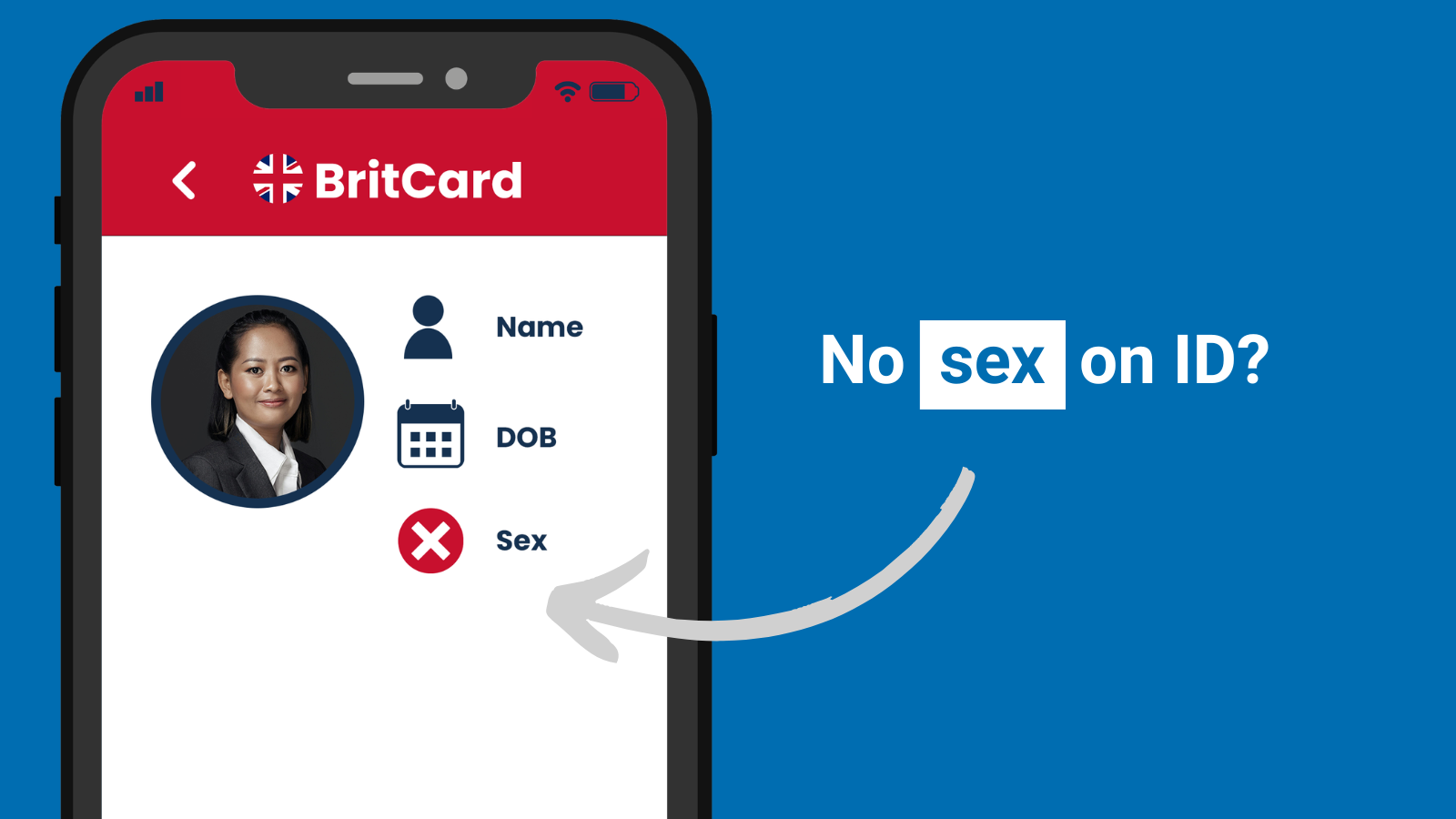
Will the government solve the sex-data problem in this Parliament?
As part of the King’s Speech on 13th May the government said that it will introduce a Digital Access...
18th May 2026
-
Update
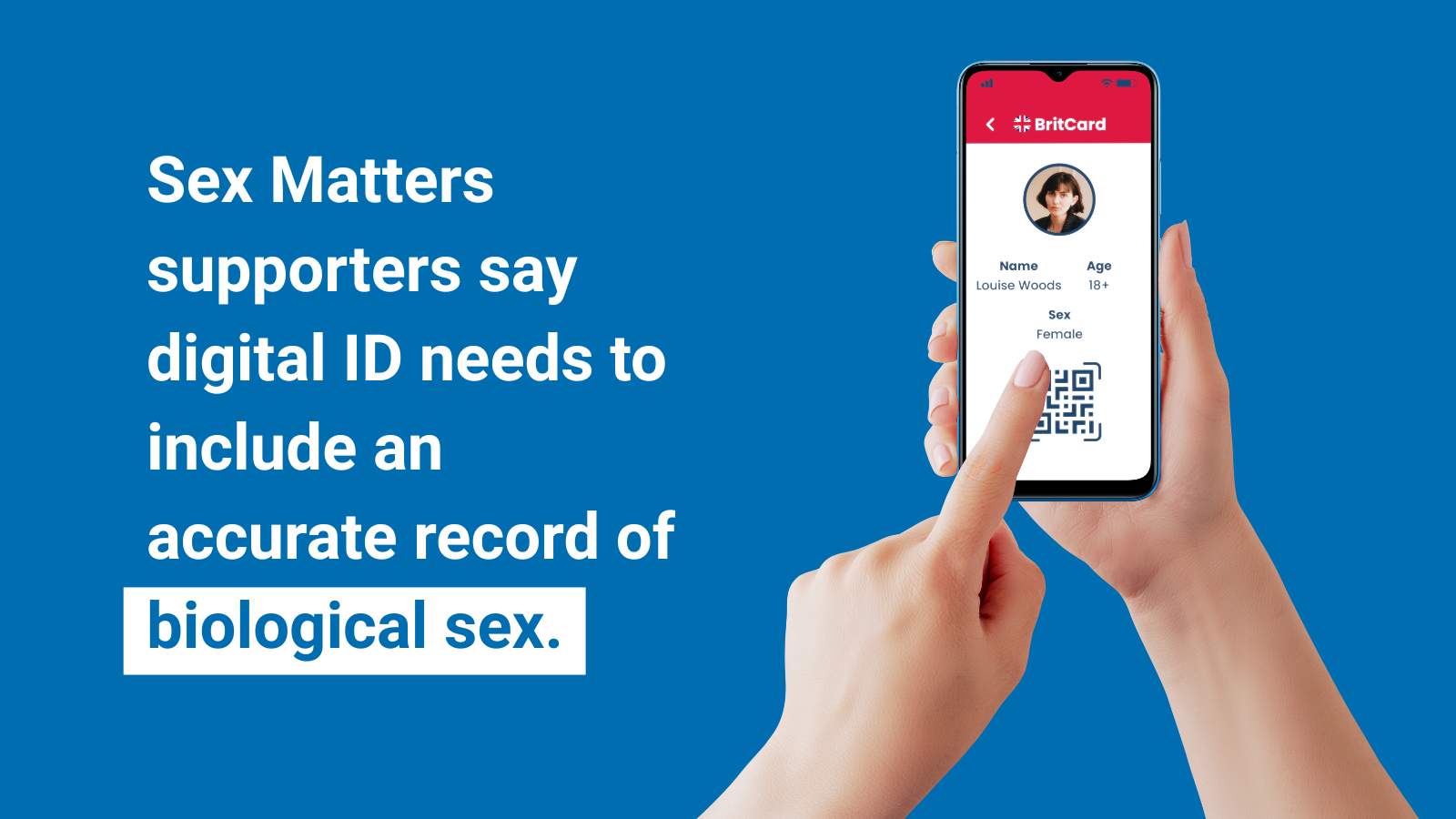
What do Sex Matters supporters think of digital identity?
We sent out a survey to Sex Matters supporters to ask for their views on digital identity. 889 people...
29th April 2026
-
Update
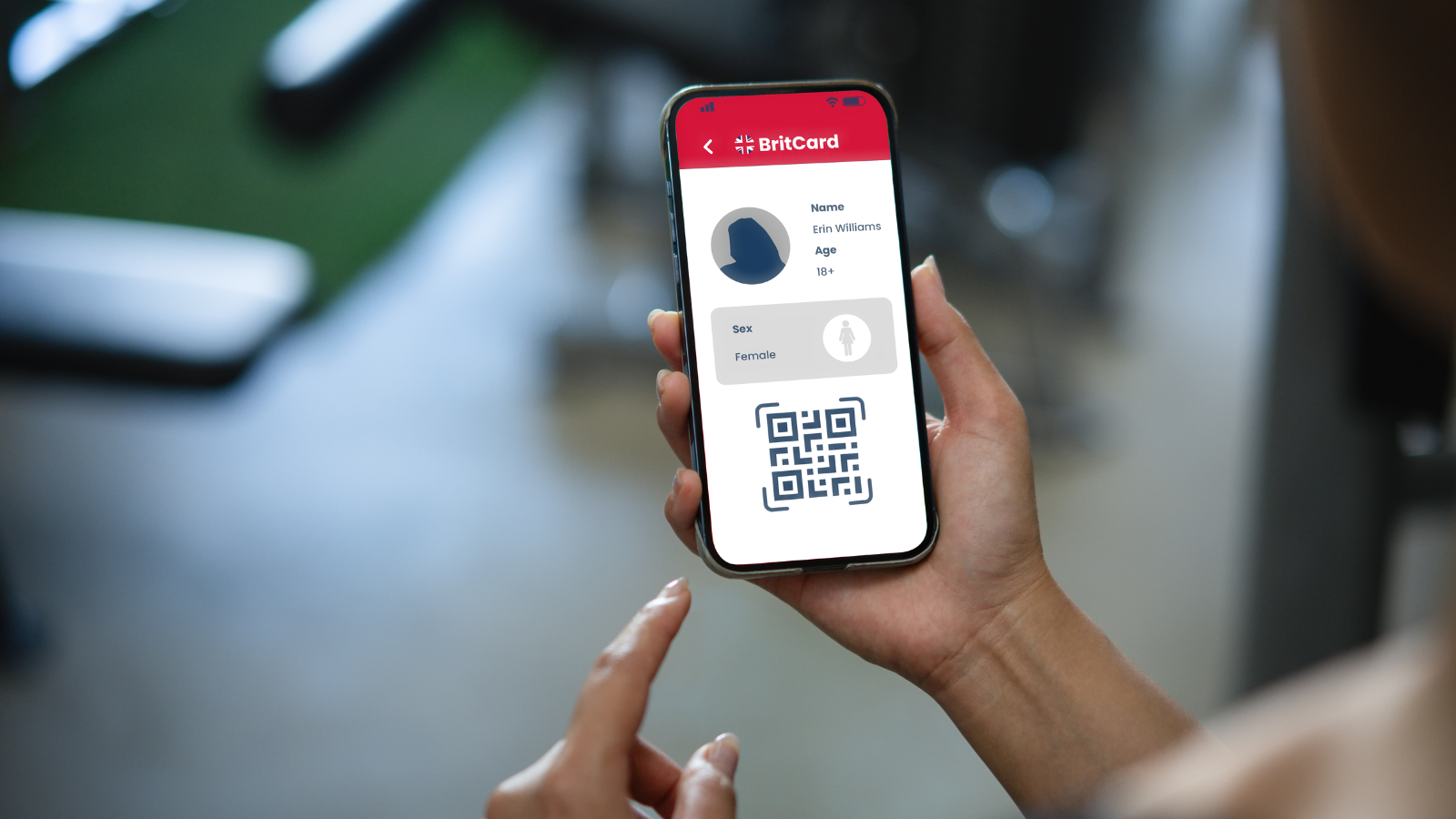
Digital ID should include sex
The government has committed to creating a new national digital ID (BritCard) by the end of this Parliament, which...
23rd April 2026
Digital ID must get sex right
The government is developing a national digital ID.
It should include sex.
It should be simple, optional and accurate.

What's the problem?
The government is creating a new digital ID. It’s meant to make life easier, protect privacy and improve services. But right now, it won’t include sex.
That’s a gap.
Why it matters
In some situations – healthcare, safeguarding, sport, single-sex services – accurate sex data is necessary. Without a reliable way to verify sex, organisations face confusion, cost and risk.
A simple solution
Make sex a voluntary field on digital ID:
- only included if the user wants it
- only shared when needed
- verified using reliable sources, like the birth register.
Our personal information should be accurate when needed, and private when not. This includes our sex.
Why does this matter?
Last year we persuaded the government that digital ID must not include unreliable information (as passports and driving licences currently do). It has now removed sex completely from its plans for digital identity.
But if digital ID is going to be useful and trusted, it needs the right information. That includes sex.

Health and social care
Keeping people safe depends on knowing what sex they are. Medical diagnoses and drug prescriptions vary according to what kind of body you have, not what gender identity might be in your head.

Sport and leisure
Fairness and safety for women and girls depends on protecting the female category in sport, from elite level down to leisure activities. Showers and changing-rooms must also be women-only.

Women’s services
From hostels to refuges to rape crisis centres, networks of services for vulnerable people need to be able to communicate whether they are for women only or both sexes, and recognise and record the sex of the people they serve.
Updates
In the media
-

Labour’s digital ID card “may let people choose their own gender”, MPs are warned
Sam Merriman for the Daily Mail.
Maya Forstater and advisory group member Professor Alice Sullivan are quoted.13th October 2025
-
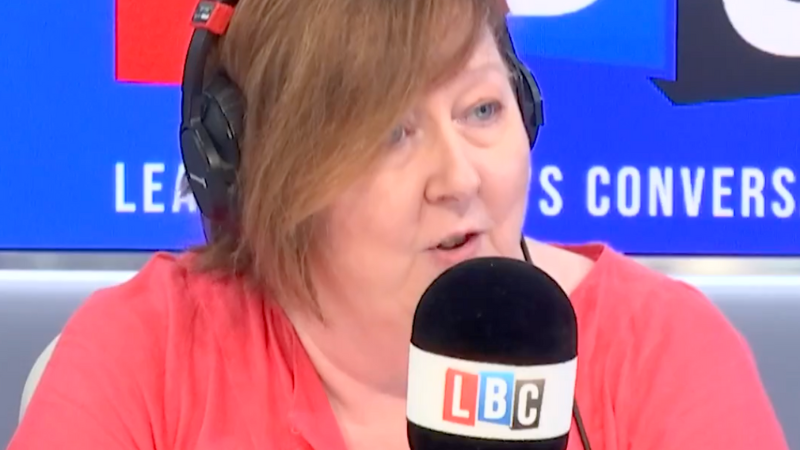
Maya Forstater on LBC, 20th March 2025
Maya Forstater discusses the Sullivan Review with Shelagh Fogarty.
21st March 2025
-

Public data should not conflate sex and gender, review says
Aoife Walsh and Euan O'Byrne Mulligan for BBC News report on the Sullivan Review and how it found that...
20th March 2025
-

Is the government sleepwalking into a digital disaster?
The digital identities framework needs to account for individuals’ sex, says James Arbuthnot.
4th March 2025
Resources
-
Publication
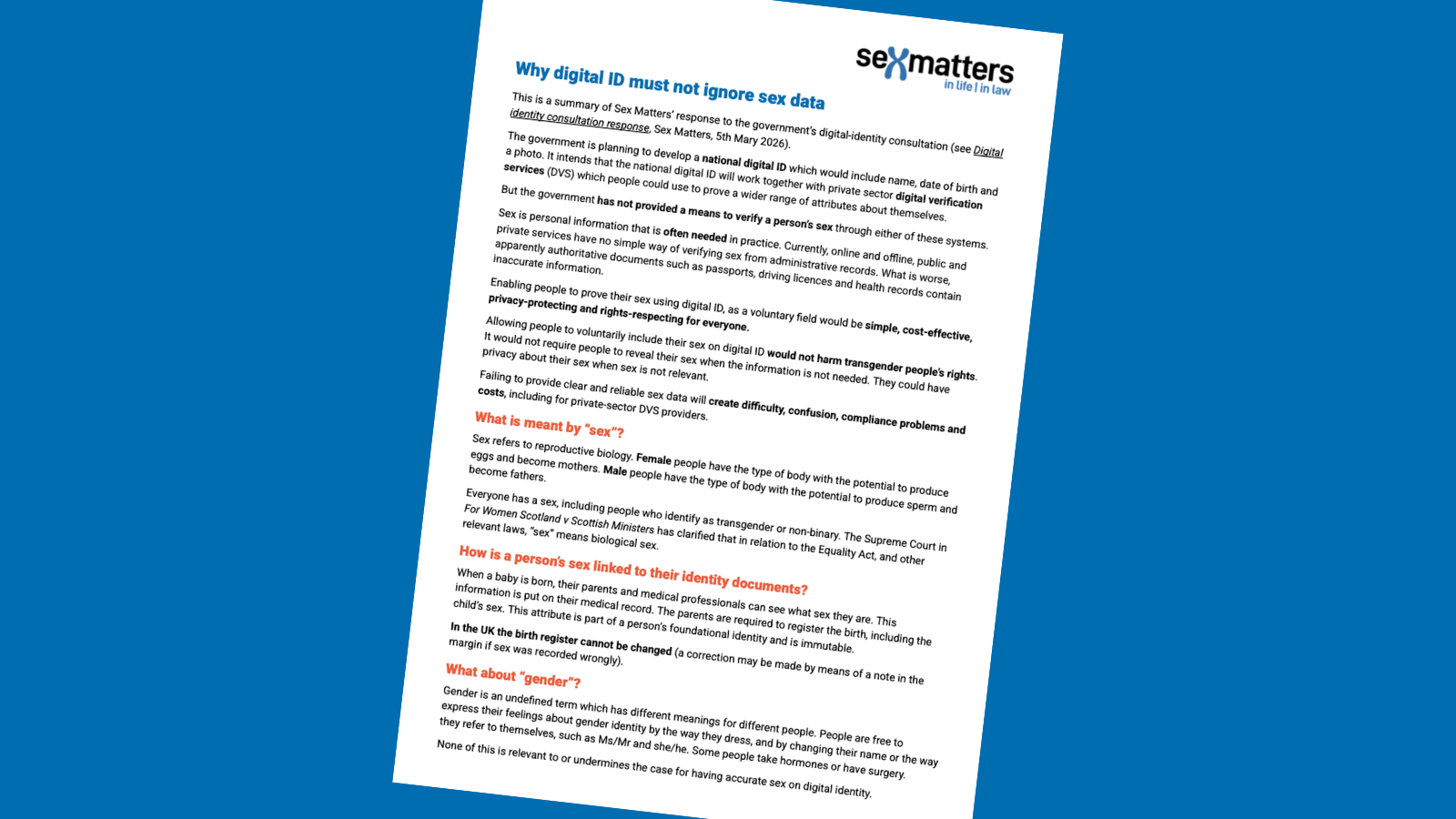
Why digital ID must not ignore sex data
A summary of Sex Matters’ response to the government’s 2026 digital-identity consultation.
18th May 2026
-
Publication
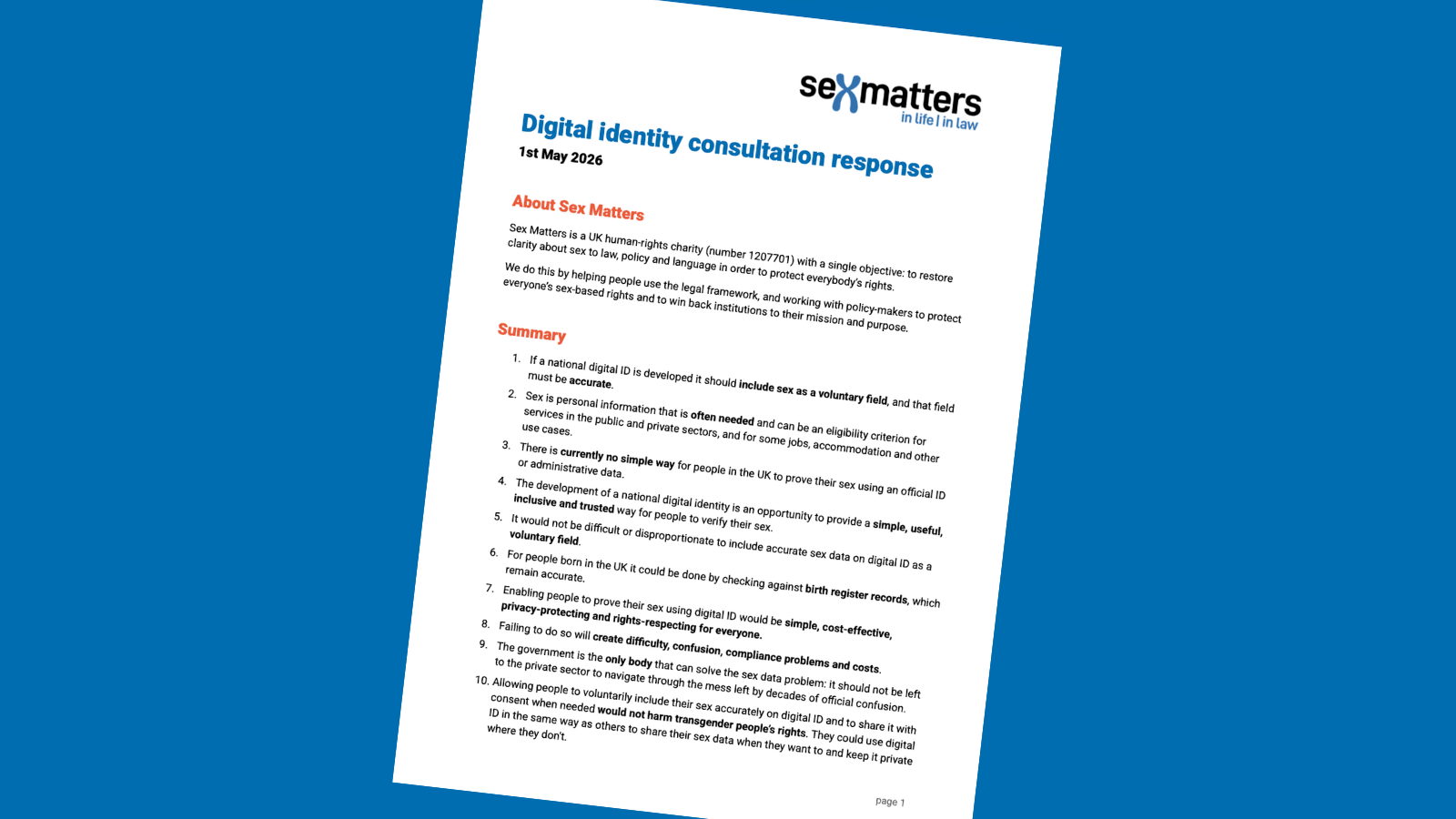
Digital identity consultation response
Sex Matters’ response to the UK Government's consultation on digital identity, which ran from 10th March to 5th May...
5th May 2026
-
Publication
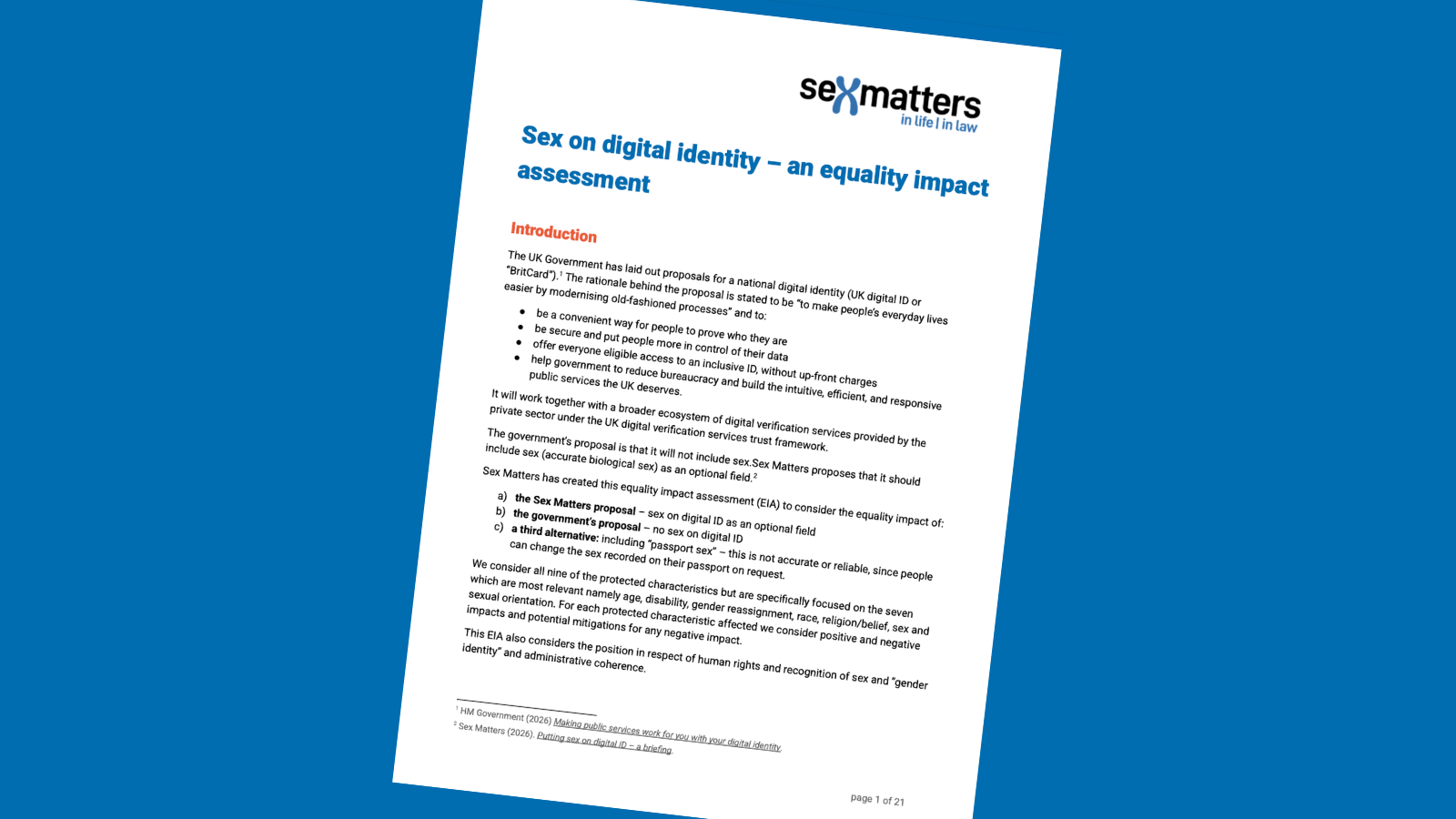
Sex on digital identity – an equality impact assessment
We consider the impact across the nine protected characteristics of the government’s proposal to have no sex on digital...
5th May 2026
-
Video
Putting sex on digital ID
Discussing the BritCard
24th April 2026