
Where sex matters | Schools and safeguarding
Schools and safeguarding
Replacing “sex” with “gender identity” undermines safeguarding.

Being able to talk clearly and honestly about sex, in policies and procedures, and between individuals and agencies, is critical to informed consent, to identifying risk and to preventing harm.
Basic rules to reduce risk take sex into account. For example, single-sex spaces for changing and washing in schools and sports venues, and legislation on overcrowding which states that children over the age of 10 should not have to share a bedroom with members of the opposite sex.
Safeguarding is the responsibility of all agencies working with children, young people and their families, or with vulnerable adults, to:
take all reasonable measures to ensure that the risks of harm to their welfare are minimised, and where there are concerns, take appropriate actions to address those concerns.
There are six core principles of safeguarding:
- Empowerment: ensuring people are supported and confident in making their own decisions and giving informed consent.
- Protection: providing support and representation for those in greatest need – this requires identifying risk.
- Prevention: working to stop abuse before it happens by raising awareness, training staff and encouraging individuals to ask for help.
- Proportionality: ensuring that services take each person into account, respecting each individual and assessing risks.
- Partnerships: giving organisations the opportunity to work together, as well as with the local community.
- Accountability: safeguarding is everyone’s business and accountability makes sure that everyone plays their part. Everyone is accountable for their actions as individuals, services and organisations.
A person’s sex can be a risk factor in abuse, particularly sexual abuse, both for perpetrators and people at risk of harm. Put bluntly, statistically female pupils are most at risk of being subjected to sexual abuse and males – whether pupils or staff – present a larger risk as perpetrators.
At the most basic level, the risk of becoming pregnant depends on sex not gender identity. Research evidence in the UK on the prevalence of child sexual abuse finds higher levels among girls than boys. However, boys may face particular challenges when reporting abuse. Perpetrators of sexual abuse and child abuse are predominantly men.
What is the problem?
Many institutions with safeguarding responsibilities are adopting policies that replace “sex” with “gender”, and set rules which require staff and young people to ignore, or make it taboo to talk about, a person’s actual sex if they prefer to be referred to as the opposite sex. This conflicts with safeguarding legislation and principles.
Some schools are adopting policies which allow children to use opposite-sex changing and toilet facilities based on the idea of gender identity. If a child has gender dysphoria or identifies as transgender, schools are told by lobby groups to treat this with absolute confidentiality — including not informing parents. This directly contradicts basic information-sharing safeguarding principles.
Staff and parents raising safeguarding concerns are dismissed as transphobic or pressured to use language that erases risk. Safeguarding systems cannot work where people are not able to speak clearly about risks.
Updates
-
Keeping children safe in education: better than before
The government has published the final version of the statutory safeguarding guidance for schools in England, Keeping children safe...
8th July 2026
-

Guidance released on “gender-questioning” children
The government has published an updated draft version of Keeping children safe in education (KCSIE). This is a regular...
12th February 2026
-
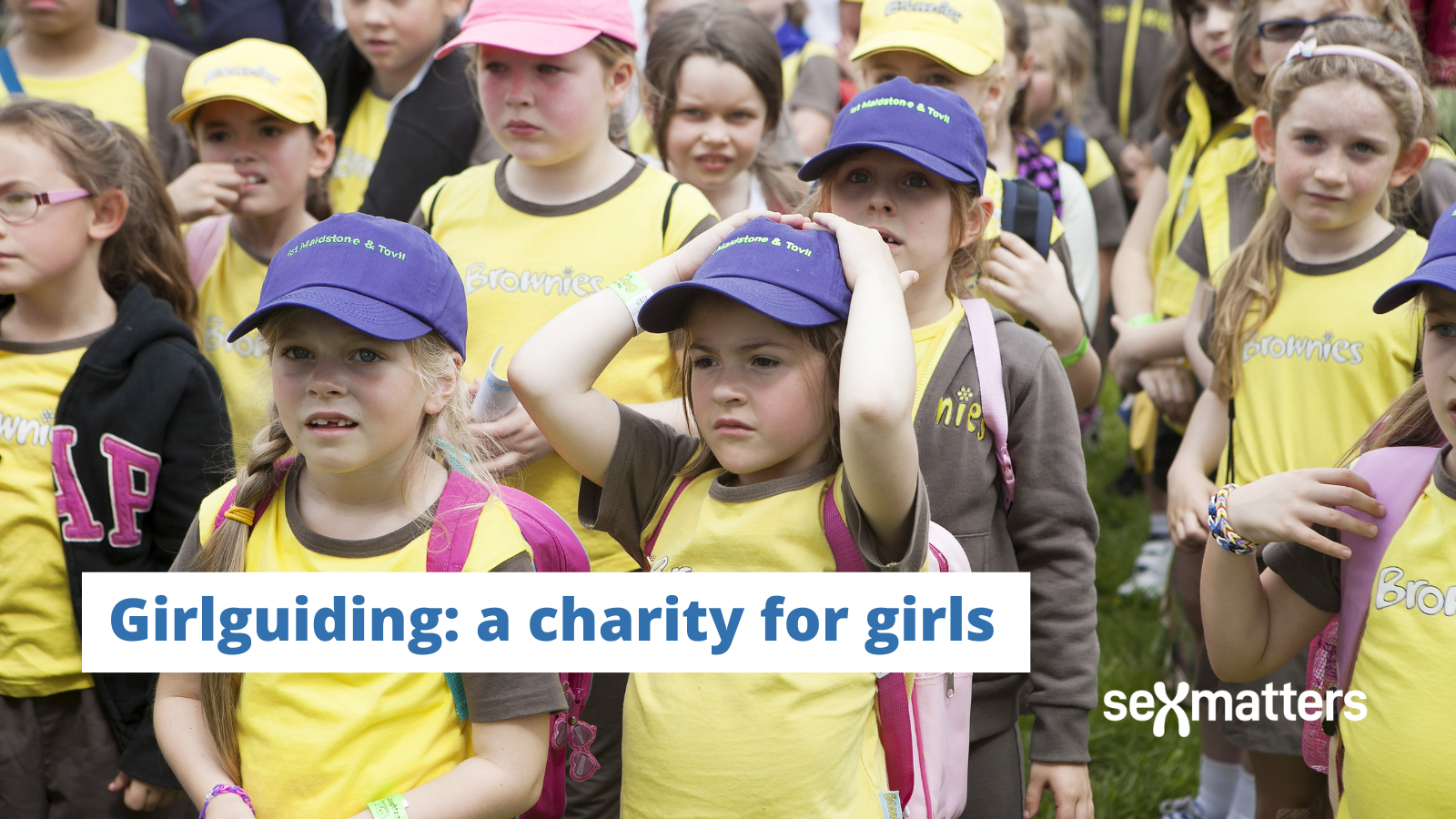
Will Girlguiding follow the law?
Girlguiding is the UK’s largest youth organisation dedicated to girls. It is a charity registered in England and Wales,...
16th December 2025
-

Model policy for schools: updated
Sex Matters’ model policy for schools has now been updated following the Supreme Court’s judgment in For Women Scotland....
29th July 2025
-

What does the For Women Scotland judgment mean in practice?
The judgment handed down yesterday by the Supreme Court returns the Equality Act to clarity. Many organisations have fallen...
17th April 2025
-
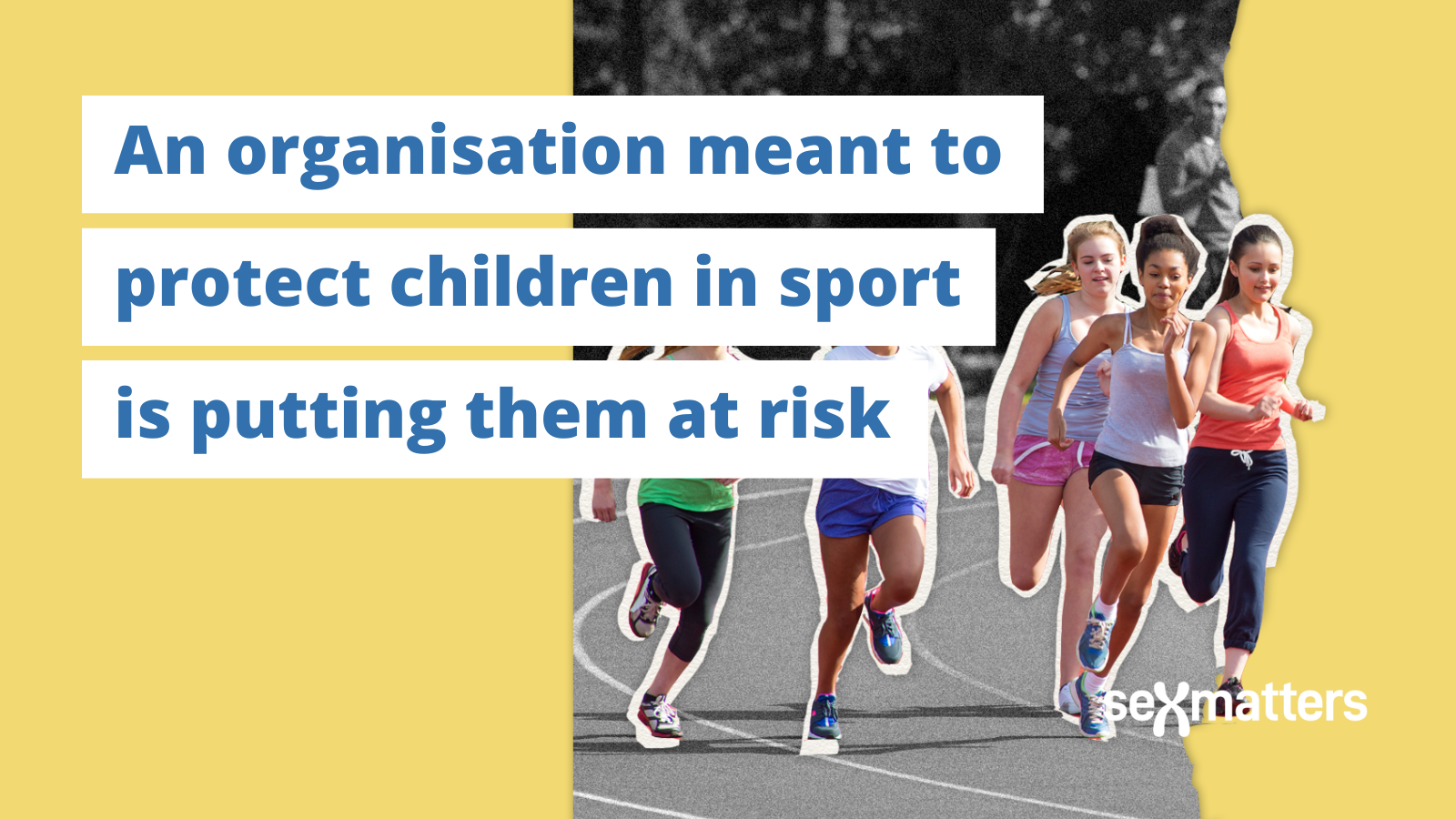
When child safeguarding meets gender ideology in sport, children are the losers
An organisation meant to protect children has built gender-identity ideology into its policies, putting children at risk. There is...
19th September 2024
-
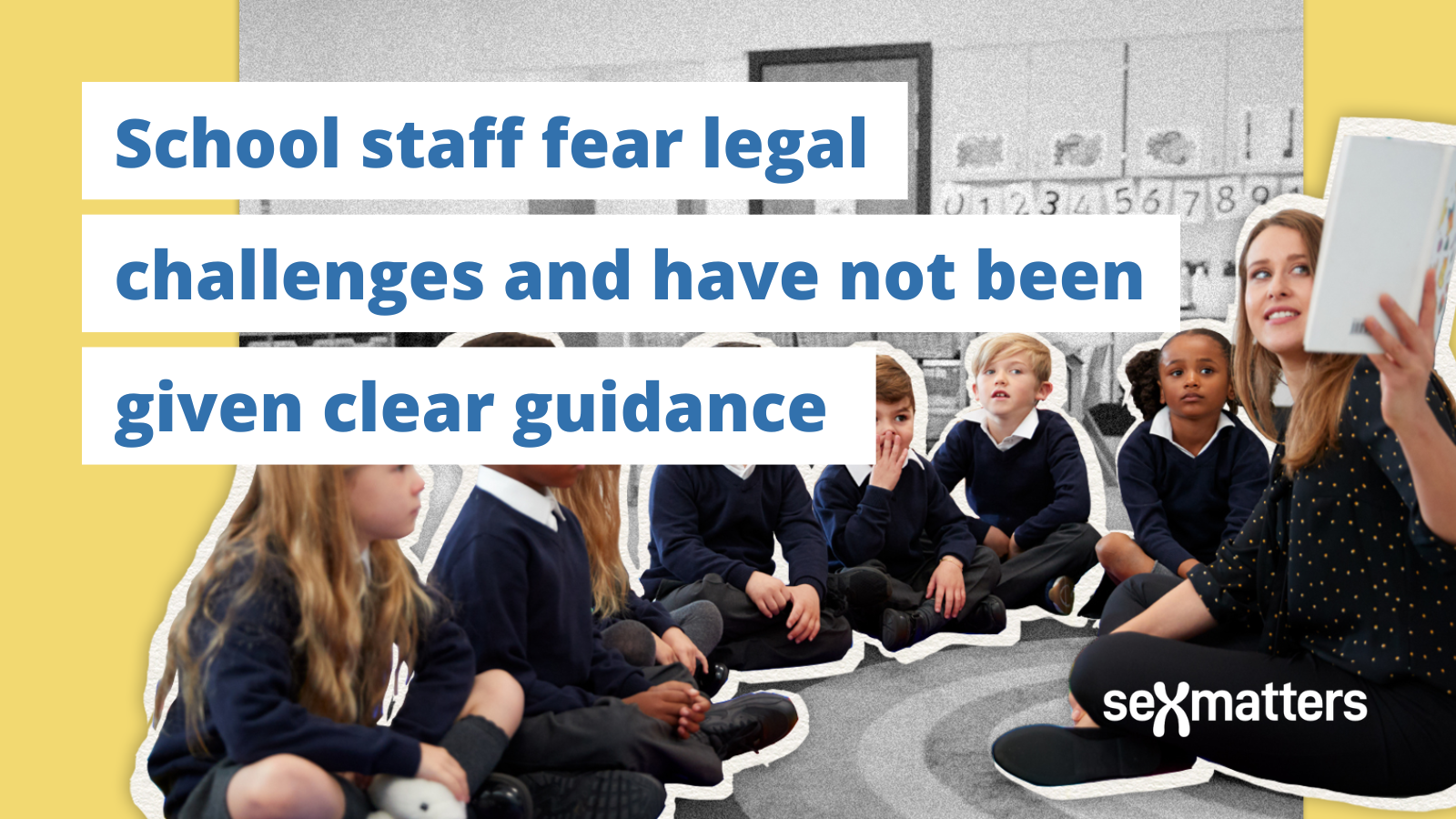
How should schools respond to “gender questioning” children?
Sex Matters has published a model policy on sex-based rules and data collection. Our policy applies to a whole...
17th September 2024

Other resources
-
Draft Relationships Education, Relationships and Sex Education (RSE) and Health education
The Department for Education’s statutory guidance for governing bodies, proprietors, head teachers, principals, senior leadership teams, teachers. Draft guidance for consultation from 16th May to 11th July 2024.
-

The Cass Review – final report
Dr Hilary Cass's final report and recommendations to NHS England in her role as chair of the Independent Review of gender identity services for children and young people.
-
Hung out to dry – the impact of Welsh Government inaction on gender distressed children, their families and their schools
The impact of Welsh Government inaction on gender distressed children, their families and their schools, and a call for urgently needed clear, legally compliant guidance.
-
Evidence-Based Social Work Alliance (EBSWA)
Coalition of practitioners, academics and students in the field of social work. Formed as a response to concerns about the impact of gender-identity theory in their field. Argues that social workers’ legal responsibilities to safeguard children are being put at risk by the lack of an evidence base for...
-
Single-sex toilets in schools
Are your daughter’s safety, dignity, health and privacy important at school? Single-sex toilets are being removed in schools despite the Equality Act’s legal protections. The WRN has a range of resources you can use to highlight this problem and talk to your child’s school.
-
Mixed sex toilets in Wales’ schools
New and refurbished school buildings across Wales are imposing mixed sex toilet facilities on children, reports Merched Cymru. These toilets are not compliant with the law, and present considerable problems, particularly for girls.
-

How trans inclusion in sport is harming women and girls
The harms caused include unfair competition and demoralisation; losing out on records, rankings or on opportunities to participate; no consent or being coerced into a mixed-sex environment; a chilling climate of intimidation, fear and silencing; loss of privacy and dignity; and risks to women’s and girls’ physical safety

Publications
-

Template email about positive action based on self-ID instead of sex
This template email is designed to help you tell organisations that programmes and prizes for women and girls must be for women and girls.
14th November 2025
-
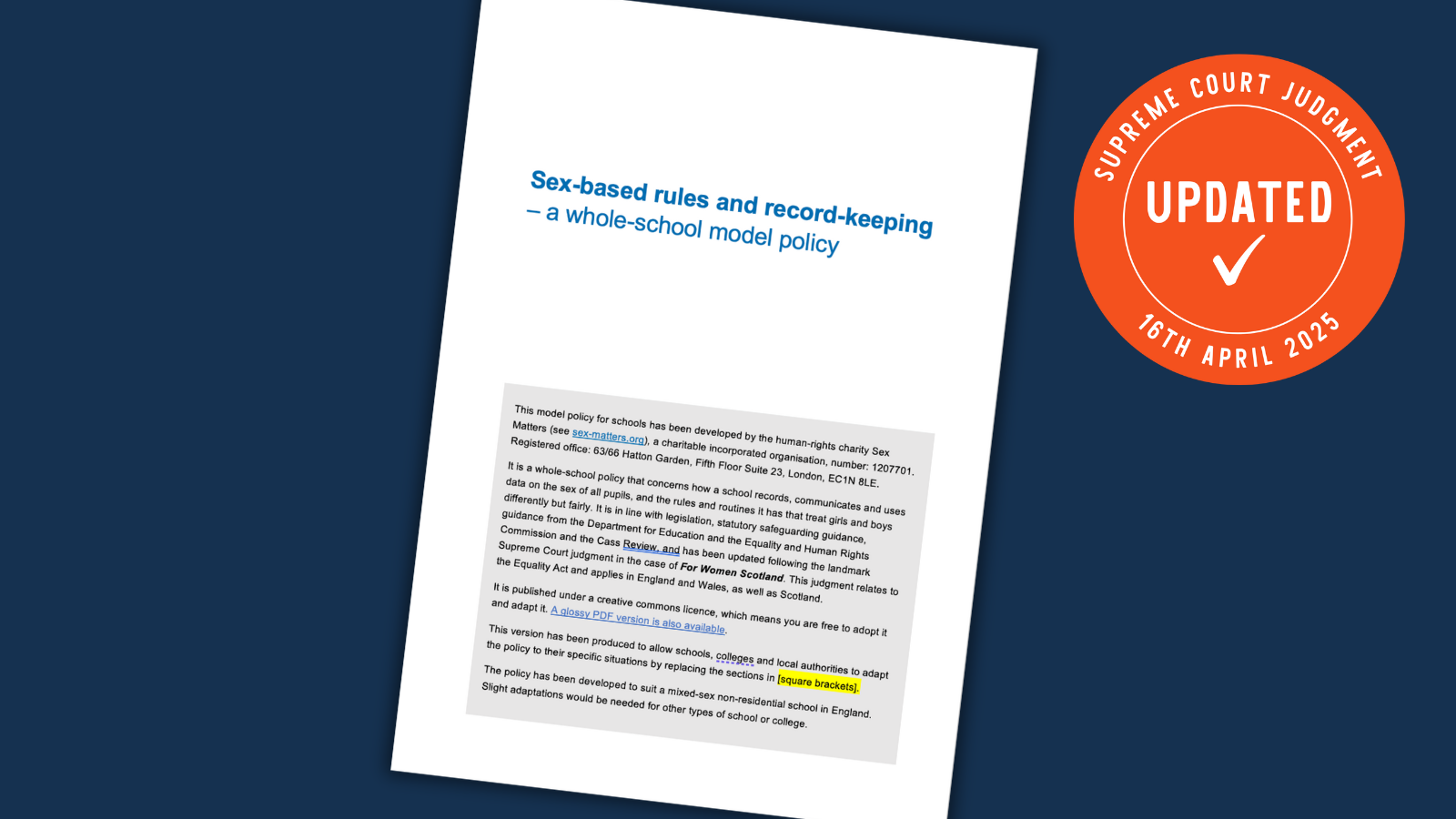
Schools model policy – editable
UPDATED FOR 2025: Our whole-school model policy on sex-based rules and record-keeping, formatted as a Word document for schools to adapt. Read more about why this policy is needed.
See also the glossy PDF version.26th August 2025
-
Sex-based rules and record-keeping – a whole-school model policy
UPDATED FOR 2025: This model policy specifies how a school records, communicates and uses data on the sex of all pupils, and any rules that treat girls and boys differently but fairly. It draws on inputs from parents, teachers, lawyers and safeguarding experts and is in line with legislation...
25th July 2025
-
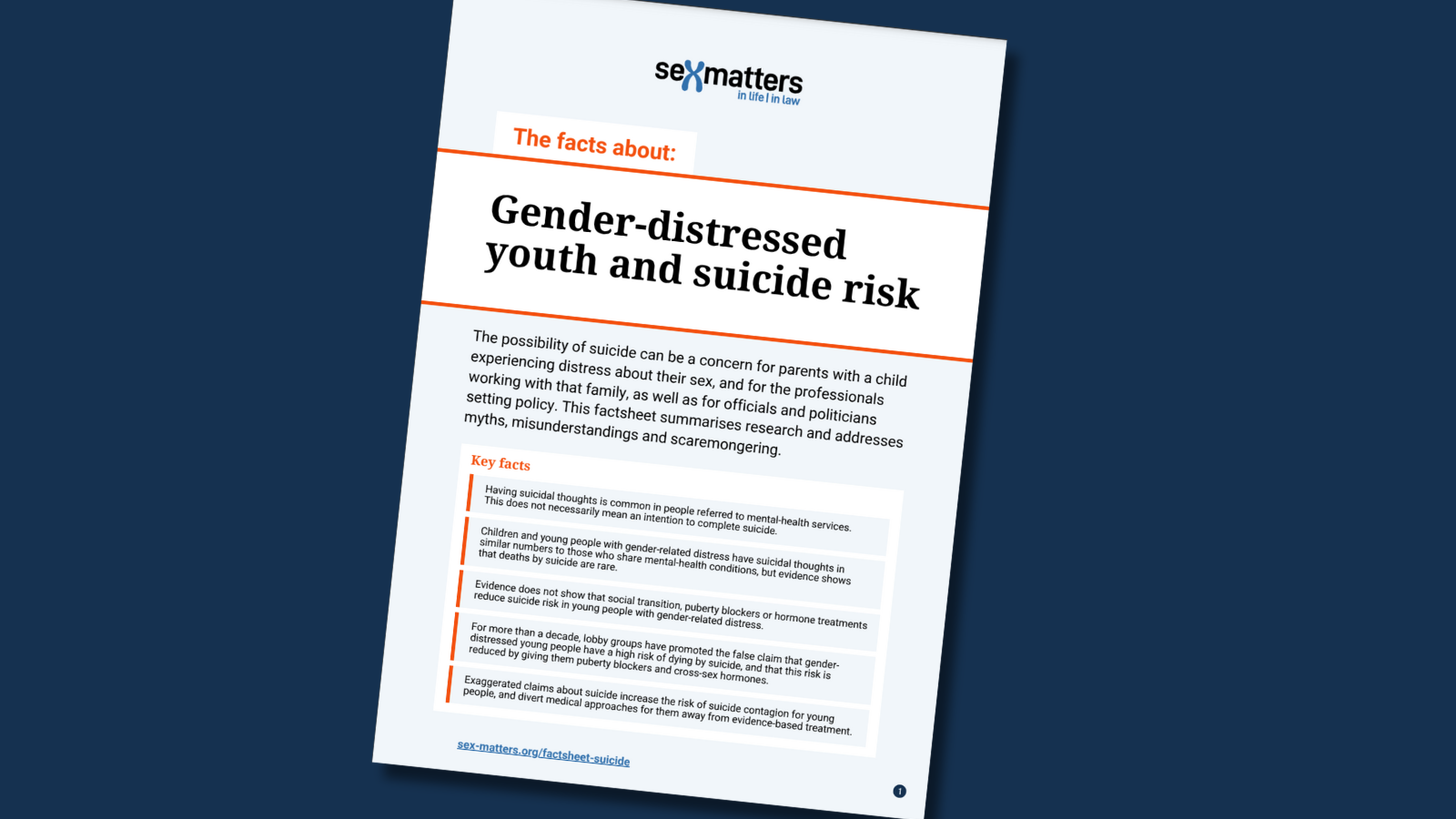
Gender-distressed youth and suicide risk – factsheet
The possibility of suicide can be a concern for parents with a child experiencing distress about their sex, and for the professionals working with that family, as well as for officials and politicians setting policy. This factsheet summarises research and addresses myths, misunderstandings and scaremongering.
10th May 2024
-
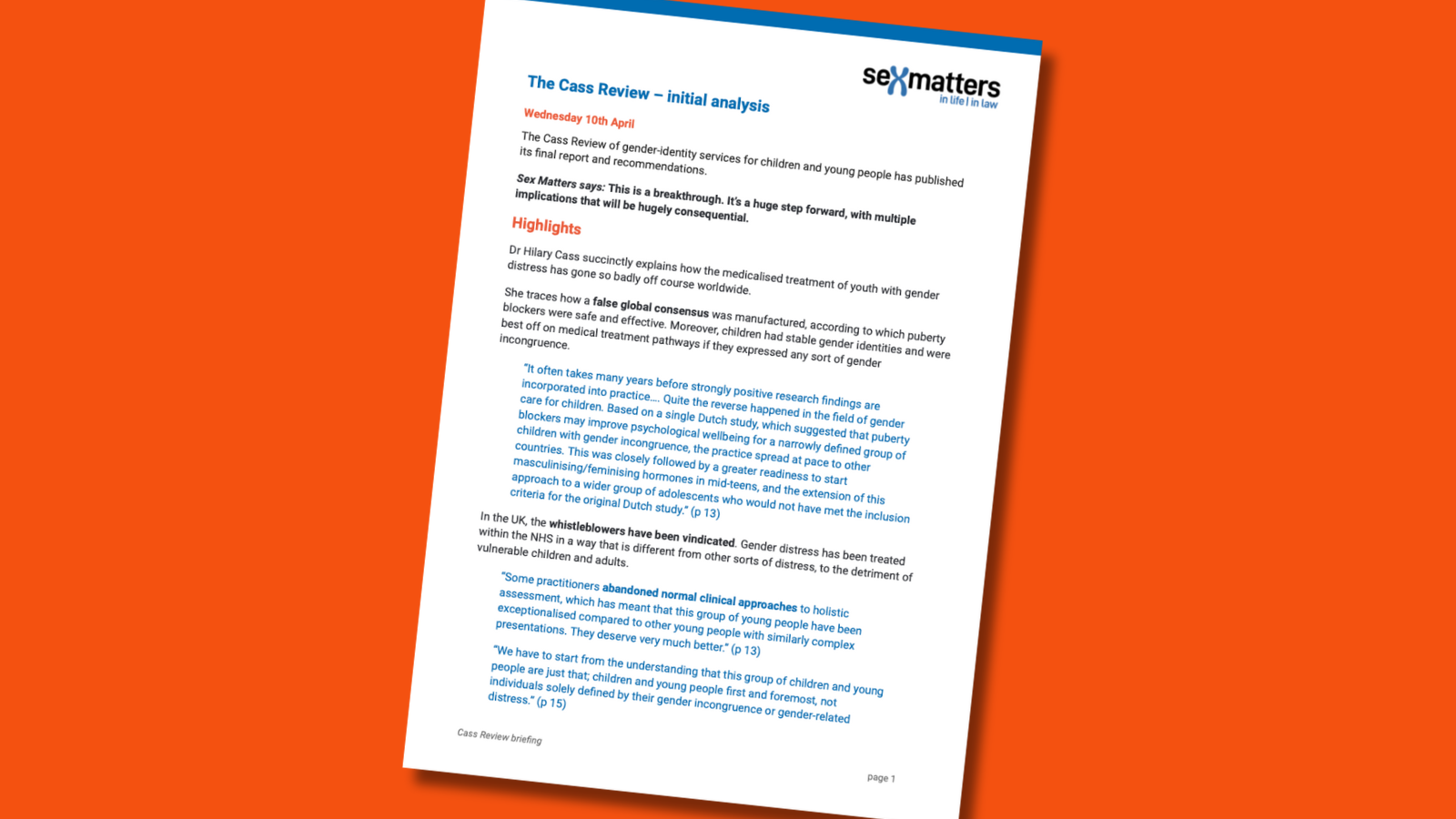
The Cass Review – initial analysis
The Cass Review of gender-identity services for children and young people has published its final report and recommendations.
Sex Matters says: This is a breakthrough. It’s a huge step forward, with multiple implications that will be hugely consequential.10th April 2024
-
Response to Department for Education consultation on national minimum standards for further education residential accommodation
Covering academies, further education colleges and sixth-form colleges, this aims to align the standards with the position on residential accommodation being consulted on in the draft "Gender Questioning Children: non-statutory guidance for schools and colleges in England".
4th April 2024
-
What does the law say about “gender-questioning children” in schools?
An analysis of the Equality and Human Rights Commission’s response to the Department for Education’s draft guidance for schools on gender-questioning children. See all our updates about this guidance.
21st March 2024
-
Response to Department for Education draft guidance for schools on gender-questioning children
Our final response (after our draft response) to the DfE's draft guidance for consultation, published in December 2023. See all our updates about this guidance.
14th March 2024