This is part of our The law is clear – so get on with it! campaign |
The law is clear – providing single-sex services with confidence
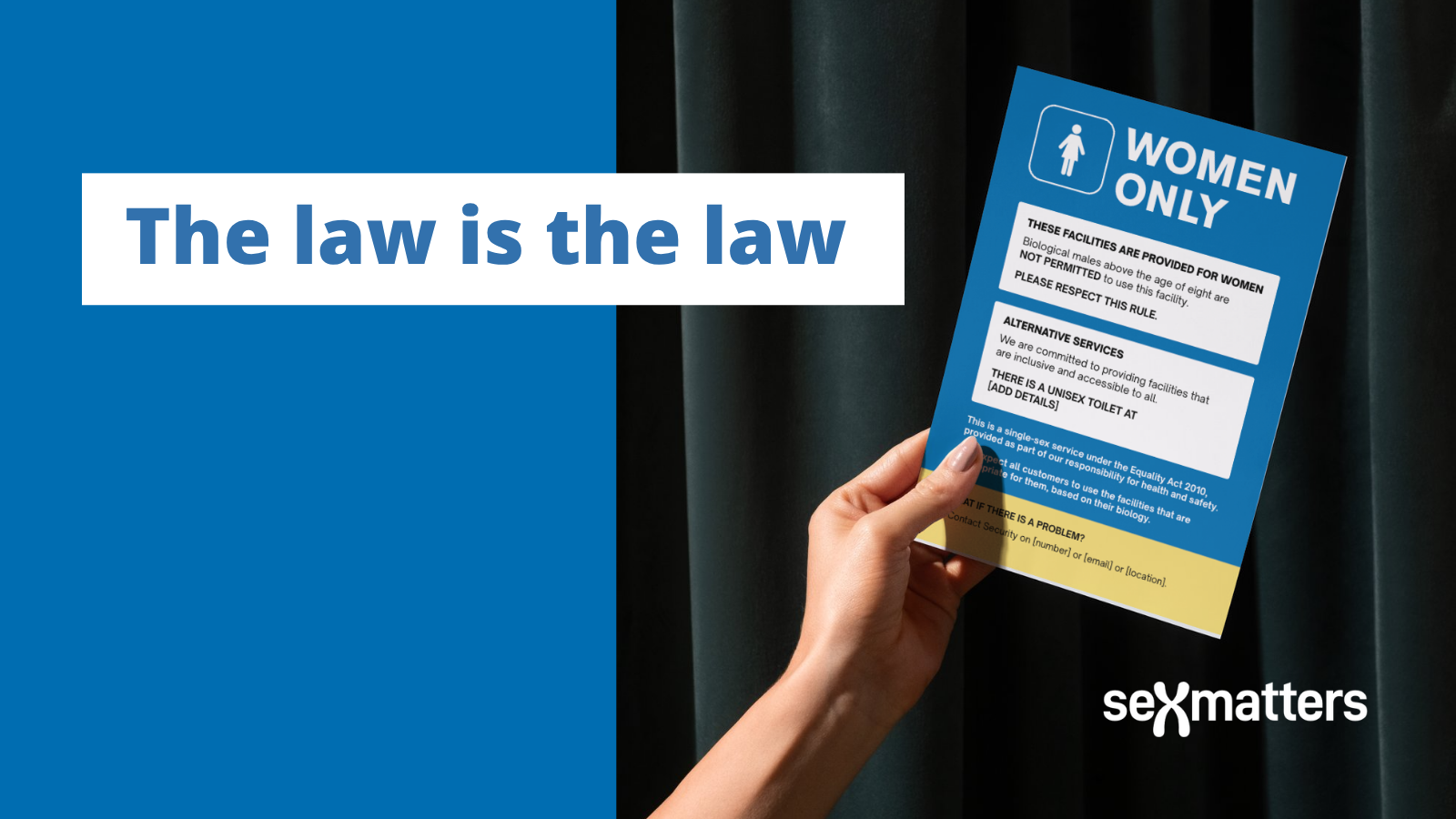
On 16th April 2025 the Supreme Court concluded in relation to provisions enabling single-sex services that:
“The plain intention of these provisions is to allow for the provision of separate or single-sex services for women which exclude all (biological) men (or vice-versa).”
The government is delaying issuing guidance from the Equality and Human Rights Commission (EHRC) that would help service providers understand this, and has failed to withdraw the old guidance from 2011 – even though the Chair of the EHRC wrote to the Secretary of State for Women and Equalities on 15th October saying that she should “revoke the current code as soon as possible”, since:
“The published version of the (2011) Code currently contains analysis of the Equality Act 2010 which has been shown to be incorrect by the Supreme Court.”
Whatever happens with the guidance, the Equality Act 2010, as interpreted by the Supreme Court, is and will remain the law.
Service providers and public bodies cannot pretend that they do not know this.
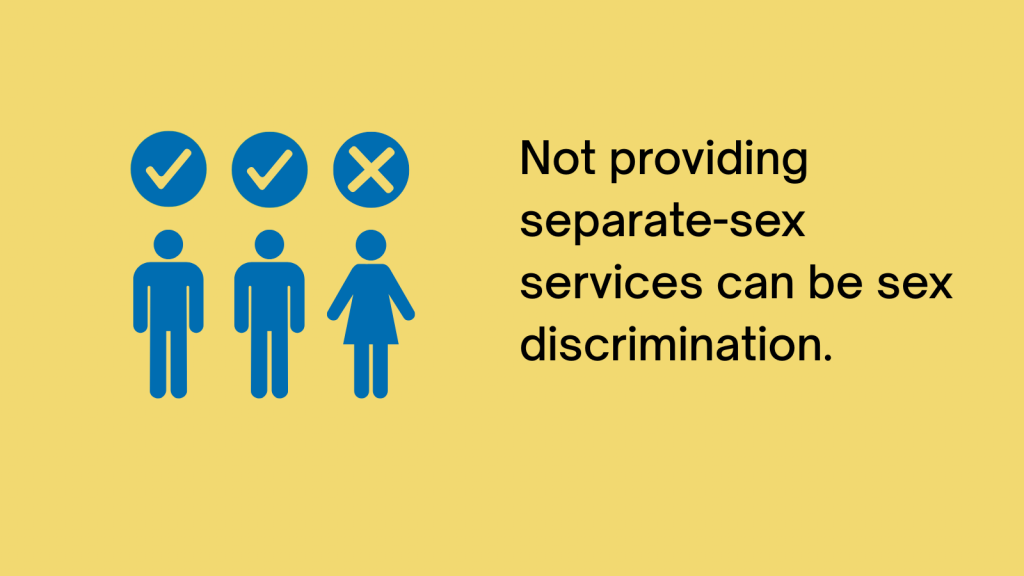
Despite what Stonewall says, the law is not at all unworkable. Sex Matters first published a guide to providing single-sex services with confidence in May 2025, following the Supreme Court judgment. It has been updated with new graphics and answers to some of the most common questions and concerns.
A few simple principles