
This is part of our Keep the women’s pond for women campaign |
How the City of London allowed the consultation on the ponds to be hijacked
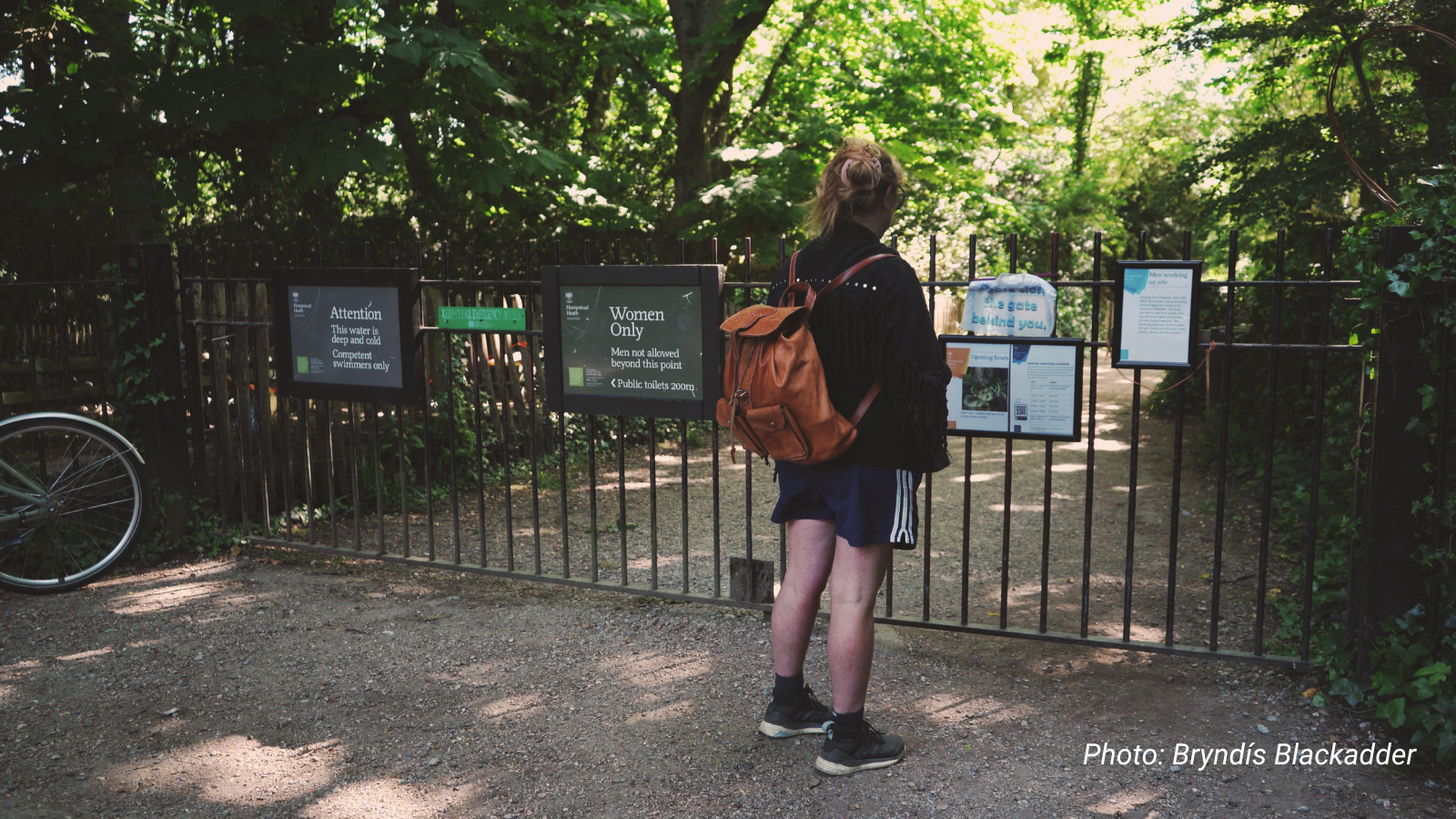
The day before the announcement of the permissions judgment in our case against the City of London Corporation over the Hampstead Ponds, the corporation rushed out the results of its consultation exercise, saying:
“A clear majority (86%) of respondents said the ponds should continue to operate as trans‑inclusive spaces, with trans men using the Men’s Pond and trans women using the Ladies’ Pond.”
The consultation was open online from 30th September to 25th November 2025. It received 38,742 responses: 31,296 claimed they swam in the ponds. This is an extraordinary number, which demands some reality checking.
For comparison, this survey got 35 times more responses than the City got in 2020/21 when it did a survey of swimmers’ experience of Covid adaptations. A link to that questionnaire was sent to nearly 11,000 people who had used the Eventbrite booking platform for the ponds. It got 1,108 responses. The same year the Kenwood Ladies’ Pond Association did a survey concerning the impact of changes in the charging policy at the ponds and 600 people responded. A survey of swimmers in 2021/22 got 2,079 responses.
At a meeting of the Hampstead Heath Consultative Committee on 13th January 2026, one of the members, Simon Hunt, commented on the large number of responses:
“I am not sure there are 40,000 people on the Heath who replied. I was a little concerned that the replies might reflect a population other than the ones who use the Heath… Who are these 40,000?”
Andrew Impey, the corporation’s deputy director of natural environment, admitted that the City of London had anticipated that the survey might be hijacked:
“We were probably expecting nearer 100,000.”
“We knew there was the potential for it to get hijacked… There will be some within those 40,000 who don’t know where Hampstead Heath is.”
Is the survey report credible?
31,296 people who responded to the survey claimed to have swum in the Hampstead Heath bathing ponds and 20,821 said they had swum there within the last three months. The majority of those who responded said they swim less frequently than once a month.
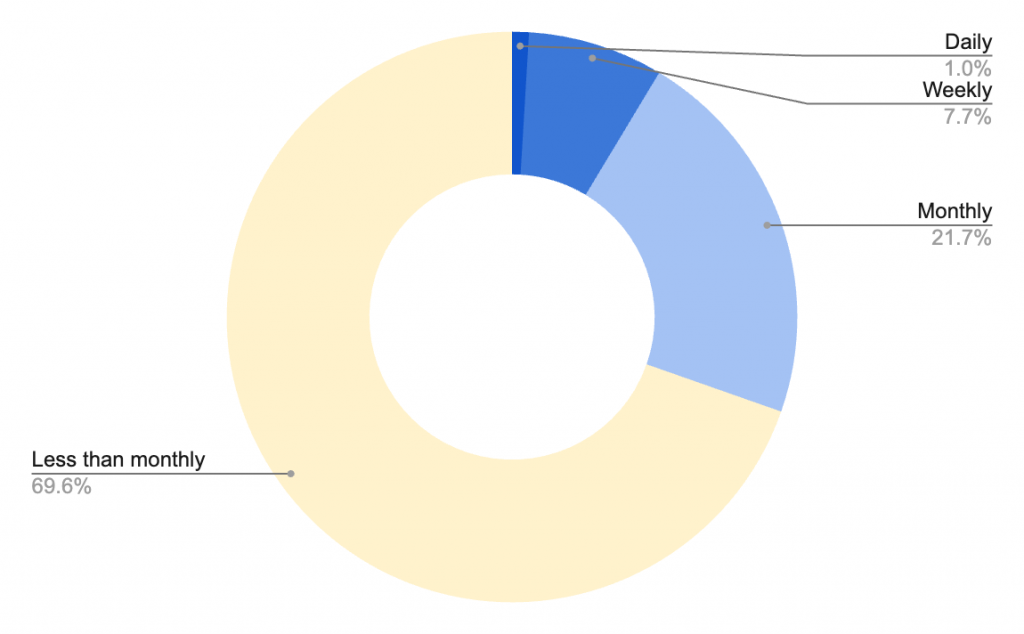
66% said they had (at any time) swum in the ladies’ pond, 22% had swum in the men’s pond and 49% in the mixed pond.
How confident can the City of London be that the 31,296 people who said they swim in the ponds really do?
Simon Hunt asked a very good question and did not get an adequate response.
The Hampstead Ponds have a maximum bather load for each pond of 100 people in the water. Over the course of a year there are around 368,000 swims in total across the three ponds (based on an annual report for 2022/23). The men’s and ladies’ ponds are open all year round – for around 12 hours a day through the summer and seven hours from late October till May. The peak months are June, July and August.
Respondents who said in the consultation that they had swum in the past three months are claiming to have swum during July, August, September, October and November (depending on when they completed the survey) – five months (152 days), so we can estimate the number of swims this represents.
| Number of people | Number of swims | Basis of calculation | |
| Swam in the pond in three months before they completed the survey | 20,821 | ||
| Daily | 294 | 31,752 | n x 108 days (5 out of 7) |
| Weekly | 2,370 | 50,955 | n x 21.6 (assuming once a week) |
| Monthly | 6,710 | 33,550 | n x5 (assuming once a month) |
| Less than monthly but in the last three months | 12,035 | Number of people who said they had swum in the pond in last three months – daily, weekly and monthly swimmers – assuming each swam once in the past three months | |
| Total swims over five months | 128,292 |
Based on these estimates we can see that the vast majority (an estimated 90%) of swims represented by survey respondents are accounted for by those claiming to be regular swimmers.
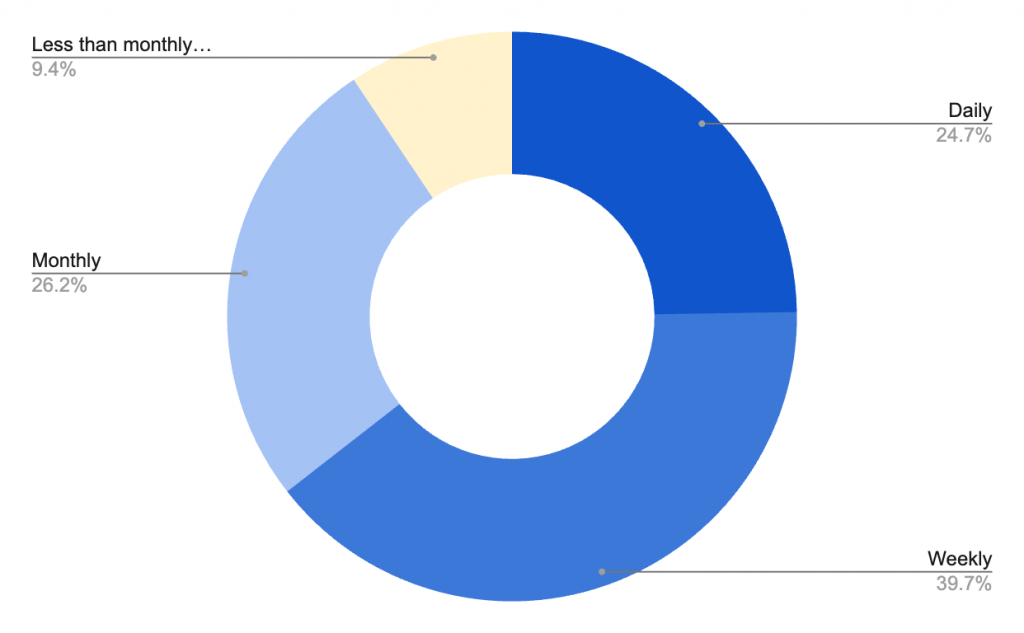
The total number of swims represented by the survey respondents would account for more than a third of the annual swims undertaken at the ponds during the year. This is an extraordinarily high response rate.
If we assume that 70% of annual swims take place during the July to November period, which covers two of the busiest months, around half of the people who swam in the ponds during those five months would have undertaken the survey.
This is implausible, but when combined with the demographic skew, it becomes impossible.
One thing that is striking about the people who responded is how many were “LGBQ+”.
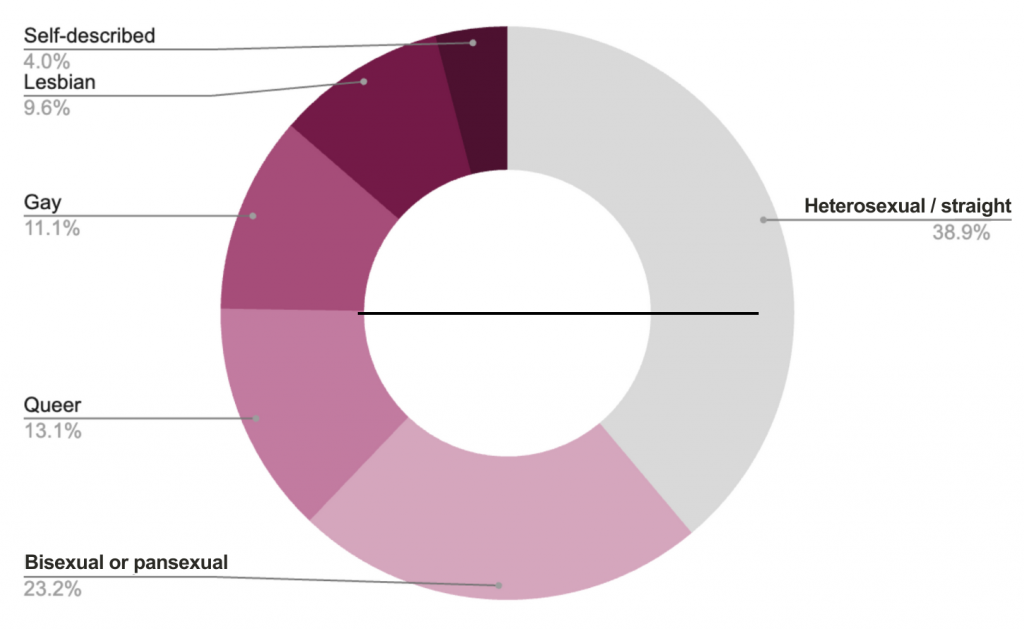
In the UK census, 4.7% of the population said they were LGB. So if there are 368,000 swims a year, you would expect about 17,400 swims by LGB people over the year. Yet if the consultation responses are accurate, they suggest that over just five months of the year, 77,600 swims by LGB people took place. That would be around 450% of the expected number of swims by LGB people over the course of the entire year. The only plausible explanation is that a large number of the consultation responses are not accurate.
The survey was undertaken by Tonic, an independent social research organisation specialising in public consultations.The methodology section of its report does not say how the survey was promoted or distributed. Tonic says:
This is not an accurate description of the situation. The demographic skew in the data shows that there is no mere “risk” of self-selection bias: it is certain that this occurred and that it has dramatically biased the sample. The results are not merely unrepresentative; there is strong evidence that the survey was hijacked.
This was not, as Tonic claims, unavoidable. The City of London could have controlled the survey so that only people who had genuinely used the ponds could have claimed to be pond users – by providing a personalised login code to those who had booked via the Eventbrite system or had season tickets, for example. It could have provided a separate survey for non-pond users and advertised it with QR codes around the heath. It chose not to do that.
The aim of the consultation should have been to gather data that was as representative as possible of the views of the user base of the ponds, and of the potential user base of people who use the Heath. If they do not do this, the findings are worthless.
The consultation leaves the corporation knowing no more than it did before it undertook the survey: some people feel strongly that men who identify as women should be able to access services for women and girls, including where they are naked or undressing, and some people do not.