
[I understand / In response to my inquiries I have been told] that [name of organisation] intends to convert all [toilets/ changing rooms] to unisex or gender-neutral, in response to the recent Supreme Court ruling that sex means biological sex in the Equality Act.
Template email about proposed unisex changing rooms or toilets
This template email is designed to help you clearly and confidently raise concerns about policies to make changing-room or toilets into “gender-neutral” or unisex facilities.
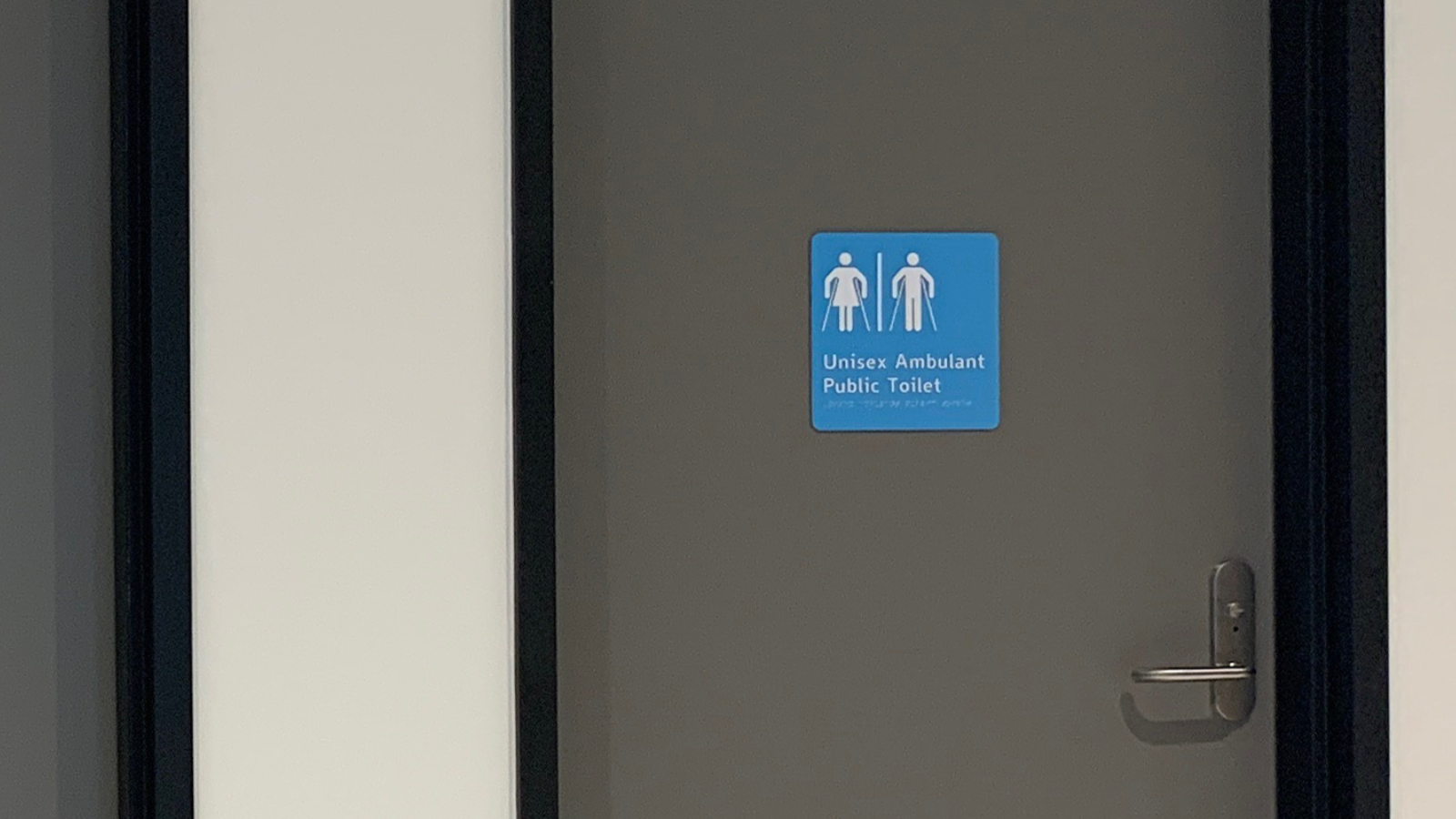
- If you are concerned about the removal of single-sex facilities or unclear guidance on who is permitted to use which facilities, use our template email specifically for that.
- If you are concerned about facilities in a workplace, the law is different so use our workplace template email.
Once you know your rights, use this sample text to start an informal conversation, adapted to submit a formal grievance, or amended to escalate a previous complaint.
How to use it
- Use the text below, or edit the same text in a Google doc (click Use template at top right) or Word document.
- Copy and paste into an email, with the optional sections to suit your own situation.
- Replace the placeholder text in [square brackets].
- Send it as an informal query or adapt it to form part of a formal grievance if needed.
Write the email
Start by saying who you are and how you are connected to the organisation – service user, pupil, parent, long-term customer – and mentioning any history you have of discussion of this topic with the organisation.
Then edit this copy:
Then add this explanation:
This approach is ill-advised and may expose the organisation to legal action. I request that single-sex provision be retained. A mixture of single-sex and unisex may be an appropriate and lawful option but removing all, or even the majority of, single-sex provision is not inclusive.
Most people prefer separate-sex facilities, and they are particularly important for women. Since the organisation has previously provided separate facilities for men and women, it clearly recognises that this is the case. It would therefore appear irrational to remove such provision.
Replacing separate-sex facilities with fully enclosed “superloos” with the handbasins inside gives privacy, but will mean that fewer people can go to the toilet in the same time and space. Women in particular feel less comfortable in unisex facilities. Waiting in line for unisex toilets is an uncomfortable situation for many women, even if the hand basins are inside the toilet rooms. They may be forced to queue with men in a small enclosed space. Small spaces with floor-to-ceiling partitions are oppressive and can feel more unsafe than the traditional single-sex cubicles, because users don’t know who is outside the door, and a woman could get pushed into a cubicle. Someone facing a medical emergency cannot easily call for help or communicate with people outside the door, nor can people outside see a user who has had a seizure or lost consciousness.
Locks on public toilets are often faulty, or might be opened by children. This is a minor embarrassment in a single-sex washroom, but much more humiliating in a mixed-sex facility. Mixed-sex toilets and changing rooms also provide more opportunities for accidental-on-purpose exposure – a man may leave the door unlocked on purpose so that a woman accidentally opens it and sees him with his trousers down.
Ordinary, well-designed, single-sex facilities have features such as vestibules and corner turns at the entrance which put two layers of physical boundary between a woman or girl on the toilet and a man who might be loitering nearby. This makes such facilities both feel safer and actually be safer, and deters opportunistic voyeurism and exposure.
Add this if the service is used by adults with children or babies
Single-sex toilets with traditional cubicles are also places where parents (most often women) can supervise children more easily, because they, or a sibling, can monitor and reassure each other without having to be inside the cubicle together. Many women have had the experience of going to the toilet with the door ajar and a baby buggy wedged into it.
Add this if the service is in England
Buildings in England are also subject to building regulations set out in Approved Document T, which makes the provision of separate-sex facilities the norm for new-builds and refurbishments.
Ask that they reconsider, then explain the legal jeopardy:
I request that [name of organisation] considers the impact on women (as well as on religious, disabled and older users, and on parents with children), and reconsiders this proposed change.
Full conversion to unisex creates legal jeopardy
For all these reasons, replacing single-sex provision with all-unisex could give rise to claims for indirect sex discrimination, since women are likely to suffer a detriment as a result, and to claims for harassment, since it creates a hostile and degrading environment for women in which voyerism, indecent exposure and sexual harassment become more likely.
Add this if it is a public body
As a public body you are covered by the public-sector equality duty and are required to consider how your policies affect people with different protected characteristics, including sex and religion or belief, as well as gender reassignment. While some people prefer a gender-neutral option, it is not proportionate to remove all separate-sex facilities.
Sign off
Please confirm, therefore, within 14 days of the date of this letter that [name of organisation] will not remove separate-sex facilities in general and replace them with all “gender-neutral” (unisex).
I look forward to hearing from you within the timescale set out above. I will be sending the response to Sex Matters and may seek support from them to take the next steps towards legal action if the current proposal is not reversed.
Now sign and send it.
Feedback
Tell us about your complaint, whether you succeed or hit a brick wall. We will treat it in confidence and will not share anything publicly without your consent.
It’s useful for us to track how organisations are responding to the Supreme Court’s clarification of the law, and to have an idea of compliance and non-compliance by sector.