
FAQs – gender reassignment
What does it mean for someone to have the protected characteristic of “gender reassignment” under the Equality Act 2010? The government, public bodies, many employers and even employment tribunals are often confused about this.
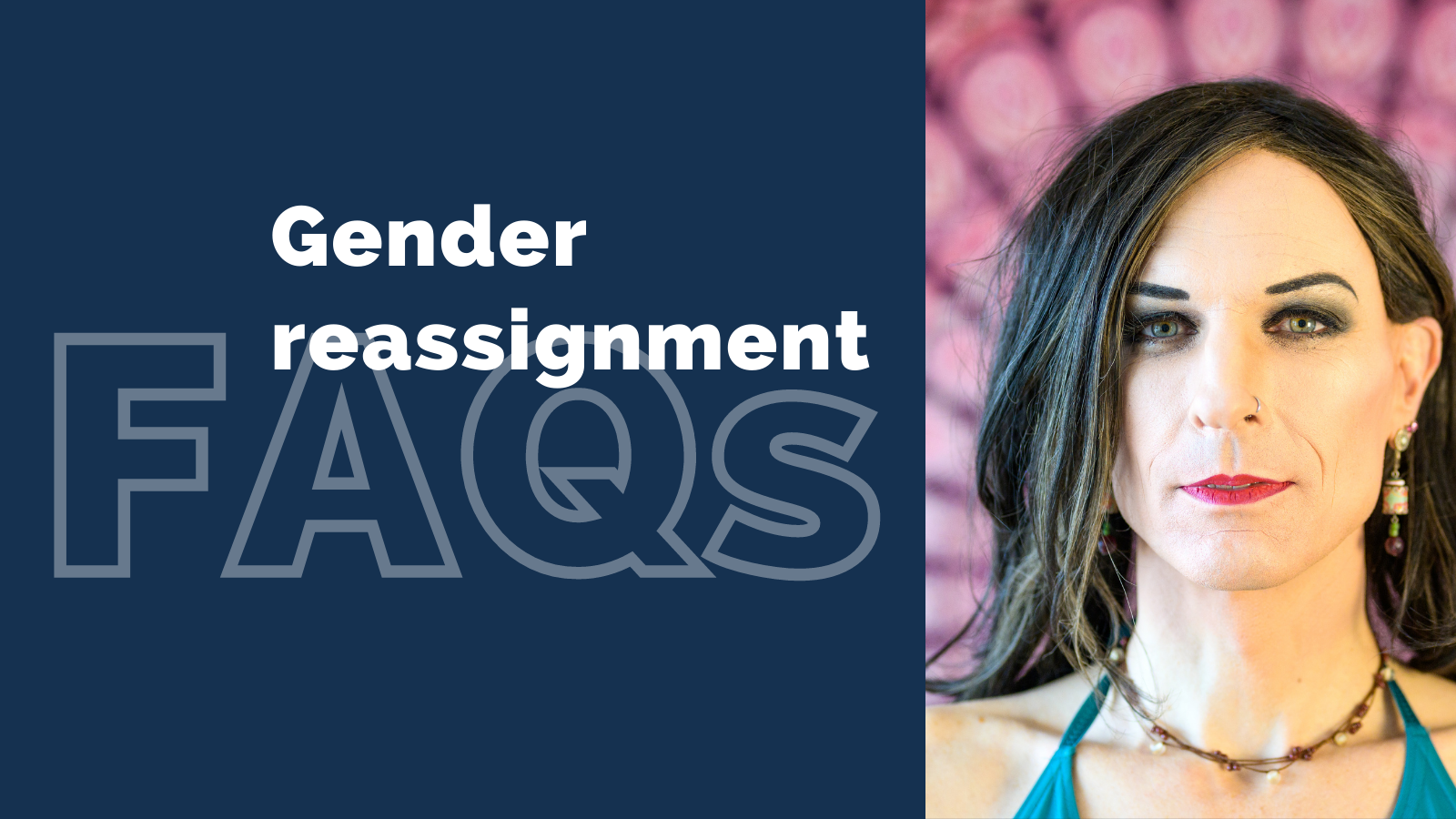
Having the protected characteristic of gender reassignment does not mean that someone’s sex has changed or give them the right to make other people pretend that it has.
These FAQs cover the definition of the characteristic and who it covers – and what this means for employers and service providers.
Download these gender reassignment FAQs as a PDF.
- What is the protected characteristic of “gender reassignment”?
- What does it mean to have this characteristic?
- Who can have this characteristic?
- Does having the protected characteristic of gender reassignment mean that a person must be treated as the opposite sex?
- Does the Equality Act outlaw “misgendering”?
- Is it harassment to “out” a person as transgender?
- Can employers have policies which require people to refer to transgender people in particular situations in a particular way?
- What should employers and service providers do to avoid the risk of harassment claims?
- Should schools have rules about “misgendering”?
What is the protected characteristic of “gender reassignment”?
The Equality Act 2010 at Section 7 defines the protected characteristic of “gender reassignment” as relating to a person who is:
“proposing to undergo, is undergoing or has undergone a process (or part of a process) for the purpose of reassigning the person’s sex by changing physiological or other attributes of sex.”
The law refers to this as being “transsexual”. But the term more commonly used today is “transgender” or “trans”. This broadly relates to anyone at any stage of a personal process. For example:
- A man tells his employer that he is considering “transitioning” and is seeing a therapist with the potential result of being referred for medical treatment.
- A man identifies as a “transwoman” without having any surgery or treatment.
- A woman identified as a “transman” for several years and took testosterone, but has now stopped and “detransitioned”.
What does it mean to have this characteristic?
The Equality Act protects people from direct and indirect discrimination, harassment or victimisation in situations that are covered by the Equality Act, such as in the workplace or when receiving goods or services.
Direct discrimination
Direct discrimination is when you are treated worse than another person or other people because:
- you have a protected characteristic
- someone thinks you have that protected characteristic (known as discrimination by perception)
- you are connected to someone with that protected characteristic (known as discrimination by association).
For example: an employee tells their employer that they intend to transition. Their employer alters their role against their wishes to avoid them having contact with clients.
The comparator is a person who is materially similar in other aspects but does not have the protected characteristic (“is not trans”).
Indirect discrimination
Indirect discrimination happens when a policy applies in the same way for everybody but disadvantages a group of people who share a protected characteristic, and you are disadvantaged as part of this group. This is unlawful unless the person or organisation applying the policy can show that there is a good reason for the policy. This is known as objective justification.
For example: an airport has a general policy of searching passengers according to their sex. Everyone travelling needs to follow the same security procedures and processes, but it makes transgender travellers feel uncomfortable. This could be indirect discrimination, so the airport reviews its policy and changes it so that any passenger may ask to be searched by a staff member of either sex and have a private search, out of view of other passengers.
The comparator is a person who is materially similar in other aspects but does not have the protected characteristic (“is not trans”).
Harassment
Harassment is unwanted behaviour connected with a protected characteristic that has the purpose or effect of violating a person’s dignity or creating a degrading, humiliating, hostile, intimidating or offensive environment.
For example: a transgender person is having a drink in a pub with friends and is referred to by the bar staff as “it” and mocked for their appearance.
Victimisation
Victimisation is when you are treated badly because you have made a complaint of gender-reassignment discrimination under the Equality Act or are supporting someone who has made a complaint of gender-reassignment discrimination. For example:
For example: a person proposing to undergo gender reassignment is being harassed by a colleague at work. He makes a complaint about the way his colleague is treating him and is sacked.
The Equality Act also provides that if a person is absent from work because of gender-reassignment treatment, their employer cannot treat them worse than they would be treated if absent for illness or injury.
Who can have this characteristic?
Does a person have to be under medical supervision?
No. This was explicitly removed from the definition in 2010. Gender reassignment can be a personal process.
Must they have a gender-recognition certificate or be in the process of applying for one?
No. The protected characteristic is defined without reference to the Gender Recognition Act.
Do they have to have made a firm decision to transition?
No. Protection against discrimination and harassment attaches to a person who is proposing to undergo, is undergoing or has undergone a process (or part of a process).
During the passage of the Equality Act, the Solicitor General stated in Parliament:
“Gender reassignment, as defined, is a personal process, so there is no question of having to do something medical, let alone surgical, to fit the definition.
“Someone who was driven by a characteristic would be in the process of gender reassignment, however intermittently it manifested itself.
“At what point [proposing to undergo] amounts to ‘considering undergoing’ a gender reassignment is pretty unclear. However, proposing’ suggests a more definite decision point, at which the person’s protected characteristic would immediately come into being. There are lots of ways in which that can be manifested – for instance, by making their intention known. Even if they do not take a single further step, they will be protected straight away. Alternatively, a person might start to dress, or behave, like someone who is changing their gender or is living in an identity of the opposite sex. That too, would mean they were protected. If an employer is notified of that proposal, they will have a clear obligation not to discriminate against them.”
In the case of Taylor v Jaguar Land Rover, a male employee told his employer that he was “gender fluid” and thought of himself as “part of a spectrum, transitioning from the male to the female gender identity”. He said to his line manager: “I have no plans for surgical transition.” He started wearing women’s clothing to work, asked to be referred to by a woman’s name and raised a question about which toilets he should use. The Employment Tribunal concluded that he was covered by the protected characteristic.
Can children have the protected characteristic?
Yes. In the case of AA, AK & Ors v NHS England, NHS England argued that children who are waiting for assessment by the Tavistock Gender Identity Development Service (GIDS) do not have the protected characteristic as they have not yet reached the stage of proposing to transition. The Court of Appeal rejected this argument. It noted that the definition of “gender reassignment” does not require medical intervention and can include actions such as changing “one’s name and/or how one dresses or does one’s hair”.
The court concluded:
“There is no reason of principle why a child could not satisfy the definition in s.7 provided they have taken a settled decision to adopt some aspect of the identity of the other gender.”
It noted that the decision did not have to be permanent.
Is “Gillick competence” relevant to the protected characteristic?
No. “Gillick competence” refers to the set of criteria that are used for establishing whether a child has the capacity to provide consent for medical treatment, based on whether they have sufficient understanding and intelligence to fully understand it.
Having the protected characteristic of gender reassignment (that is, being able to bring a claim for gender-reassignment discrimination) does not depend on having any diagnosis or medical treatment. Therefore Gillick competence is not relevant to the Equality Act criteria.
Does having the protected characteristic of gender reassignment mean that a person must be treated as the opposite sex?
No. There is nothing in the Equality Act which means that people with the protected characteristic of “gender reassignment” need to be treated in a particular way, or differently from people without the characteristic.
Article 9 and 10 of the European Convention of Human Rights protect the fundamental human rights of freedom of speech and freedom of belief.
In the case of Forstater v CGDE [2021] it was established that the belief that men are male and women are female, and that this cannot change and is important, is protected under Article 9 and in relation to belief discrimination in the Equality Act.
This means that employers and service providers must not harass or discriminate against people because they recognise that “transwomen” are men and “transmen” are women. Employers and service providers cannot require people to believe that someone has changed sex, or impose a blanket constraint on expressing their belief.
Does the Equality Act outlaw “misgendering”?
No. “Misgendering” is not defined or outlawed by the Equality Act.
In general, people who object to “misgendering” mean any reference to a person who identifies as transgender by words that relate to their sex. This can include using the words woman, female, madam, lady, daughter, wife, mother, she, her and so on about someone who identifies as a “transman”, or man, male, sir, gentleman, son, husband, father, he, him and so on about someone who identifies as a “transwoman”.
Any form of words may be harassment, but this depends on the circumstances and the purpose and effect of the behaviour. Harassment is unwanted conduct related to a relevant protected characteristic that has the purpose or effect of violating a person’s dignity, or creating an intimidating, hostile, degrading, humiliating or offensive environment for a person. An employment tribunal would also consider:
- that person’s perception
- the other circumstances of the case
- whether it is reasonable for the conduct to have that effect.
Tribunals have emphasised that when judging harassment context is everything, and warned against a culture of hypersensitivity to the perception of alleged victims.
Employment tribunal judgments
As Lord Justice Nicholas Underhill found in Dhellwal v Richmond Pharmacology [2009], a case decided under the Race Relations Act:
“What the tribunal is required to consider is whether, if the claimant has experienced those feelings or perceptions, it was reasonable for her to do so. Thus if, for example, the tribunal believes that the claimant was unreasonably prone to take offence, then, even if she did genuinely feel her dignity to have been violated, there will have been no harassment within the meaning of the section.”
In the Forstater case, the employment appeal tribunal said that it was not proportionate to “impose a requirement on the Claimant to refer to a trans woman as a woman to avoid harassment”. It said that:
“Whilst the Claimant’s belief, and her expression of them by refusing to refer to a trans person by their preferred pronoun, or by refusing to accept that a person is of the acquired gender stated on a GRC, could amount to unlawful harassment in some circumstances, it would not always have that effect. In our judgment, it is not open to the Tribunal to impose in effect a blanket restriction on a person not to express those views irrespective of those circumstances.”
In the case of de Souza v Primark Stores [2017], a transgender claimant who went by the name of Alexandra, but whose legal name was Alexander, was found to have been harassed by colleagues who made a point of using the male form of name when they knew he did not want them to, but not by being issued with a “new starter” badge that showed his legal name.
In the case of Taylor v Jaguar Land Rover [2020], a male claimant who wore women’s clothing to work was judged to have been exposed to harassment by colleagues saying “What the hell is that?”, “So what’s going on? Are you going to have your bits chopped off?”, “Is this for Halloween?” and referring to the claimant as “it”.
Is it harassment to “out” a person as transgender?
Not necessarily.
A person can be “outed” as transgender in two different ways:
- Their sex is commonly known and recorded, but their transsexualism is not (for example a man who cross-dresses at the weekend and is considering transitioning is “outed” at work by someone who has seen them at a social event).
- They are disappointed in the expectation of being treated as one sex when they are actually the other (for example a person who identifies as a “trans woman” is referred to as male by a woman in a changing room).
Employment tribunal judgments
In Grant v HM Land Registry [2011], which concerned the unwanted disclosure that an employee was gay, Lord Justice Elias found that this did not amount to harassment:
“Furthermore, even if in fact the disclosure was unwanted, and the claimant was upset by it, the effect cannot amount to a violation of dignity, nor can it properly be described as creating an intimidating, hostile, degrading, humiliating or offensive environment. Tribunals must not cheapen the significance of these words. They are an important control to prevent trivial acts causing minor upsets being caught by the concept of harassment.”
The perception (or hope) of transgender people that they “pass” as the opposite sex is often not realistic. Their sex is not in fact hidden, but is politely ignored by some people in some situations. It is not reasonable for them to be offended by other people recognising their sex, particularly if they are seeking access to a single-sex service. Acknowledging someone’s sex, particularly where there is a good reason, is unlikely to be harassment.
In the first-instance case of Chapman v Essex Police, a transgender police officer felt embarrassed and upset when a police control-room operator double-checked his identity over the radio because his male voice did not match the female name that the operator could see. The tribunal did not uphold a complaint of harassment, finding that the claimant was “too sensitive in the circumstances”.
Can employers have policies which require people to refer to transgender people in particular situations in a particular way?
Yes, but those policies must be proportionate. Employers cannot have blanket policies against “misgendering”, but can have specific policies concerning how staff should refer to transgender people in particular situations. Organisations should recognise that these policies constrain the expression of belief, and therefore they should seek to achieve their specific aims in the least intrusive way possible.
When determining whether an objection to a belief being expressed is justified, a court will undertake a balancing exercise. This test is set out in the case of Bank Mellat v HM Treasury:
- Is the objective the organisation seeks to achieve sufficiently important to justify the limitation of the right in question?
- Is the limitation rationally connected to that objective?
- Is a less intrusive limitation possible that does not undermine the achievement of the objective in question?
- Does the importance of the objective outweigh the severity of the limitation on the rights of the person concerned?
For example:
- A company provides a specialist dress service to transsexual and transvestites. The men who use the service expect to be called “she” and “her” and referred to as Madam. It is justified for the employer to train and require staff to use this language when serving customers.
- Staff at a full-service restaurant greet customers as “Sir” and “Madam” as they arrive. The restaurant’s policy is that staff should use the terms which appear most appropriate based on gendered appearance, and to defer to customer preference if one is expressed. This is justified by the aim of creating the service and ambience that the restaurant owners seek to provide.
- A public body assesses claimants for medical benefits, including individuals with mental-health conditions. It directs its staff to refer to claimants using the terms which the claimants prefer, including using opposite-sex pronouns when requested, in order to make them feel comfortable. However, it recognises that in recording medical information, assessors must be able to be accurate about claimants’ sex. This is justified by the aim of providing a service that is accessible and effective for vulnerable clients.
The case of David Mackereth v AMP and DWP concerned a doctor who lost his job undertaking claimant health assessments for the Department for Work and Pensions because he refused to comply with its policy on using claimants’ preferred pronouns. The employer’s policy was found not to have amounted to unlawful harassment or discrimination against Dr Mackereth, in the particular circumstances of his job. However, the Employment Appeal Tribunal stated that “misgendering” would not necessarily be harassment:
“Such behaviour may well provide grounds for a complaint of discrimination or harassment but, as the EAT in Forstater made clear, that will be a fact-specific question to be determined in light of all the circumstances of the particular case.”
Relevant considerations
In Higgs v Farmor’s School [2023] Mrs Justice Eady sets out the considerations that are likely to be relevant considering whether constraining the expression of a belief (“manifestation”) in order to avoid harassment or discrimination is justified in the context of employment. These include:
- the content of the manifestation
- the tone used
- the extent of the manifestation
- the worker’s understanding of the likely audience
- the extent and nature of the intrusion on the rights of others, and any consequential impact on the employer’s ability to run its business
- whether the worker has made clear that the views expressed are personal, or whether they might be seen as representing the views of the employer, and whether that might present a reputational risk
- whether there is a potential power imbalance given the nature of the worker’s position or role and that of those whose rights are intruded upon;
- the nature of the employer’s business, in particular where there is a potential impact on vulnerable service users or clients
- whether the limitation imposed is the least intrusive measure open to the employer.
What should employers and service providers do to avoid the risk of harassment claims?
Employers cannot force employees to believe that people can change sex, or prevent them expressing that lack of belief except in limited circumstances. So what should employers do to protect transgender people from harassment, and themselves from liability?
They should have ordinary policies against bullying and harassment, including jokes, name-calling, humiliation, exclusion and singling people out for different treatment.
They should seek to avoid putting people in situations they will reasonably experience as hostile or humiliating.
Ambiguous rules put people in situations where it is reasonable to feel offended. For example, an employer provides “female” toilets, showers and changing rooms, but allows some male staff in because they identify as transgender. This creates a hostile environment:
- female staff are surprised, shocked, humiliated and upset to find themselves sharing with a colleague of the opposite sex
- male staff members who want people to treat them as women may be challenged or face comments that are intended to intimidate, humiliate or degrade them.
This was the situation faced by the Sheffield Hospital Trust, which had a policy that transgender staff could use opposite-sex facilities. It had to deal with the fall-out when women complained about seeing a half-naked male in their changing room and the male staff member sued for harassment after being questioned about this.
Rather than putting these two groups of people together in a environment where both will reasonably feel harassed, employers should have clear rules about facilities that are single-sex, and also, where possible, provide a unisex alternative for anyone who needs it, including people who feel that they have “transitioned away from their sex” and therefore do not wish to use single-sex facilities shared with members of their own sex. The EHRC last year provided guidance on single-sex services which encouraged clear rules and policies.
It should be made clear to people who have the protected characteristic of “gender reassignment” that having this characteristic does not mean it is reasonable for them to expect others to believe or pretend to believe they have changed sex, or for them to be allowed to break (or expect to be an exception to) rules that aim to protect the dignity and privacy of others.
If a person breaks a clear rule against entering a space provided for the opposite sex, it is not reasonable for them to feel offended when this is pointed out.
Should schools have rules about “misgendering”?
No. It would not be lawful for schools to have a policy that forbids, punishes or denigrates pupils who use clear words about the sex of other people (such as pronouns, but also boy/girl, male/female and so on), nor to require pupils to refer to some classmates as if they were the opposite sex.
- To do so constrains the freedom of speech of pupils in a way that is unjustified and discriminates against them on the basis of belief.
- It is inconsistent with schools’ safeguarding duty of care, and with their record-keeping responsibilities, for staff to misrepresent the sex of pupils in their records or in introducing them to their peers.
- In order to explain and enforce sex-based rules designed to keep children safe (such as who is allowed in which showers, toilets, dormitories or sports teams), schools must be able to use clear and unequivocal language.
- It is not reasonable to expect that a child at school, or transferring between schools, can avoid being “outed” as the sex that they are.
We do not think that any policy which tells teachers or pupils to lie about the sex of pupils, constrains them from using clear sex-based language or treats them detrimentally if they do would pass the proportionality test. It is an unreasonable constraint on speech that is neither required nor justified in order to avoid discrimination on the basis of gender reassignment.
Schools form part of a system that is regulated at a national level. In England that system is the responsibility of the Secretary of State for Education. It is the responsibility of the Secretary of State to make this legal situation clear across the English school system by issuing the long-awaited DfE guidance.