
The words mum, dad, boy, girl, he, she, man and woman are among the first we learn.
There are many everyday reasons why people might want to refer to someone’s sex or previous name, or to talk about the material reality of the two sexes. People should be able to speak about sex and use sexed language in debates on sex and gender identity, without fear of losing their job or being investigated by the police.
We need to be able to talk about issues such as how crimes should be recorded, how prisons and other single-sex services should accommodate transgender people, how the census should record sex, and rules for women’s sports – and this cannot be done by talking in generalities. It will necessitate discussion of individual cases and illustrations, and the sex of the people involved.
People asserting their rights to single-sex services should be able to do so in plain English and without the barrier of having to perform the mental gymnastics required to avoid “misgendering” or “deadnaming”.
What’s the problem?
In recent years people have been called “hateful” simply for making ordinary, everyday statements about what it means to be male or female.
Public bodies and private entities are silencing and punishing lawful speech about sex and gender as “transphobic”: people have been removed from social media platforms, had websites and social media forums shut down, been bullied and harassed at work, lost jobs, and been arrested, questioned and prosecuted for communications offences.
Many organisations have adopted policies and guidance which prevent people using ordinary language about the sexes. There have been proposals for new laws on hate crimes that would criminalise ordinary talk about the sexes.
Updates
-

Fighting bigotry in service provision
Most of the high-profile gender-critical belief-discrimination cases to date have related to workplaces. But gender-critical belief discrimination is unlawful...
29th May 2026
-

When will the BBC face up to the truth?
Last week a leaked dossier revealed the BBC’s biased reporting on the topic of sex and gender alongside concerns...
11th November 2025
-

Kristie Higgs wins belief-discrimination case
Court of Appeal warns against discrimination based on unreasonable objections to social-media posts
12th February 2025
-

Meta pledges to stop censoring gender-critical speech
Mark Zuckerberg has announced that Meta, the company that owns Facebook and Instagram, is taking steps to protect free...
8th January 2025
-
Answering questions about data protection
As part of our ongoing work on defending the female category in sport, we recently asked people to get...
4th November 2024
-
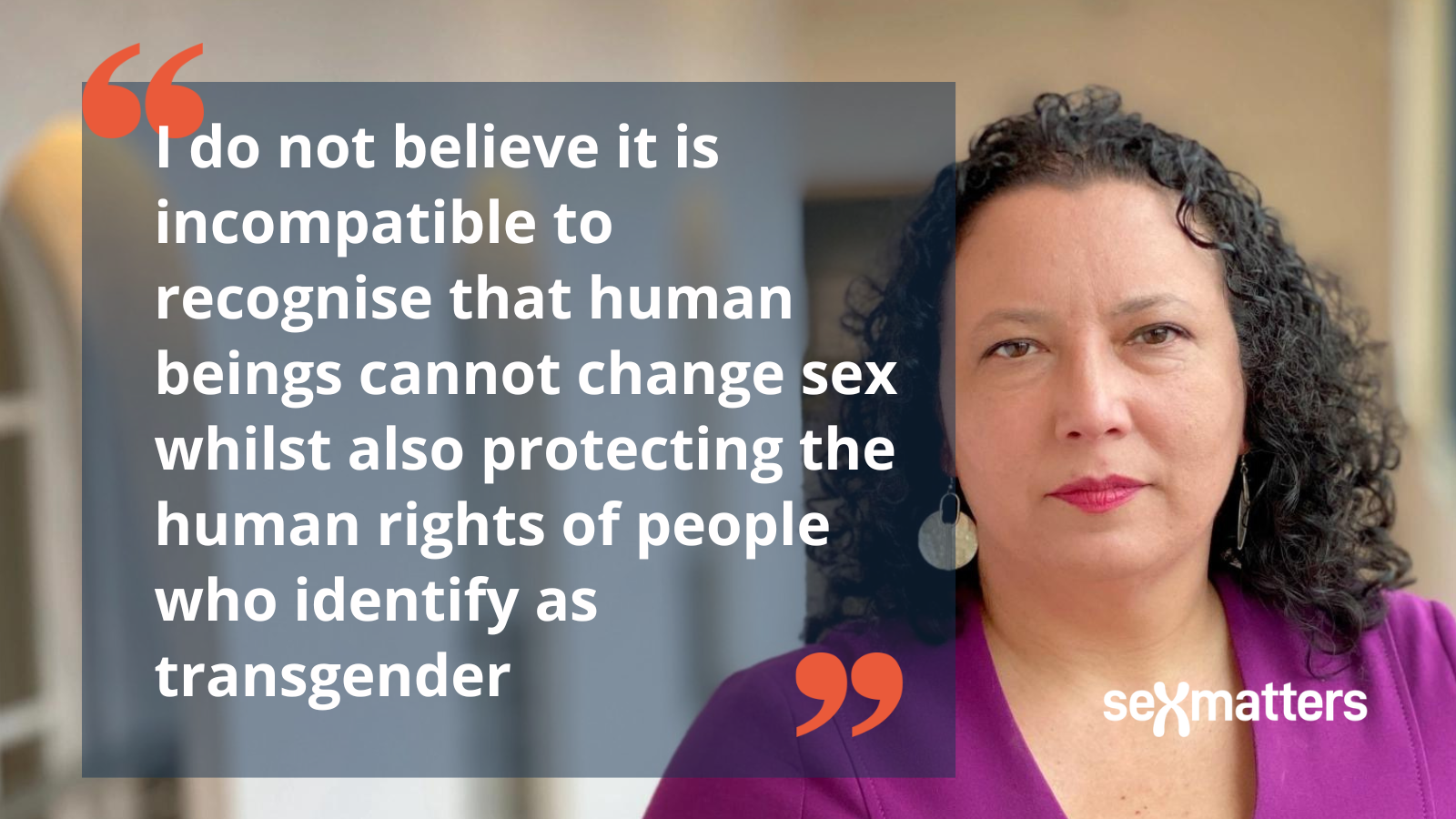
Being clear about our beliefs
Sex Matters was founded as an organisation based on human rights. We believe that the rule of law, and...
29th May 2024
-
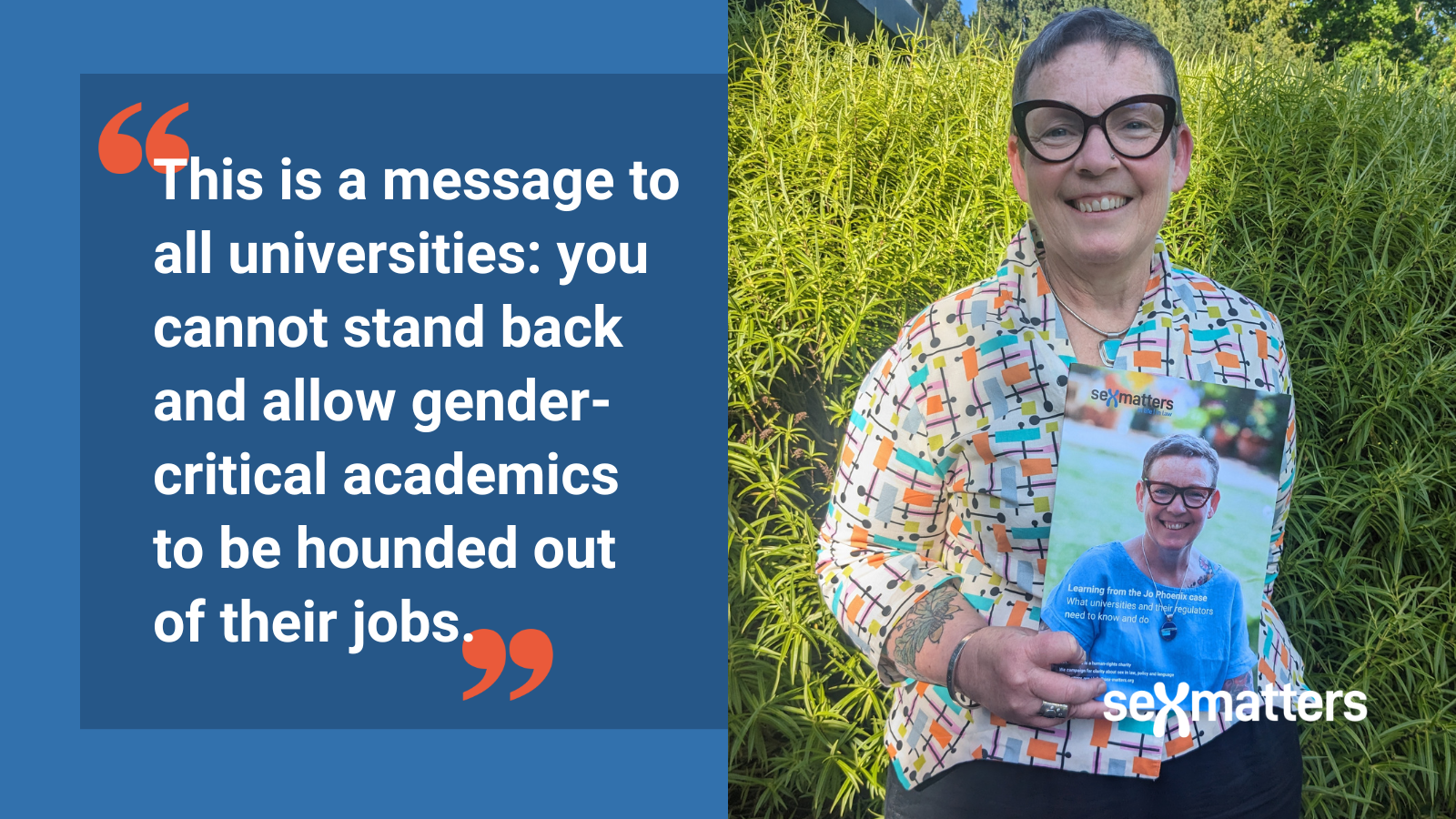
The Jo Phoenix case should be a wake-up call for universities
In 2019 Professor Jo Phoenix became the target of a campaign of harassment from her colleagues at the Open...
16th May 2024
Other resources
-

Flying Flags and Ticking Boxes – what went wrong with EDI and how leaders can fix it
By Simon Fanshawe OBE and Matilda Gosling,

A Woman’s Guide to the Hate Crime and Public Order (Scotland) Act 2021
A brief guide to what the Act says, and other relevant legal references, explaining when you are entitled to free legal advice, and ways to find it.

Inclusion at Work Panel: report on improving workplace diversity and inclusion
A report from the independent Inclusion at Work Panel setting out how organisations can improve diversity and inclusion practices through evidence.
Employee holding gender critical beliefs suffered harassment and employer failed to take reasonable steps to prevent it
An analysis of Fahmy v Arts Council England by BDBF Solicitors – an employment law firm in the City of London specialising in high stakes and high value cases.
Reality vs. Trans Ideology | Helen Joyce & Peter Boghossian
Peter and Helen discuss the definition of sex, why trans men should be allowed in women’s spaces, the tragedy of the commons, fa’afafine, evolution, the “thought-terminating cliché,” the tribal fear of rejection, the cultivation of mental illness, why institutions are losing their North Stars, and much more.
1:10:31 on...
“Vague complaints about transphobia when they won’t tell you what that is.”
Richard Tice interviews Maya Forstater for Talk TV
A woman who lost her job for saying biological sex cannot be changed has been awarded £106,000 after an employment tribunal found she experienced discrimination and victimisation at work.
9:53 on YouTube
Maya Forstater: gender-critical campaigner wins £100,000
James Beal, Social Affairs Editor for The Times
The gender-critical campaigner Maya Forstater has said that her £100,000 compensation award is a warning to organisations about their attitude to sex-based rights.Publications
-
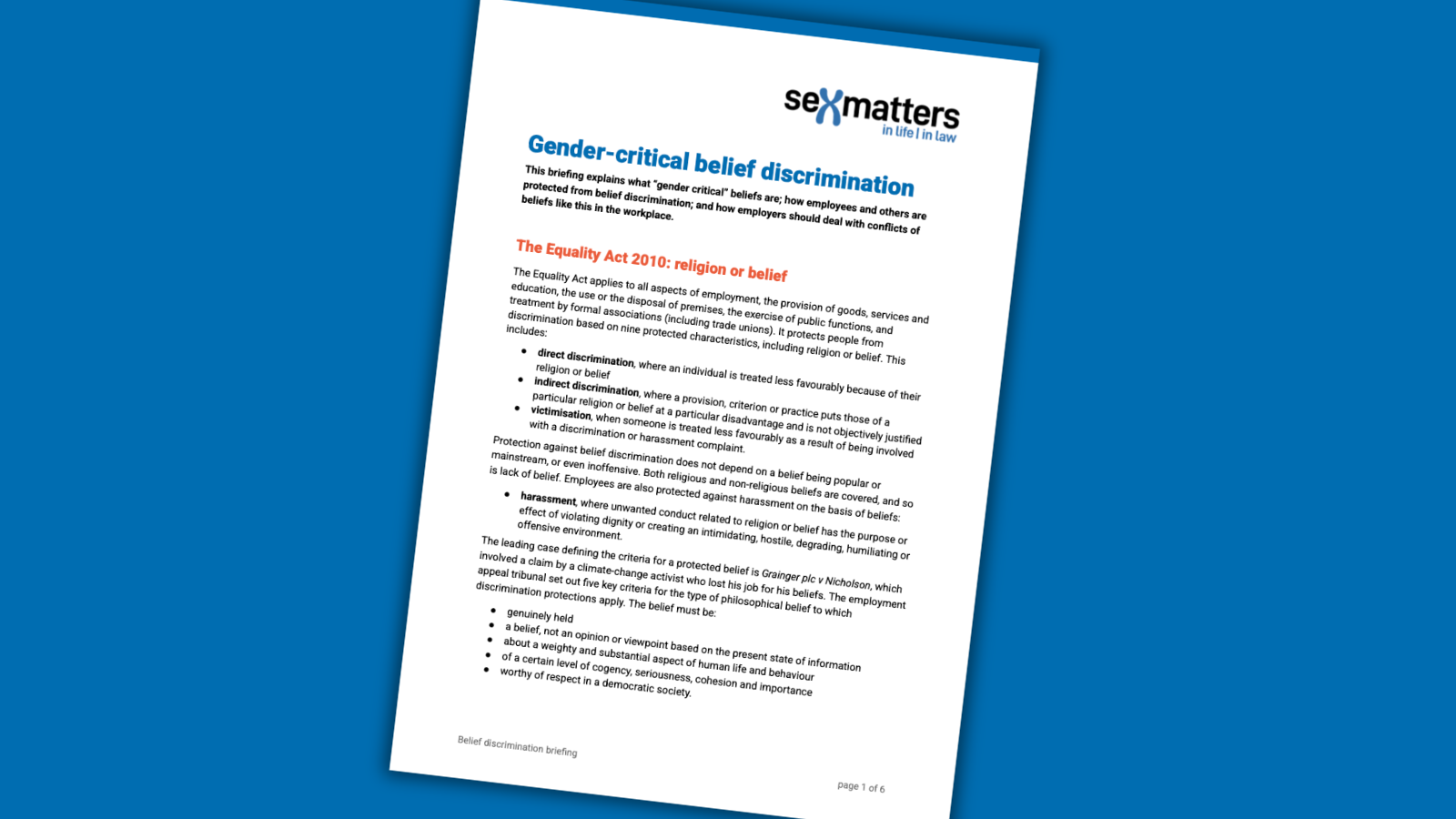
Gender-critical belief discrimination – briefing
What “gender critical” beliefs are; how employees and others are protected from belief discrimination; and how employers should deal with conflicts of beliefs like this in the workplace.
10th October 2025
-

What happened at Sussex University?
What led the University of Sussex to adopt an unlawful policy that led the Office for Students to fine them more than half a million pounds?
1st April 2025
-
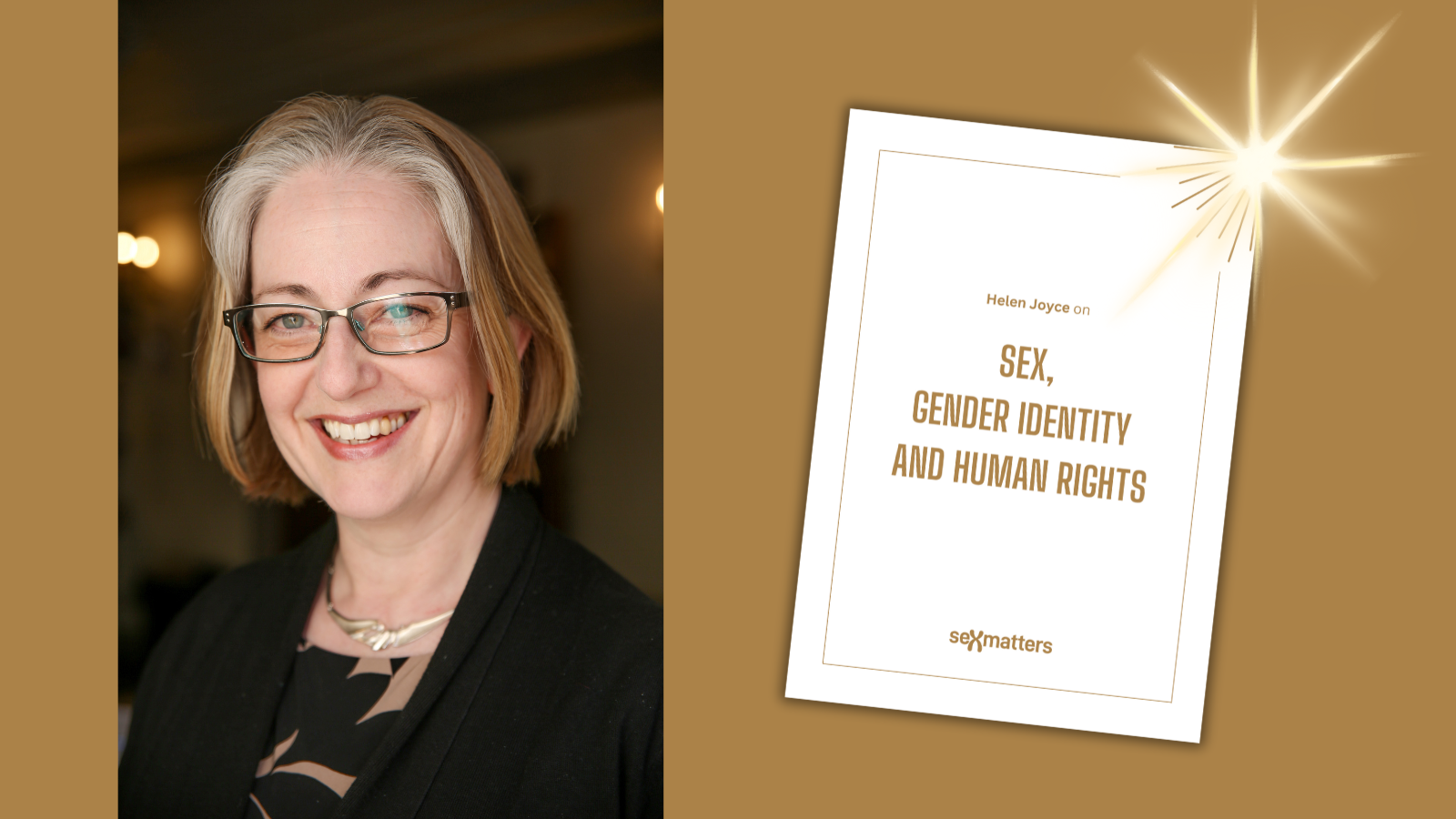
Helen Joyce on sex, gender identity and human rights
Helen Joyce is Director of Advocacy at Sex Matters.
These are edited versions of Helen’s talks at the conferences held in 2023 in Killarney and 2024 in Lisbon by Genspect, an international organisation advocating for non-medical approaches to gender distress.20th December 2024
-

Submission to the Meta Oversight Board
Sex Matters responded to the Meta Oversight Board's call for public comments on how the company handles complaints about "hate speech" on Facebook and Instagram in relation to "misgendering" and saying a trans-identifying man should not use the women’s bathroom.
12th September 2024
-
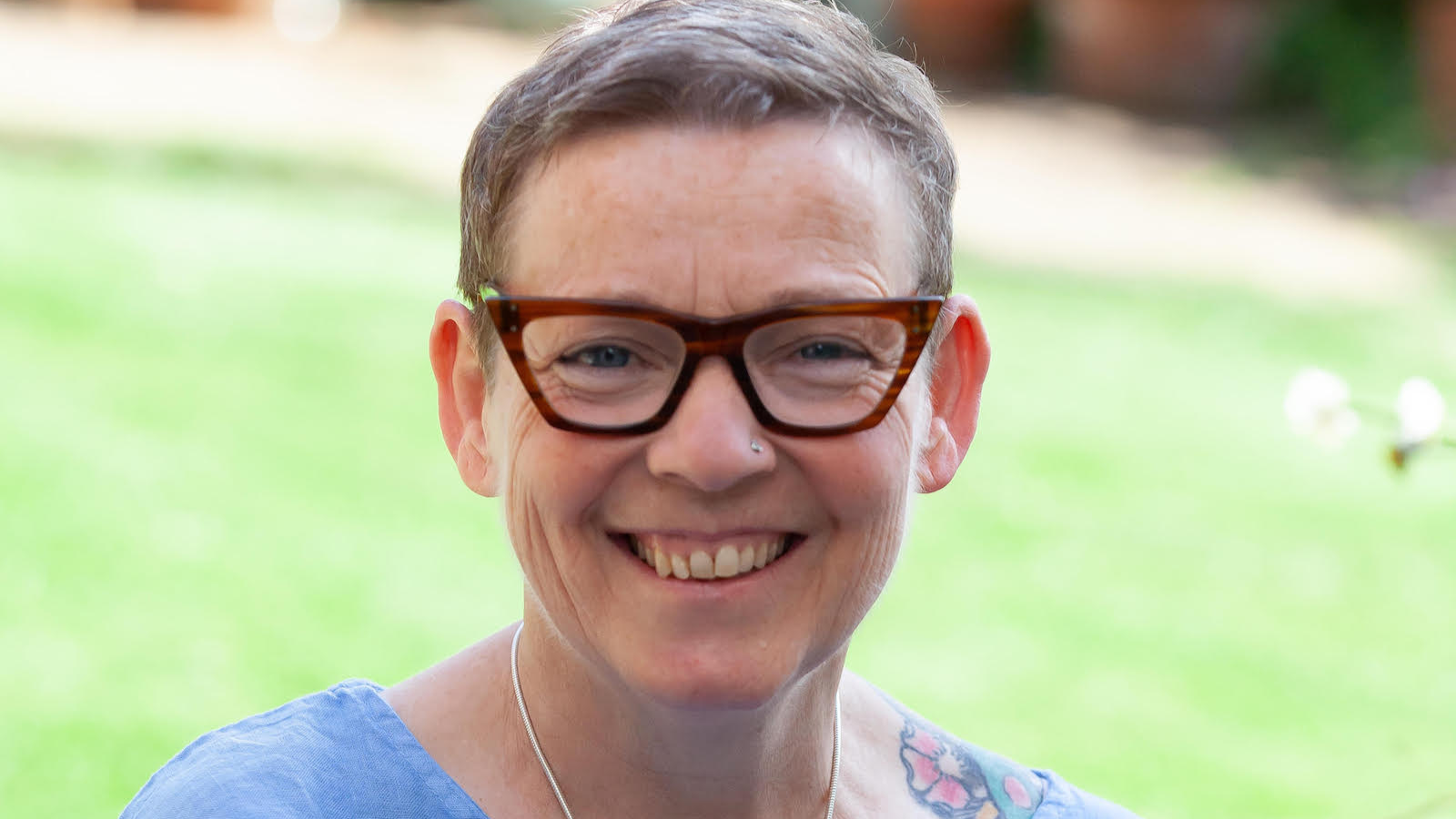
Learning from the Jo Phoenix case
What happened at the Open University was not an isolated problem, and it was not just about Phoenix. This briefing tells the story of the case based on the findings of the employment tribunal, and sets out lessons for the university sector and for its regulators.
16th May 2024
-
Academic mobbing – what university management needs to know
Ian Pace, Professor of Music, Culture and Society at City, University of London, writes for Sex Matters on the phenomenon of workplace mobbing, drawing on studies of dissent under totalitarian regimes and the phenomenon of groupthink. He explores why mobbing seems to be on the rise in universities, with...
15th May 2024
-
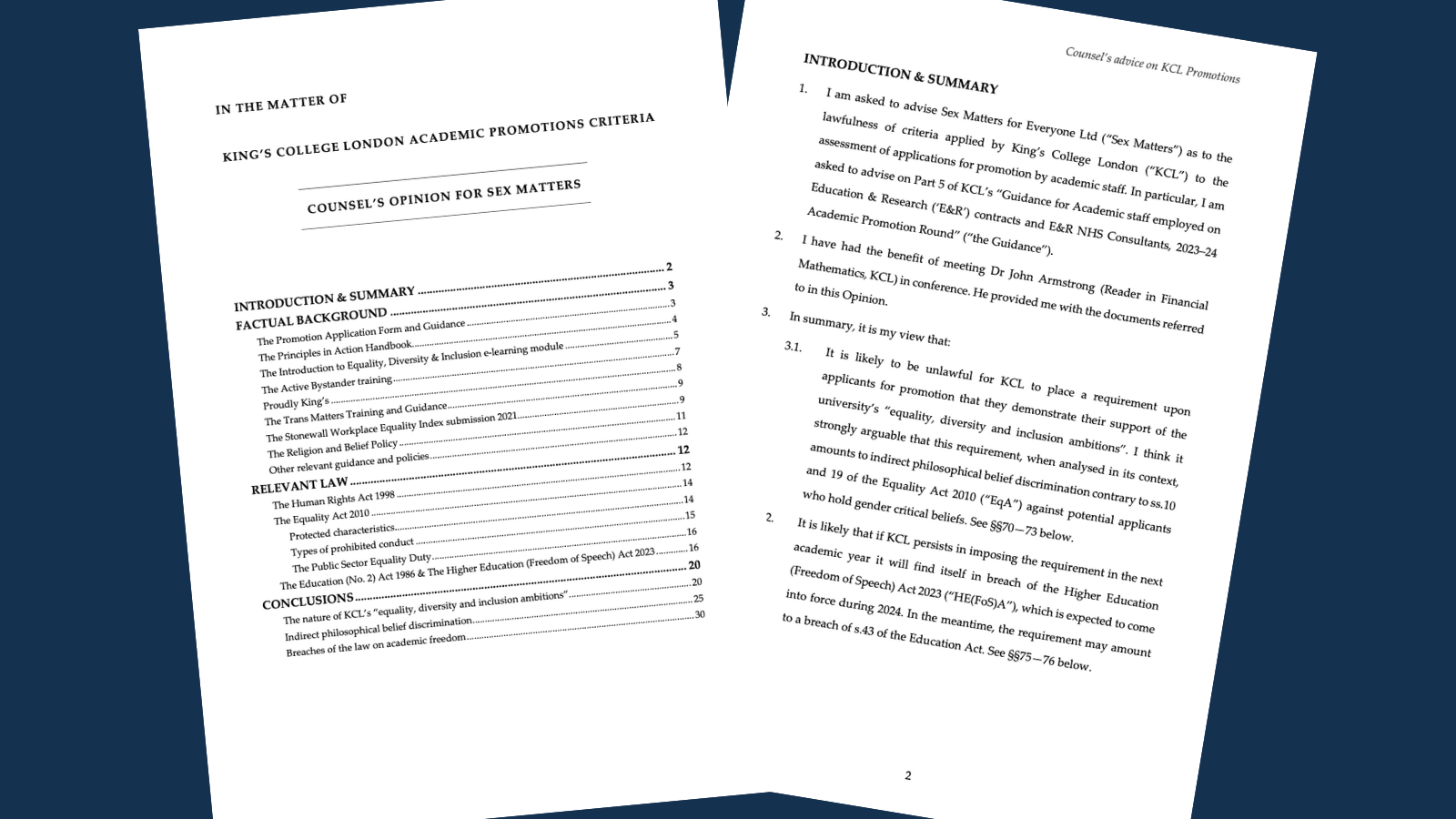
Counsel’s opinion in the matter of King’s College London academic promotions criteria
KCL’s promotion policy discriminates on the basis of gender-critical beliefs, and will also be likely to contravene the new law on academic freedom due to come into force in August 2024.
20th April 2024
Stay informed. Stay involved.
Sign up for timely updates on issues affecting everyday sex-based rights, our campaigns and events, as well as ways to get involved.