
Where sex matters | Healthcare
Healthcare
Confusing sex and gender identity creates risks in the healthcare system.

To treat people safely and effectively, doctors, pharmacists and other clinicians need to be able to access accurate information about a person’s sex.
More than ten years ago the NHS recognised the need for clear systems for recording biological sex and social gender. It carefully set up a system of data and definitions which could deal with both. The official data standard written in 2009 explained:
“The term ‘Gender’ is now considered too ambiguous to be desirable or safe… “
Sex and Current Gender Input and Display User Interface Design Guidance
The data standard set out definitions for patient “sex” and “current gender” and warned:
“Users may confuse the terms current gender and sex, or assume that they are synonymous. Therefore, it is essential that all NHS applications display and explain current gender and sex terminology and values in a clear and consistent manner.”
Sex and Current Gender Input and Display User Interface Design Guidance
The NHS recognised that sex also matters in relation to interactions with healthcare professionals. For example, patients can request to be seen by a GP of a particular sex, or to have a chaperone for any procedure. For overnight stays in hospital, since 2010 there has been a policy of “single-sex wards” recognising that sex matters in interactions with other patients.
As Andrew Lansley, the then Health Secretary, said:
“Patients should not suffer the indignity of being cared for in mixed-sex accommodation. I am determined to put an end to this practice, where it is not clinically justified.”
Lansley promised that patients would be in single-sex accommodation, such as a bay which only consists of people of the same sex, and they should be able to access washing and toilet facilities without having to pass through a part of the ward or another ward where there might be people of the opposite sex. He called this “the kind of privacy and dignity people have a right to expect”.
What is the problem?
In practice the NHS has adopted gender self-identification, completely undermining these policies.
After carefully setting up a system to record both sex and social gender, the NHS does not use it. People requesting their medical records commonly find that the sex field is left blank and their sex is recorded as their gender. This can then be changed at a patient’s request – but it means that nobody’s sex is reliably recorded.
This means that patients’ health can be put in danger if their sex is not communicated to healthcare staff.
Across the healthcare service doctors, managers and inspectors are being told to mentally replace sex with “gender identity” at all times. This creates a loophole in their ability to identify inappropriate behaviour and abuse of power which relate to sex.
These policies are embedded across institutions, covering both patients and healthcare professionals:
- Patient records – The GMC tells doctors to change a patient’s sex as recorded on medical records on request. This does not require any medical diagnosis, anatomical changes or a gender-recognition certificate. Doctors and other healthcare professionals are warned not to “disclose a patient’s gender history” (i.e. sex) “unless it is directly relevant to the condition or its likely treatment”.
- GP surgeries – Public Health England tells GP surgeries to change a patient’s recorded sex on their medical record at any time, without requiring diagnosis or any form of gender-reassignment treatment. They are given a new NHS number and previous medical information must be transferred into a newly created medical record. They will be sent screening appointments (for example, for cervical smear tests or prostate cancer screen) according to their new gender – that is, invitations to attend the wrong screenings.
- “Pride in Practice” is a “quality assurance” scheme run by the LGBT Foundation. It works with GP practices, dental surgeries, pharmacies and optometrists. Its philosophy is that it is important to encourage healthcare professionals to record a person’s trans status and sexual orientation, but not to record their sex. It advises that on transferring medical records “any information relating to the patient’s previous gender identity should not be included in the new record” if it reveals their sex.
- Doctors – The General Medical Council register lists all doctors practising in the United Kingdom, showing their registration status, training and “gender” (male or female, so actually sex). Doctors are allowed to self-identify their gender. If they change change their name and ask for their “gender marker” to be changed, a new GMC number is issued – so that there is no accurate public record of the person’s career as a doctor.
- Hospital staff – NHS hospital trusts (such as West Suffolk, Cambridgeshire and Peterborough, Brighton and Sussex) practise self-identity for all staff. The gender identity of staff is allowed to replace their sex on records and in policies, and there is no consideration of how this impacts on the rights of patients who may want to see a healthcare professional or a chaperone of a particular sex.
Patients who request to see a female doctor may find themselves being examined by a doctor who is male, without their consent. Without clear policies for obtaining consent and addressing the difference between sex and gender, professionals may find themselves put into positions which patients experience as assault.
And “single sex” hospital wards in practice are mixed sex according to NHS policy which states that:
“Trans people should be accommodated according to their presentation: the way they dress, and the name and pronouns they currently use. This may not always accord with the physical sex appearance of the chest or genitalia… Non-binary individuals, who do not identify as being male or female, should be allocated to the male or female ward according to their choice.”
This approach undermines the privacy, dignity and wellbeing of other patients, for example:
“A Lancaster mum whose bi-polar disorder left her believing men were conspiring to kill her said she was left terrified when she was locked on a women’s psychiatric ward with an ‘extremely male-bodied’ transgender patient. When she raised her concerns with hospital staff, however, she said she was not taken seriously and her medical notes implied that she was a ‘transphobic bigot’.”
The Care Quality Commission inspects healthcares services to check if they are safe, effective, caring, responsive to people’s needs, and well led, including whether it has systems to identify the possibility of abuse and prevent abuse from happening. If you can’t envisage the possibility of a risk (or you can, but are prevented from speaking about it) then you cannot begin to consider what reasonable steps could be taken to protect the needs of everybody.
The CQC’s equality statement tellingly omits the Equality Act’s protected characteristic of sex (and mistakenly replaces “gender reassignment” with “gender reassignment/identity/expression”). Like so many public bodies, the CQC is a member of the Stonewall Champions scheme. Its management at the highest level has set an objective to gain a higher placement on the Stonewall Index. The equality strategy mentions Stonewall three times. The words female and sex do not appear once.
Updates
-

MPs debate the puberty-blocker trial
More than 146,000 people signed a parliamentary petition set up by James Esses calling on the government to cancel...
26th March 2026
-
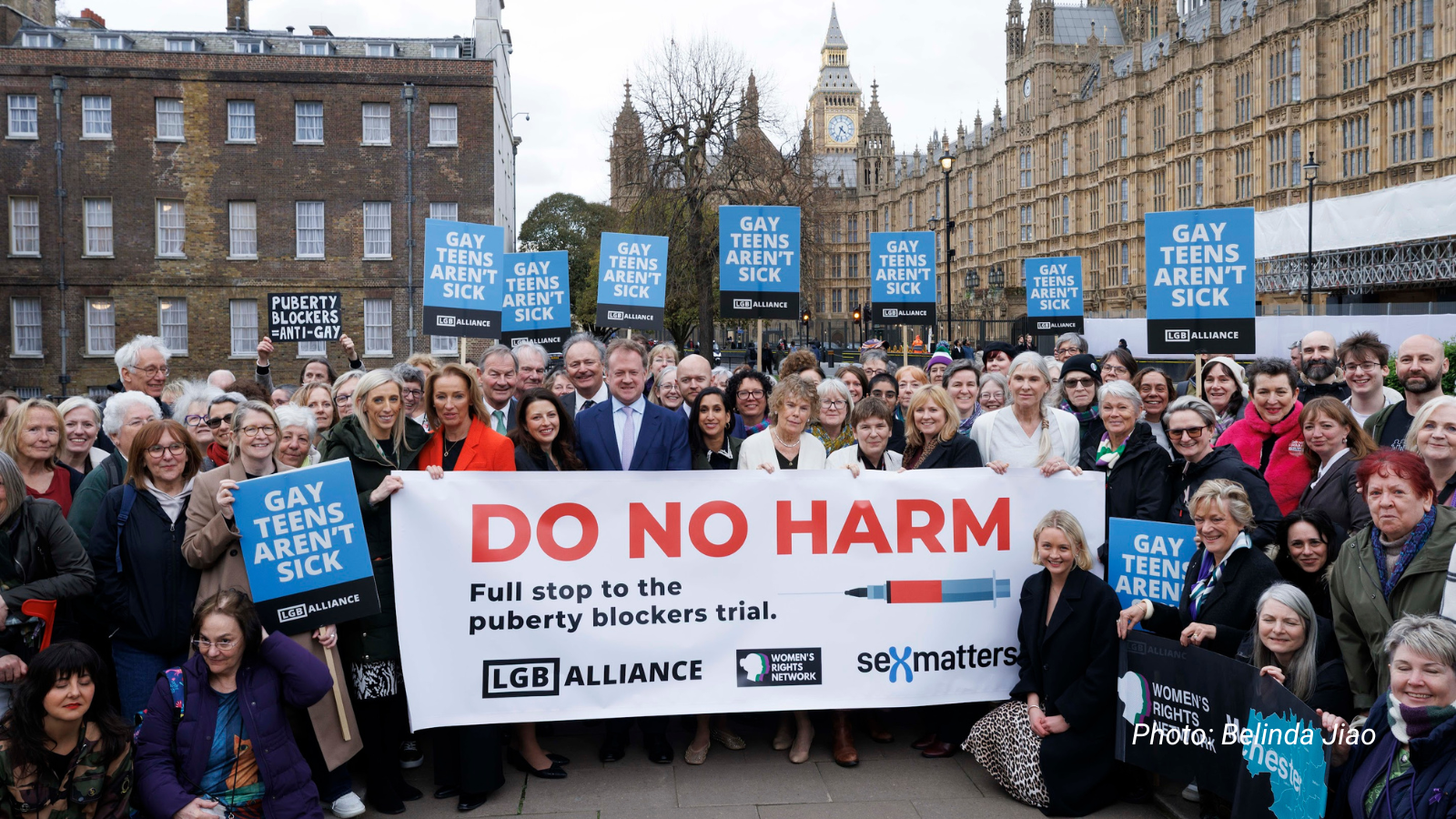
Blocking puberty is a human-rights abuse – call off this drug trial now
Since the surprise announcement last November that a trial of puberty blockers had been approved by regulators, there has...
12th March 2026
-

The puberty-blocker trial: paused but not yet stopped
The King’s College London “Pathways” clinical trial of puberty blockers has been paused because of safety and ethical concerns...
26th February 2026
-
Send the puberty-blocker trial back to the research ethics committee, Wes!
Last year, together with other groups, Sex Matters wrote to the secretary of state for health urging him to...
19th February 2026
-

Guidance released on “gender-questioning” children
The government has published an updated draft version of Keeping children safe in education (KCSIE). This is a regular...
12th February 2026



Other resources
-
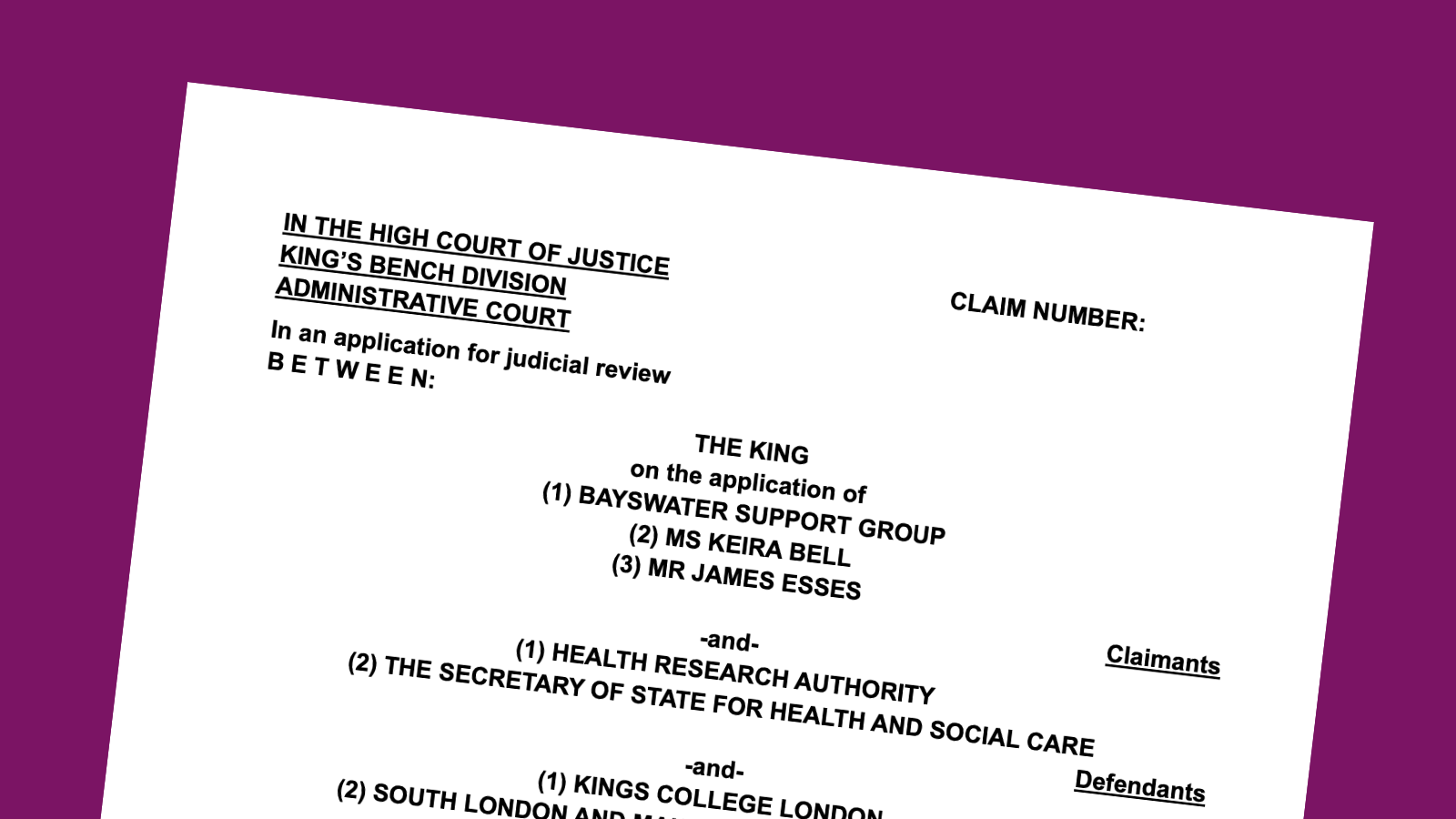
Claimant’s statement of facts and grounds in R (Bayswater Support Group and others) v HRA and Secretary of State for Health and Social Care
Statement of facts and grounds by Bayswater Support Group, Keira Bell and James Esses in their application for judicial review of the decision by the Health Research Authority and the Secretary of State for Health and Social Care to approve the "Pathways" puberty-blockers trial.
-
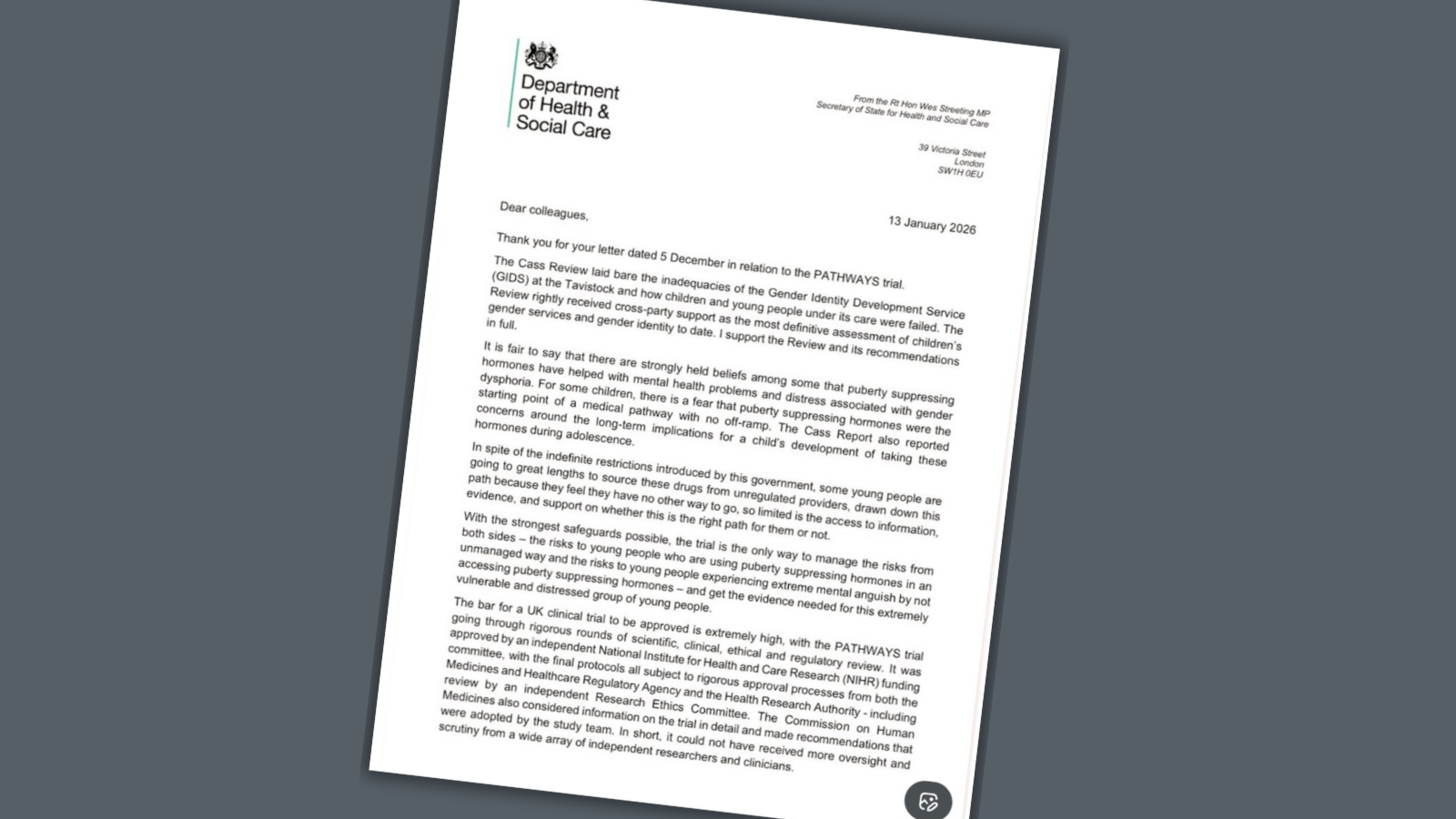
Reply from Secretary of State for Health on the puberty-blockers trial
Led by Rosie Duffield MP, a group of Parliamentarians wrote urgently to Wes Streeting MP on 15th December 2025 urging him to stop the “Pathways” puberty-blockers trial. This is his reply.
-
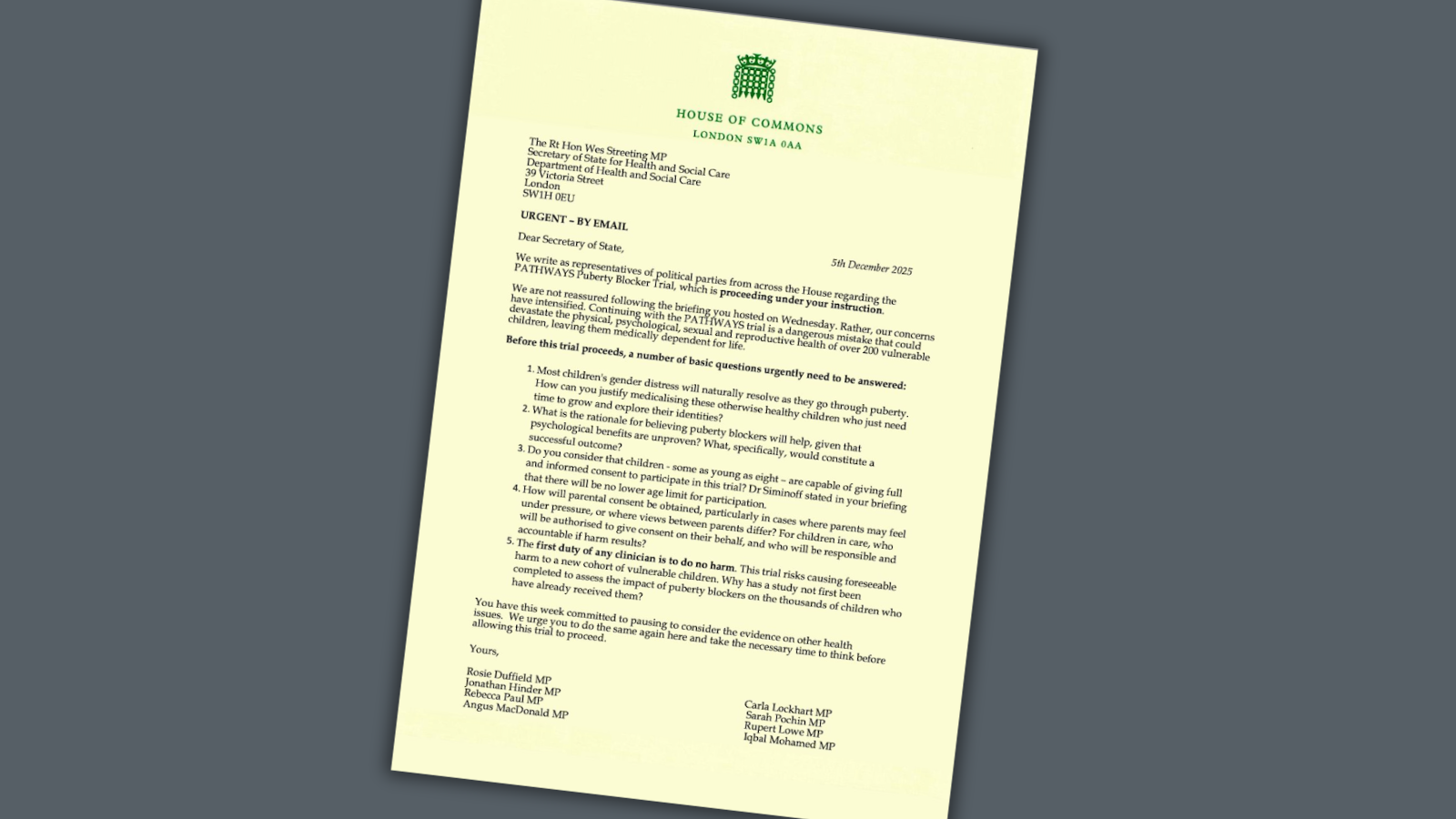
Letter to Secretary of State for Health on puberty-blockers trial from cross-party MPs
Led by Rosie Duffield MP, a group of Parliamentarians wrote urgently to Wes Streeting MP urging him to stop the “Pathways” puberty-blockers trial.
-

Treatment for Pediatric Gender Dysphoria: Review of Evidence and Best Practices
A report by the US Department of Health and Human Services. Links to: Foreword & Executive Summary; Full Report; Appendix; Errata and peer reviews and responses.
-

Public data should not conflate sex and gender, review says
Aoife Walsh and Euan O'Byrne Mulligan for BBC News report on the Sullivan Review and how it found that cancer screenings have been missed and criminal convictions overlooked because of how data is collected about people's biological sex and gender identity.
-

How safe are our Scottish hospitals? The concerning extent of sexual assaults and rapes in Scottish hospitals 2019–2024
Carolyn Brown and Mary Howden’s report for the Women’s Rights Network highlights that NHS boards and private hospitals are failing to safeguard women and girls.
-

Another myth of persistence?
A letter from Alex Byrne to the journal Archives of Sexual Behavior argues that although many experts claim that childhood-onset gender dysphoria that persists into early puberty will persist into adolescence and adulthood if untreated, the published evidence does not bear this out.
-

The Cass review of gender identity services marks a return to reason and evidence – it must be defended
Its author has had to fend off criticism and misinformation, but the report offers hope for a realistic conversation, writes David Bell for
.
Publications
-
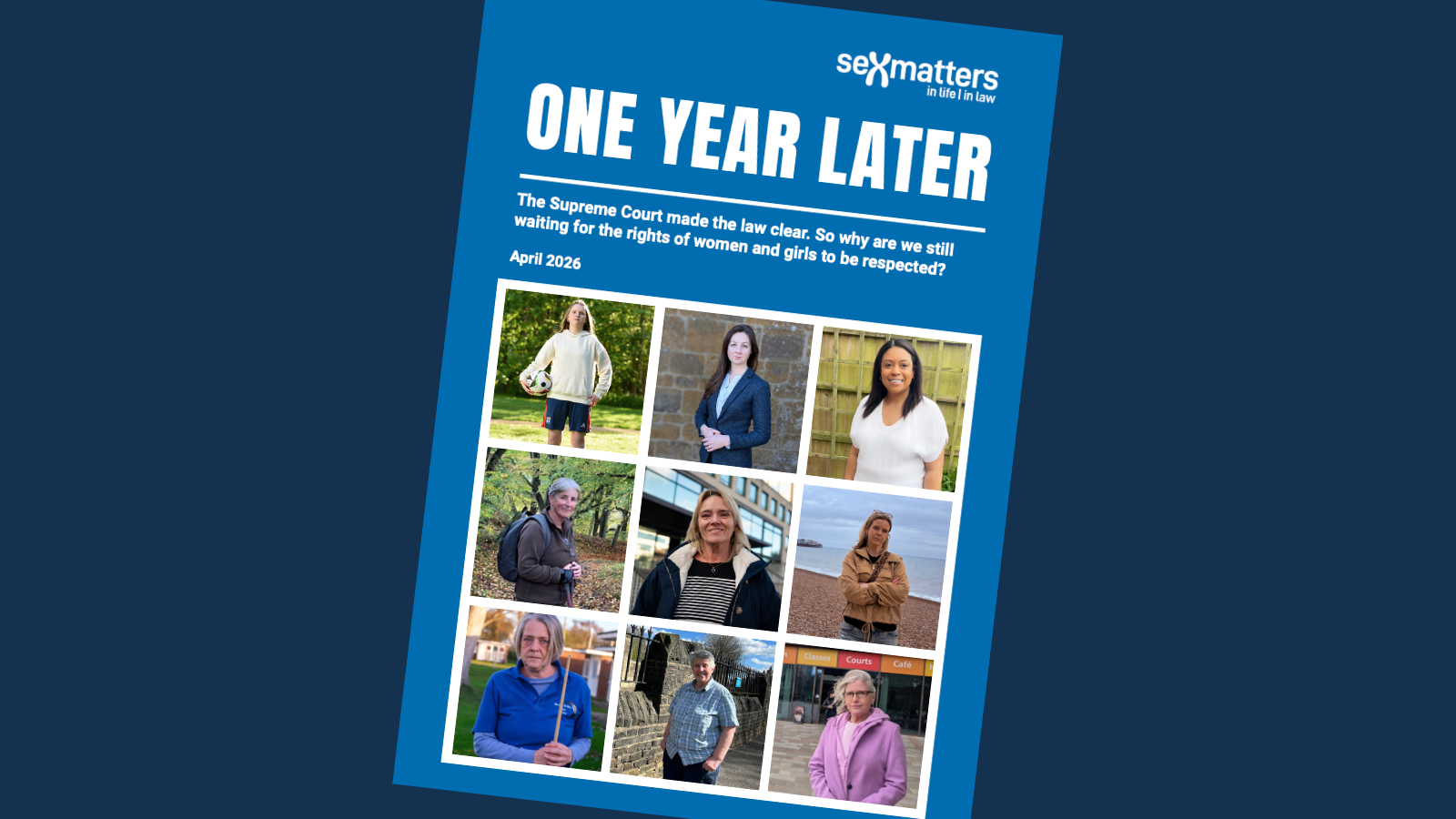
One year later
The Supreme Court made the law clear. So why are we still waiting for the rights of women and girls to be respected?
9th April 2026
-
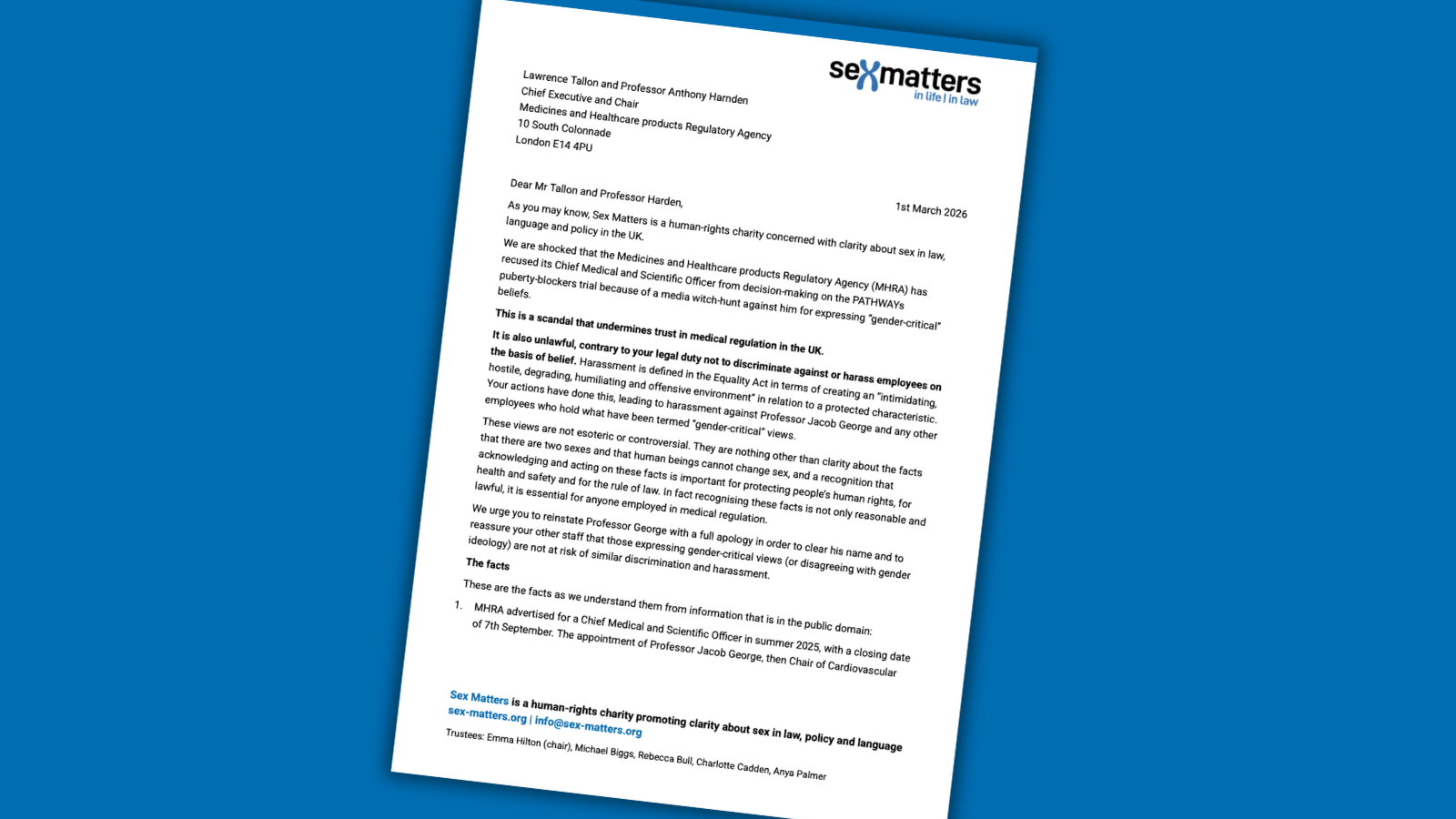
Letter to the Medicines and Healthcare products Regulatory Agency about Professor George
Sex Matters wrote to Lawrence Tallon, chief executive, and Professor Anthony Harnden, chair, of the MHRA, to urge them to reinstate Professor Jacob George as a decision-maker on the PATHWAYs puberty-blockers trial.
12th March 2026
-
Claimant’s statement of facts and grounds in R (Bayswater Support Group and others) v HRA and Secretary of State for Health and Social Care
Statement of facts and grounds by Bayswater Support Group, Keira Bell and James Esses in their application for judicial review of the decision by the Health Research Authority and the Secretary of State for Health and Social Care to approve the "Pathways" puberty-blockers trial.
26th February 2026
-

Why gender medicine isn’t medicine
In October and November 2025 Helen Joyce toured Australia and New Zealand with the Coalition Advancing Scientific Care, Women's Rights Party NZ and Free Speech Union NZ. This is an edited version of the speeches she gave.
22nd December 2025
-

Letter to the Secretary of State for Health and Social Care
Sex Matters wrote to the Rt Hon Wes Streeting MP about the planned puberty-blocker trial for gender-questioning children.
24th November 2025
-

Letter to the CEO of NHS England and the Secretary of State for Health and Social Care
Letter to Sir James Mackey, CEO of NHS England – copied to Wes Streeting MP, Secretary of State for Health and Social Care – from Sex Matters, LGB Alliance, Transgender Trend and Genspect, urging him to cancel the planned puberty-blocker trial and arrange for an urgent review of practices...
30th April 2025
-

Single-sex provision for NHS staff and patients – briefing for Peers on Lords oral question
This covers the oral question from Baroness Fox on Wednesday 8th January 2025 at 11.30am in the chamber.
9th January 2025
-
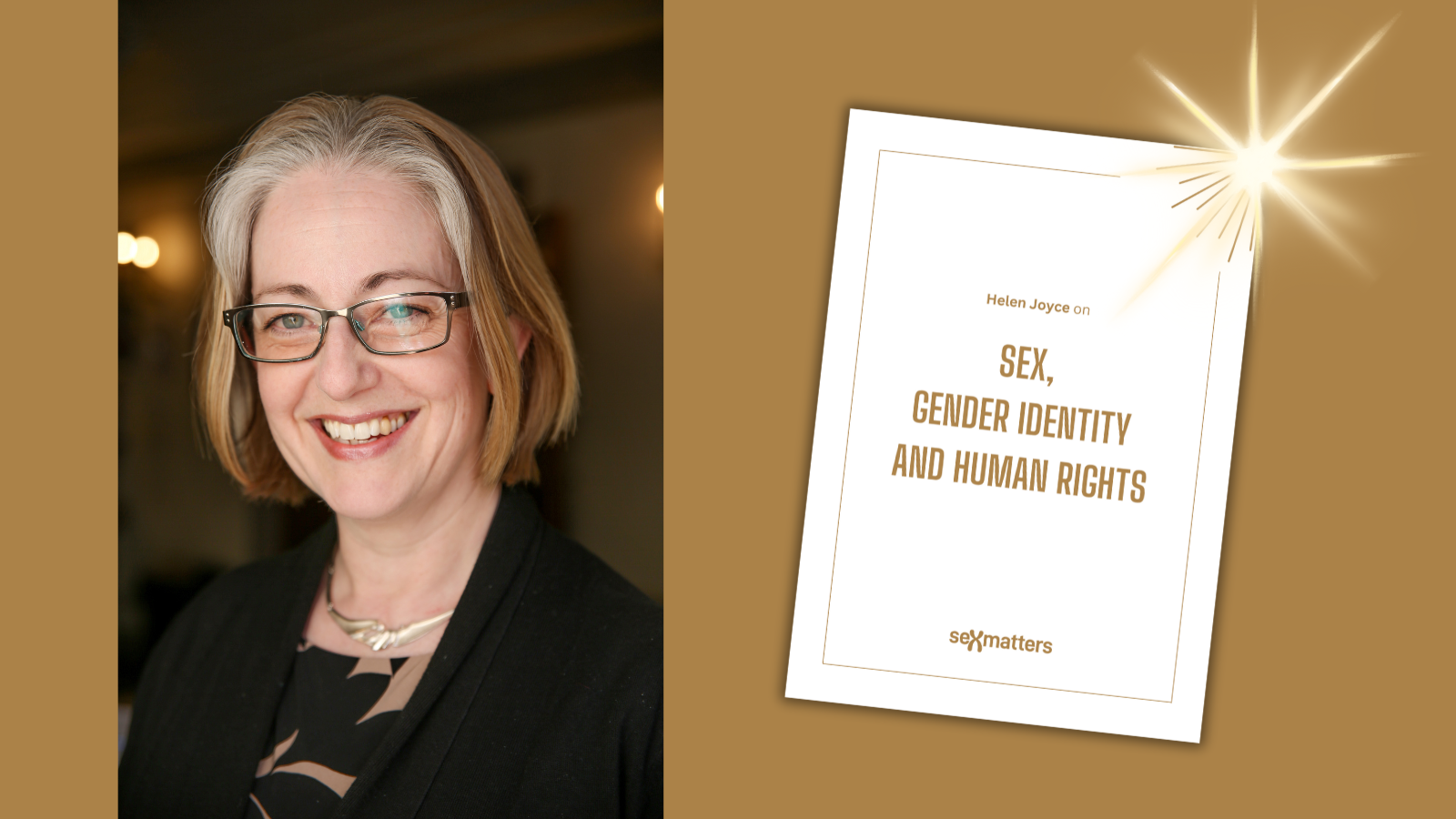
Helen Joyce on sex, gender identity and human rights
Helen Joyce is Director of Advocacy at Sex Matters.
These are edited versions of Helen’s talks at the conferences held in 2023 in Killarney and 2024 in Lisbon by Genspect, an international organisation advocating for non-medical approaches to gender distress.20th December 2024