
Getting back on track
Using the Equality Act to enable and protect sport for women and girls
Foreword
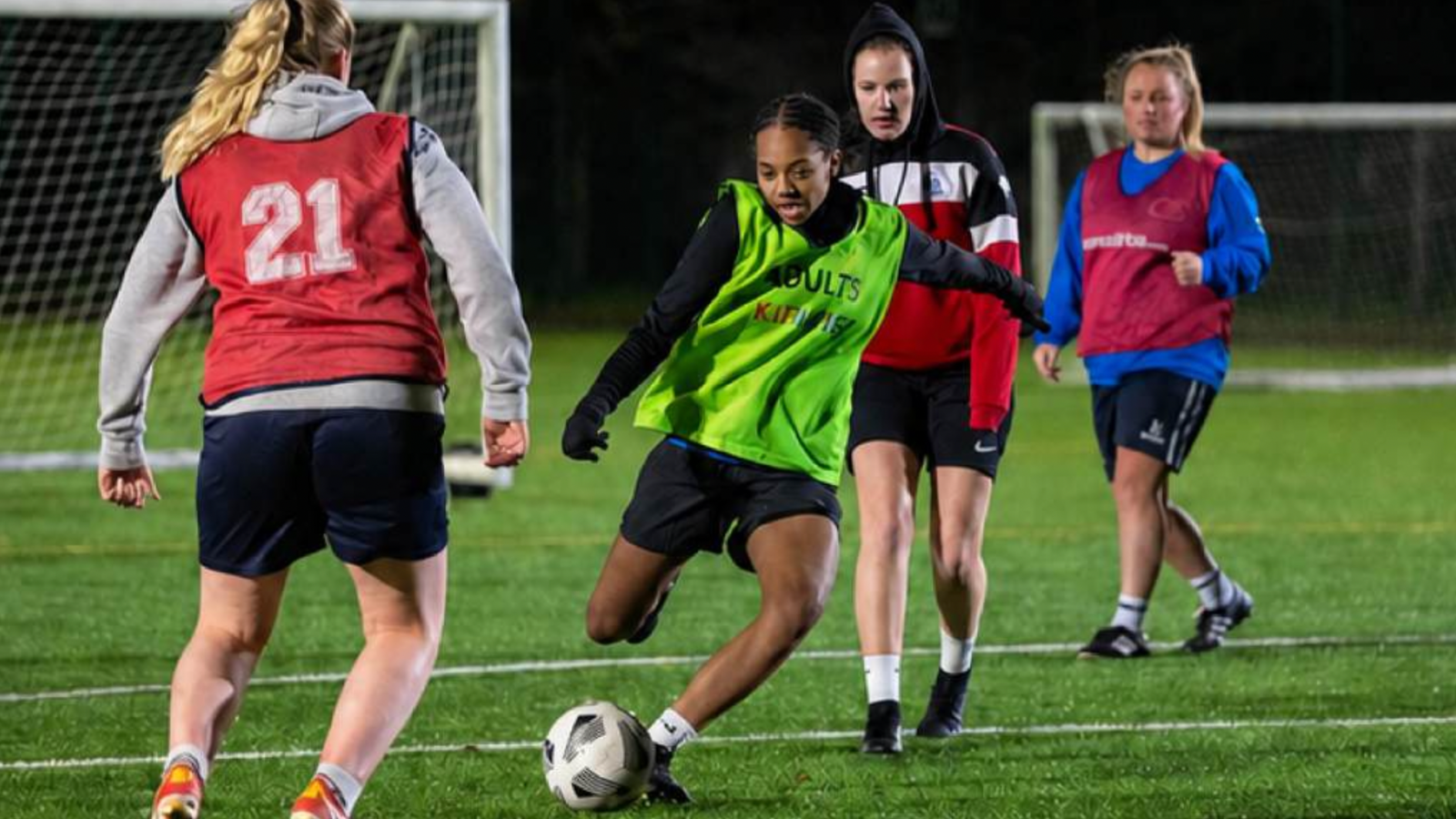
Women’s sport is more popular and celebrated than ever, attracting record audiences and increasing participation.
Following the summer of 2025, which saw the England Lionesses defend their Euro victory and the Red Roses win the Women’s Rugby World Cup in front of more than 80,000 people at Twickenham, there is new momentum in women’s sport. The Women’s T20 Cricket World Cup 2026 and the Tour de France Femmes Grand Depart 2027 coming to Britain will bring more visibility.
But women’s sport has long been marginalised and under-resourced. Many women and girls still miss out on the physical and mental benefits of participating in sports, games and exercise. The government is working to drive a decade of change in women’s sport, and wants “to support women and girls at every stage of their lives to get involved in sport”.
Many national governing bodies have strategies for increasing the visibility, participation and performance of women in sport, and of women’s sport. Specific provision for women and girls is core to these strategies. Without female-only activities, facilities and competition, women and girls are disadvantaged.
The UK’s framework of equality law enables and supports this investment and the provision of sporting opportunity for women and girls. Yet in recent years many sports governing bodies, and the UK’s sports councils, have prioritised allowing men and boys to participate “as women” under the label of “inclusion”. Female-only provision in sport is already an inclusion measure: for women. It can work only if that is understood.
This report explains how the Equality Act protects opportunity, fairness, safety and inclusion for women and girls in sport. It highlights how the law has been misunderstood for 15 years and how this has harmed women. Many national governing bodies are now taking steps to put this right. This report ends with a call to sports leaders to stand up confidently for female-only sporting provision at every level and not to wait to be dragged through the courts defending injustice.
Executive summary
The legal status of female-only sport provision
Investing resources in providing women-only sport is necessary for women to take part, enjoy, excel and achieve in sport. Even in non-competitive activities many women prefer female-only sports, fitness sessions and facilities.
The law is clear. The Equality Act 2010 makes sex discrimination, including separating men and women, generally unlawful, but includes a range of exceptions that make it lawful to provide services, facilities, associations and competitions that are just for women (or just for men), including sport and not only competitive events.
It’s time to get women’s sports back on track
Consecutive governments, sports councils and national governing bodies have misunderstood the law. Many adopted policies that conflated the protected characteristics of “sex” (being a man or a woman) and “gender reassignment” (identifying as transgender). Instead of protecting female-only provision as an inclusion measure for women and girls, they permitted men who identify as women to access women’s spaces and services and to compete in women’s sport.
This is not fair and it was never the law. The Supreme Court judgment in the case of For Women Scotland spelled this out clearly. But there is now a culture of fear and confusion about protecting women’s sport. It should not fall to individual women to bring legal cases to force sports providers to do the right thing. Those at the top of the sport system should reinstate a clear, comprehensive commitment to fairness, enabling women’s sport to thrive.
“Waiting for guidance” is no longer an excuse: the EHRC’s revised code of practice for service providers, public functions and associations (2026) reiterates the Supreme Court judgment and states clearly that sex-based provisions must be on the basis of biological sex.
The five steps to put things right
- The Minister for Sport should call for opportunity, fairness and safety for women and girls to be respected at every level of every sport.
- The sports councils should withdraw the 2021 “trans inclusion” guidance and recognise that the correct approach to trans inclusion is inclusion within the correct sex category.
- The sports councils should make a joint statement of commitment to women’s sport and produce clear, simple guidance protecting women’s sport at every level.
- Individual sports councils should bring their data-collection surveys and registration data into line with the Equality Act and the reality that sex is immutable and binary.
- National governing bodies and others in receipt of public funding should sign a fairness pledge to protect women’s sport at every level and be clear that woman means female.
How the Equality Act enables and protects single-sex sport and recreation
- Under the Equality Act 2010 the protected characteristic of sex (man/woman) relates to a person’s innate biology, not their identity; it also includes boys and girls.
- The Equality Act makes it unlawful for duty-bearers to discriminate by treating people less favourably based on their sex.
- Duty bearers include public authorities, service providers, employers, associations, qualifications bodies and education providers.
- In general, providing a service just for men or just for women would be sex discrimination. But providing only an “open” (mixed) category or facilities will also tend to disadvantage women.
- The Equality Act includes exceptions that make it lawful to provide separately for women and men, or girls and boys, in a range of circumstances relevant to sport.
- The sections of the Equality Act that do this include:
- Schedule 16, which permits single-characteristic associations
- Schedule 3 Part 7, which provides for single-sex and separate-sex services
- Section 158 on positive action, which permits a broad range of action to meet specific needs of women or men
- Section 193, which permits single-characteristic charities (and single-sex fundraising events)
- Section 195 on participation as a competitor
- Section 159 of Schedule 9, which permits employment to be limited to men or women where this is a genuine occupational requirement.
- These provide the lawful basis for a wide range of female-only activities and facilities in the context of sports, games and exercise, including but not limited to qualification of individuals to participate in competitive events.
- The public sector equality duty requires that public authorities consider women’s needs when setting policies. The provision for positive action allows for investment and development targeted at encouraging and enabling women and girls in sport.
- Women and “trans women” do not share a protected characteristic, so this group cannot be the target for lawful positive action “for women”.
- Rules and policies that allow men to participate, compete or use facilities “as women” disadvantage women. Duty bearers that design or operate such policies (or instruct, cause or induce others to) are at risk of claims for sex discrimination. Public authorities may also face claims that they are not fulfilling the public-sector equality duty.
This report explains how the law applies to every aspect of sport, including facilities, teams, competitions and changing rooms.
You do not need to be a lawyer to understand that the law enables and supports women’s sport. Simply by providing a female-only activity or badging a space as for “women”, a provider is likely to be relying on one of the sex-based exceptions in the Equality Act.
You do need to be clear and courageous to stand up for women’s sport. Women’s sport has always faced opposition, prejudice and devaluation. It is time to recognise that women and girls deserve equal opportunity to sport, and to celebrate and uphold the law that protects that.
What about transgender people in sport?
Sex is a protected characteristic in the Equality Act, and everyone is either male or female.
Gender reassignment is a separate protected characteristic. It applies to anyone who “is proposing to undergo, is undergoing or has undergone a process (or part of a process) for the purpose of reassigning the person’s sex by changing physiological or other attributes of sex” (commonly referred to as transgender people). Identifying as transgender does not change a person’s sex. Everyone retains their sex as observed at birth.
It would be direct gender-reassignment discrimination to exclude someone who identifies as transgender from sporting provision for their own sex. It would not be such discrimination to exclude them from provision for the opposite sex. A trans-identifying person might feel that separate-sex sports provision disadvantages them, but separate-sex provision is lawful if it comes under one of the exceptions in the Equality Act.
Sports facilities and providers are not required to undertake individual case-by-case assessment to decide on eligibility: they can apply clear sex-based rules.
Sport, equality and the law
The Equality Act
The Equality Act imposes specific duties not to discriminate in various defined contexts. This means that, except when sports and games are organised in a purely private context, such as among family or friends, it is likely that the organisers will be under a legal duty not to discriminate against or harass anyone in relation to protected characteristics, including sex, age, race, disability, sexual orientation and gender reassignment.1
What do we mean by sports and games?
Sports and games are not defined in the Equality Act (and do not need to be) but for our purpose we consider broadly that:
- sport means forms of physical activity “which, through casual or organised participation, aim at expressing or improving physical fitness and mental well-being, forming social relationships or obtaining results in competition at all levels”
- games are physical or mental competitions conducted according to rules with the participants in direct opposition to each other.
These categories intersect. Some physical activities that may be classified as sports for some purposes, such as yoga, group cycling or rambling, do not generally involve competition. Some, such as dance, swimming and climbing, may be performed competitively but are often not. Some activities, such as bridge and chess, involve competition but do not involve physical exertion or athleticism. Many sports and games require some combination of physical and mental skills.
People who participate in sports and games (whether professionally or as amateurs, in recreation, training, development, competition, coaching or other roles) retain their rights under the Equality Act. They are citizens entitled to public services and to fair treatment by the state, as members of associations, as users of commercial or voluntary sector services, as students in school and college, and as employees and potential employees. Everyone is protected against sex discrimination and harassment. People are also protected against discrimination on the basis of “gender reassignment”. But this does not mean they can change their sex.
An important implication of the Supreme Court judgment in the case of For Women Scotland v Scottish Ministers is that when organisations are taking lawful action for women or girls, this means female people.
How does the Equality Act apply to sports and games?
Duty bearers in relation to sports and games include:
- Associations – formal associations with 25 or more members are not permitted to discriminate in relation to the admission of members, or in the provision of any benefit, service or facility or other treatment of their members or associates. Many sports are organised through federations of such local and national associations.
- Service providers –national governing bodies, sports clubs, organisations and businesses provide services to the public including infrastructure, facilities, opportunities and systems for sports, games or exercise.
- Qualification bodies – governing bodies providing registration and licences for players, coaches and officials may be acting as qualification bodies by providing “authorisation, qualification, recognition, registration, enrolment or certification which is needed for, or facilitates engagement in, a particular trade or profession”.2
- Employers – within the sphere of professional or semi-professional sport, any club or other organisation that employs players, coaches or others (including as apprentices or contractors) has a responsibility as an employer not to discriminate. Remunerated office-holders are also protected against discrimination, even where not in an employment relationship.
- Schools and higher education institutions – thesehave specific responsibilities not to discriminate in relation to pupils or students, as well as other responsibilities, such as employers and service providers, for any wider services they provide to others who use their facilities.
- Local authorities (or education authorities in Scotland) – these have responsibilities in relation to the non-discriminatory provision of recreational and training facilities for children and young persons (such as playgrounds, parks, leisure centres, swimming pools, gymnasiums and social clubs), and the organisation of any activities at such facilities.
- Bodies exercising public functions – the functions played by public authorities (including UK Sport, Sport England, Sport Wales and Sport Scotland) and the Department for Culture, Media and Sport are also covered by the Equality Act, including the public-sector equality duty.3
A wide range of activities, facilities and functions can come under the Equality Act in relation to sports and games, including:
- provision of facilities for sport, and ancillary facilities such as changing rooms
- provision of opportunities to participate in exercise and training sessions
- terms of club membership and treatment of members
- qualification criteria for events at any level
- application of rules to decide who can participate
- registration of players and codes of conduct
- provision of coaching and pathways for performance development
- setting rules and regulations for competition eligibility
- requirements for qualification for other roles in the sport
- provision of scholarships and bursaries
- provision of healthcare to players
- programmes for leadership development
- grants and funding for clubs and individuals
- employment and conditions of employment.
Why women and girls need dedicated provision to thrive
Women have different needs
It is well recognised that men are on average taller, faster and stronger than women. Men have bigger bones, longer limbs, wider hand spans, wider shoulders and narrower pelvises. They have larger and denser muscles, with a higher proportion of fast-twitch fibres, and larger hearts and lungs. Male blood has more oxygen-carrying capacity per litre than female blood. These physical differences confer an advantage in sporting activities.
This has been recognised by the International Olympic Committee, which finds that male sex “confers performance advantage in all sports and events that rely on strength, power, and/or endurance”. To protect fairness, as well as safety, particularly in contact sports, “it is necessary and adequate to base eligibility for competition on biological sex”.4
Even in precision sports such as pool, snooker and darts, men have a physical advantage. In cue sports, one clear way that strength gives an advantage is by enabling a higher cue speed and thus a better break shot. Another is that the trade-off between power and accuracy means that a stronger player can be more accurate than a weaker one.
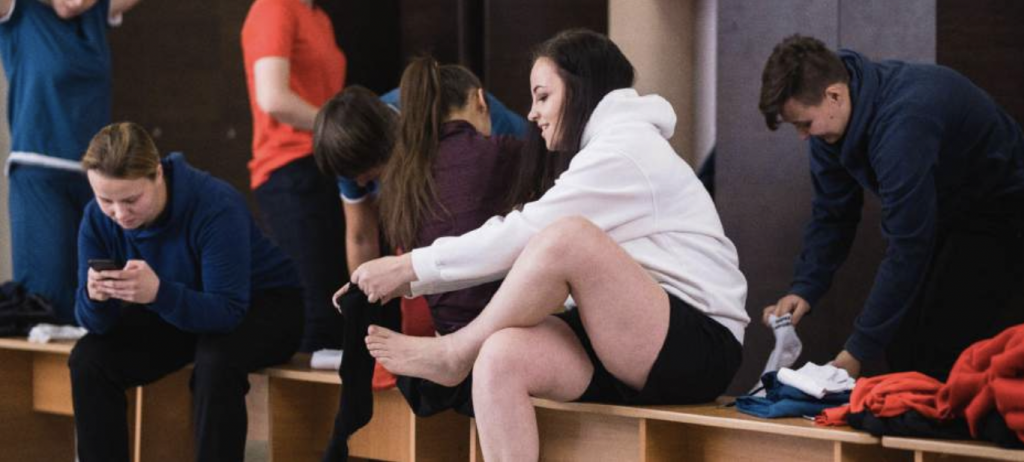
In recreational sport and exercise, it can be intimidating and demotivating for women and girls to be denied their own spaces, activities, categories and events. Many women prefer to exercise with other women, and therefore seek out women-only running groups, gym classes and swimming sessions. In a recent survey 22% of women wanted female-only gym and swimming sessions.5
Female participation lags behind
Women in Sport, the charity set up to champion women’s sport in the UK, says that the skills and participation gaps between girls and boys exist from an early age. Boys are on average slightly faster and stronger than girls throughout primary school.6
“One of the most heart-breaking emails I had was from a mother saying at her daughter’s primary school, the headmaster decided to run co-ed races all day because there’s an eight-year-old boy who’s decided he wants to identify as a girl. Not a single little girl won an event at the school sports day. Her 11-year-old daughter came home in tears and said ‘Why am I bothering?’”
Baroness Sharron Davies speaking at a SEEN in Sport event in September 2025
By adolescence, many girls decide that they do not “belong” in sport. The challenges of puberty and periods, as well as their changing body shape and the unwanted attention this often brings, can create a negative experience as girls reach adulthood. Pregnancy, motherhood, and menopause are further stages in women’s lives where participation in exercise declines.7
A recent survey found that one in four women report not feeling physically healthy. Only 23% of women engage in 30 minutes of exercise a day, five or more times a week. 65% of women report not enjoying exercise.8 Around 930,000 fewer girls than boys play team sport in England, and half as many girls as boys dream of reaching the top in sport.9
Privacy, dignity and safety matter
Female changing rooms are important. Research conducted in 2021 by Sport England and UK Active, the industry body for gyms and leisure-centre operators, found that a quarter of women surveyed said that female-only changing facilities and toilets were a factor in whether they would participate in sport and exercise. Among those who had used a facility in the past three years, this rose to 40%, showing that it is a live issue.10
Safer Spaces to Move is a dedicated project between UK Active and Sport England’s This Girl Can campaign designed to help women and girls to feel safe and more confident while being active in gyms, fitness and leisure facilities.11
None of this works when the category of “female” is opened up to include males who assert a female identity.
“My daughter is on the national development squad. We attended a presentation which talked about the process for drug testing. She will have to be naked from her bra line to her knees while somebody watches her pee. Apparently the person watching would be the ‘same gender’. I asked if that meant they would be the same sex. The presenter looked uncomfortable and said they didn’t know. So, potentially a man could be watching my semi-naked teenage daughter pee and presumably she couldn’t refuse.”
Parent, south-east England
The Equality Act permits support for women in sport
Women and girls depend on specific provision in every aspect of sports and games, including training, competition and changing rooms. The Equality Act includes a set of exceptions so that duty bearers can lawfully provide benefits and services separately to women or men. These exceptions to the general prohibition against direct discrimination are what make familiar sporting provision for women and girls (and for men and boys) lawful. They are not limited to competitive events, but cover a range of situations where the Equality Act applies.
The legal provisions that enable support for women in sport
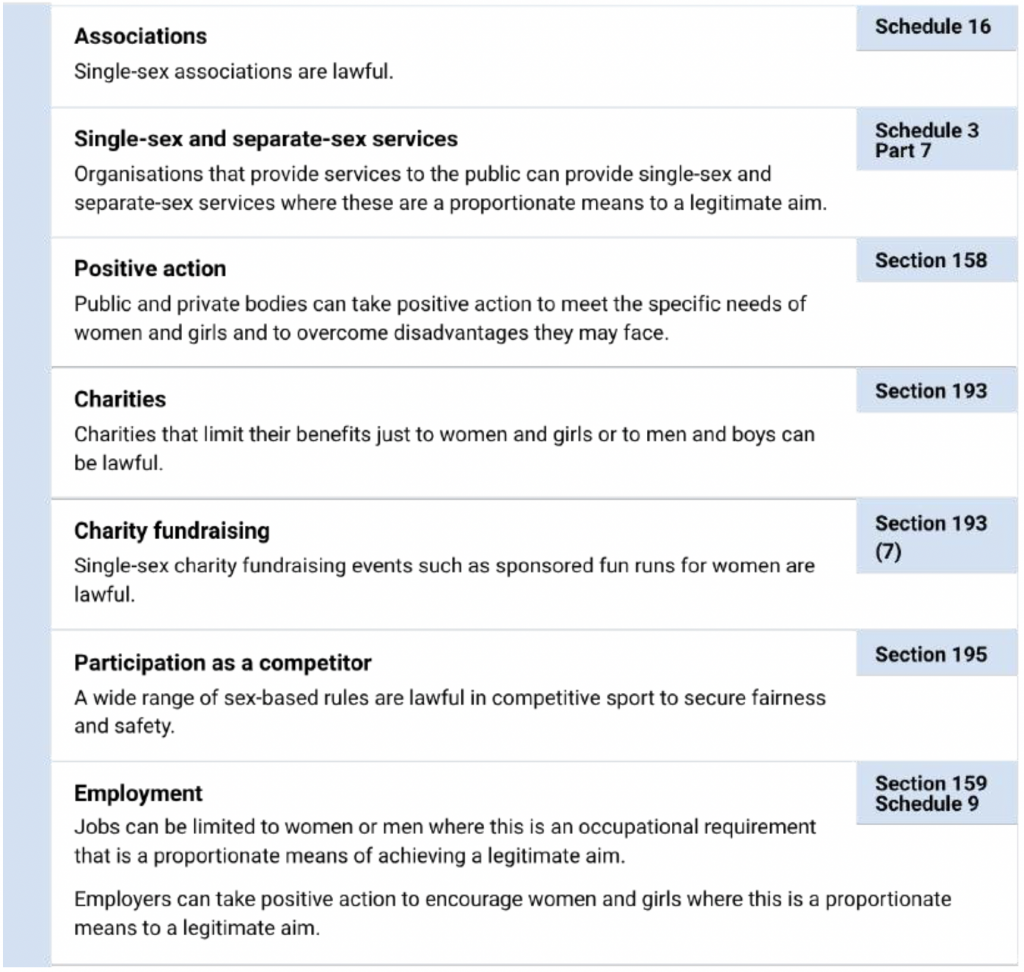
Single-sex and mixed sport
Wherever a provision of the Equality Act is used to promote opportunity for women and girls, it applies based on biological sex, not gender identity.
Although “open” (fully mixed) sport and facilities are also lawful under the Equality Act, it may be indirect discrimination not to provide separately for women.
The relevant sections of the act
Associations: Schedule 16
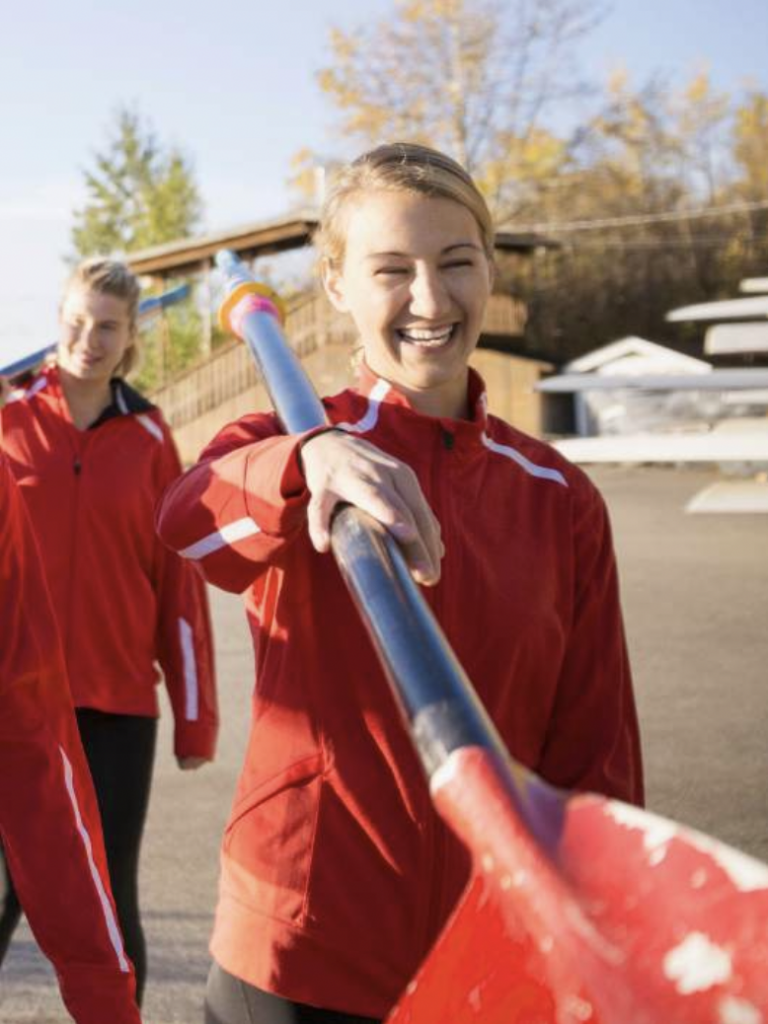
Sports at local and county level are sometimes organised through single-sex associations. Such associations are in many cases how the organisation of women’s sport began.
What the law says
Single-sex associations are lawful.
Schedule 16, paragraph 1 of the Equality Act allows an association to restrict membership to persons who share a protected characteristic (which would otherwise be unlawful discrimination).
“An association that restricts membership to persons who share a protected characteristic does not breach section 101(3) by restricting access to benefits, facilities or services to such persons as share the characteristic.”
For example:
- Buckinghamshire County Ladies Golf Association promotes the interests of women’s and girls’ amateur golf at all levels in the county of Buckinghamshire. Its members and officers are women and girls who are members of the association. It undertakes talent development, ensures correct handicapping systems and runs the County Championships and other competitions.
- Barnes Bridge Ladies Rowing Club is based at the Civil Service Sports Club Boathouse in Chiswick. The club was originally called the Civil Service Ladies Rowing Association. It shares its clubhouse with Cygnet, the men’s civil-service rowing club.
Single-sex and separate-sex services: Schedule 3 Part 7
Sports and games facilities, exercise and training sessions and changing facilities are also often provided as single-sex or separate-sex services. For example:
- Single-sex and separate-sex changing rooms, showers and toilets are commonplace and an important part of making sports facilities accessible, safe and welcoming for women and girls.
- Everyone Active is a major leisure and fitness contractor that manages municipal gyms and swimming pools. It provides a range of women-only sessions with dedicated times and facilities, including women-only gyms, and women-only swimming sessions, gym sessions, group exercise classes, climbing-wall sessions and women-only running clubs.12
- The Rugby Football Union recently published a Design Guide to Female Toilet Provision to help clubs understand this need.13 It is delivering the Rugby World Cup 2025 Impact programme in partnership with HM Treasury, the Department for Culture, Media and Sport and Sport England. The programme includes a fund of £7 million for investment in facilities to “enhance the rugby club experience for females”, including constructing new female changing rooms and improving existing ones.
- This Girl Runs is a women’s running group that offers group runs and courses to help women reach distances of 3km and then to progress to 5km.14
- Breeze rides is a programme of women-only bike rides developed by British Cycling that aims to make more women feel confident and comfortable about going on a ride. Over 1,200 volunteer “Breeze champions” organise bike rides in their local areas with support and training from British Cycling and Scottish Cycling.
- NETBALLHer is a programme developed by England Netball and The Well HQ to educate women and girls at all levels of sport about their bodies across the different life stages. It aims to normalise conversations on topics around the female body by educating staff, coaches, officials and volunteers to create environments where women and girls can train and compete as their body changes.

“My daughter had a much older male playing in her university team with girls aged around 19–21. He used the female changing room with them. All the girls had been conditioned to be kind and be ‘trans allies’ so no one said anything. I had heard my daughter complain about some ‘inappropriate behaviour’ for over a year but I didn’t know the details and assumed this was an older woman because of the female name and female pronouns used. I wish I had known earlier that she was talking about a man as my safeguarding instincts would have been alerted sooner. Thankfully he was removed from their team. My daughter didn’t want to discuss it but said that everyone on the team was relieved.”
Parent, the Midlands
Single-sex and separate-sex services: Schedule 3 Part 7

What the law says
Organisations that provide services to the public can provide single-sex and separate-sex services where these are needed as a proportionate means to a legitimate aim.
The Equality Act includes express provision for single-sex and separate-sex services in a wide range of situations. Schedule 3, paragraphs 26 and 27 of the act allows for the provision of single-sex and separate-sex services.
A single-sex service can be provided if it meets one of the following conditions:
- Only people of that sex need the service.
- The service is also provided for men and women together, but providing the service in this way would not be sufficiently effective.
- The level of need for the service makes it not reasonably practicable to provide a separate service for each sex.
- The service is likely to be used by more than one person at the same time and a woman might reasonably object to the presence of a man (or vice versa).
- A person might reasonably object to the service user being of the opposite sex because the service involves physical contact.
The act also provides a more wide-ranging set of criteria for separate-sex services.
These can be provided if a joint service for persons of both sexes would be less effective.
They can also be provided differently if the extent to which the service is required by one sex makes it not reasonably practicable to provide the service otherwise than as a separate service provided differently for each sex.
Any limited service must be a proportionate means to a legitimate aim. This is a legal test also known as “objective justification”. It basically means that you have to have a good reason for the rule. It is explained in Homer v Chief Constable of West Yorkshire Police [2012] UKSC 15, which says:
“To be proportionate, a measure has to be both an appropriate means of achieving the legitimate aim and (reasonably) necessary in order to do so.”
Positive action: Section 158
Recognising the different needs of women in sport and the structural disadvantages they face, many national governing bodies have developed strategies to promote women and girls in sports and games. Common strands include investment in facilities; separate competition and development pathways for female athletes; dedicated coaching; workforce development; efforts to improve visibility and programmes focused on female health. For example:
- The Lawn Tennis Association’s “She Rallies” plan to get more women and girls involved in tennis focuses on participation, workforce and visibility.15 Programmes include the development of specific coaching for girls, giving greater prominence to the importance of female athletes’ health and wellbeing, and tailored support for venues, coaches and female players.
- The Football Association’s strategy for women and girls is called “Reaching Higher”.16 It includes commitments to support women and girls with their health and well-being needs.
- Welsh Rugby Union is seeking to achieve “equitable investment into the men and boys and women and girls community game”, increasing the number of women and girls who play and creating a clearly identified pathway to increase the number of women coaches and match officials.17 As part of these efforts it has established three player development centres for women and girls together with Swansea University, Cardiff Metropolitan University and Parc Eirias.
- The England and Wales Cricket Board is committed to “making cricket a truly gender-balanced sport”. It established the Metro Bank Girls in Cricket Fund, which focuses on recruiting, educating, supporting and celebrating the people who make girls’ cricket happen in clubs, with the ambition of tripling the number of girls’ teams at clubs by the end of 2028.18
- Scottish Cycling has a women and girls’ strategy.19 This involves investing in women’s cycling at every level from Breeze rides, a programme of free, women-only guided rides intended as an entry route for women to build their skills and confidence, to women-only coaching sessions and women’s races. Its aims include supporting clubs and groups to provide opportunities that engage and retain women and girls, which it hopes will lead to a 30% increase in female membership of clubs and 10 new clubs with strong female sections by 2027, develop opportunities and support for female riders to get started and progress within competition across all disciplines, increase female entries and licence holders by 30% by 2027 and provide tailored support to ensure the performance pathway prioritises the health and wellbeing of female athletes. It is seeking to Increase the number of female coaches, ride leaders and mountain-bike leaders, targeting a 20% increase by 2027.
- The English Chess Federation has a women’s chess initiative that aims to increase the number of women and girls taking part in social and competitive chess. It includes organising and enabling women-only events and clubs, and promoting the visibility of women in chess.20
Any decision to invest in a programme for women to enable women to participate, train, compete and be recognised in a sport or game, rather than having a single category of participation for everyone (which would in practice be dominated by men), is likely to involve lawful positive action.
What the law says
Public and private bodies can take positive action to meet the specific needs of women and girls in sport and to overcome disadvantage they may face.
Section 158 of the Equality Act allows for “positive action” where an organisation has identified that people who share a protected characteristic suffer a disadvantage connected to the characteristic, have needs that are different from the needs of persons who do not share it or are disproportionately low in participation.
The positive action must be a proportionate means of achieving the aim of enabling or encouraging people from that group to overcome or minimise that disadvantage, meeting their needs or enabling or encouraging people from that group to participate in that activity.
This means public and private bodies can take positive action to meet women’s needs, help women overcome disadvantage or encourage women to participate in sports where they are underrepresented.
Charities: Section 193
The promotion of community participation in healthy recreation is recognised as a charitable purpose, as is the advancement of the physical education of young people. In order to be recognised as a charity, the sport or game must be capable of improving physical health and fitness or mental skill, and the club must have an open membership. That is, “access to the club’s facilities must be genuinely available to anyone who wishes to take advantage of them.”21
While most community charities for sports and games are mixed sex, some are single sex. For example:
- She Plays To Win is a charity whose aim is to encourage more girls to learn, play and benefit from chess. It provides facilities, competitions and training for girls to play chess.
- Stratford Town Women and Girls FC is a football club for women and girls that is also a registered charity.
What the law says
Charities that limit their benefits just to women and girls or just to men and boys can be lawful. Charities must follow their objects.
Sport is defined under section 3(2)(d) of the Charities Act 2011 as “sports or games which promote health by involving physical or mental skill or exertion”. Charities must pursue their charitable objects.
Single-characteristic charities are allowed by Section 193 of the Equality Act 2010. This provides that charities can be established which restrict the provision of benefits to people who share a protected characteristic, where this is justified either as a proportionate means of achieving a legitimate aim or for the purpose of preventing or compensating for a disadvantage linked to the protected characteristic.
Participation as a competitor: Section 195
Whether someone is eligible to compete in a particular sporting event is a matter of rules. As the International Olympic Committee has said: “Competition is fair when all competitors are alike with respect to the characteristics that define the category.”22 Predictability and consistency are important because all the people on each side (and the referee and record-keeper) need to know exactly what the rules are, and that all players are eligible and playing by the same rules.
The most common way to organise sports competitions is single-sex. There are also other ways of organising sport that provide variety and interest, giving opportunities for men and women to play together while securing fairness for women and between teams:
- Many sports have the option to be organised as mixed-sex pairs: doubles in racket sports, mixed pairs in figure-skating and synchronised diving.
- Mixed teams in relay and volleyball have rules regarding the number of men and women, or the maximum number of men competing at one time.
- There can also be rules about the different roles played by men and women in a mixed team. In mixed hockey, for example, some teams use a convention that a penalty flick may be taken only by a female player. In mixed netball a team is allowed only three male players on court at any one time, and only one man in each of the three zones (goal, centre and defence). In rowing, racing crews are single sex but the coxes can be either sex. In mixed rowing races, a minimum of half the crew must be female. In co-ed cheerleading teams both men and women act as “bases”, but only women act as “flyers” in acrobatic stunts involving one set of athletes lifting and throwing the other into the air. These roles require different skillsets and body types.
Sometimes, in order to advance opportunity for women, sex-based rules are complex:
- Sex-number rules – Ocean sailing competitions use rules that incentivise skippers to bring on female crew members. For example, in 2023 the 44Cup, which requires three amateurs in a crew of eight, introduced rules that a professional female sailor can be counted as an amateur and that the overall crew weight allowed for a mixed crew is 730kg compared with 680kg for an all-male crew.23 The Ocean Race (previously the Whitbread round-the-world race) limits all-male teams to seven sailors. But two additional female team members are allowed. A boat can race with a crew of five men and five women or with 11 women.24
- Some junior leagues and local fun tournaments and festivals operate sex-specific age rules designed to enable women and girls to participate in team sports despite sometimes being low in numbers. This is particularly important for girls and young women as there needs to be a continuous locally accessible pathway for them to grow up playing the sport. For example, North Middlesex Cricket Club25 says that “girls up to 17 years of age may play in boys’ league matches in a team 1 year below their own chronological age group. In the U13 and U15 boys’ cups, girls must play in their own age groups…. A male player may only play junior cricket for one Middlesex club and may not represent any other club in another county in their junior competitions. Girls may play in MJCA Girls’ competitions for one Middlesex Club and play in MJCA Boys’ competitions for a different Middlesex Club, providing their Girls’ Club does not have a team in the same league as the Boys’ Club that they play for.”
These rules are not discretionary. Nor do they allow a team to play a man while pretending he is a woman, or undermine opportunity, fairness and safety for women.
What the law says
A wide range of sex-based rules are lawful in competitive sport, to secure fairness and safety.
Section 195(1) states that a person does not contravene the Equality Act:
“so far as relating to sex, only by doing anything in relation to the participation of another as a competitor in a gender-affected activity.”
This means that the setting and applying of single-sex and complex sex-based rules can be justified as lawful in a “gender affected activity”.
Gender-affected activity is defined in s.195(3) as:
“a sport, game or other activity of a competitive nature in circumstances in which the physical strength, stamina or physique of average persons of one sex would put them at a disadvantage compared to average persons of the other sex as competitors in events involving the activity.”
Subsection 4 says:
“In considering whether a sport, game or other activity is gender-affected in relation to children, it is appropriate to take account of the age and stage of development of children who are likely to be competitors.”
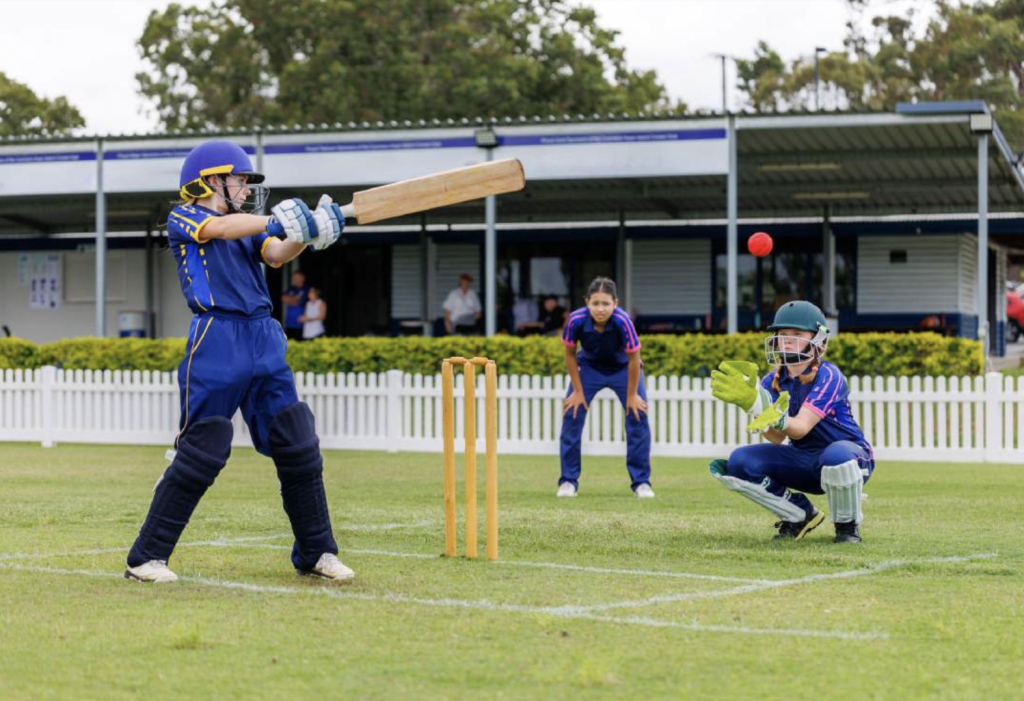
“My daughter was shocked to find that at an U12 girls cricket festival, she was forced to play against a male. He was much taller and visibly stronger. Some of the girls on my daughter’s team were only 9 years old. She was upset, saying it was grossly unfair. It made a mockery of the tournament and could have been really dangerous. Worse still was that the club stated that ‘all competitors were eligible to play’ which clearly was incorrect and went against the Supreme Court ruling.”
Parent, north-east England
The competition exception is particularly wide-ranging. It is not limited to a particular kind of duty bearer (it can be used by associations, service providers, employers, educational institutions and others) or only to single-sex situations (it also allows mixed doubles and teams) and it does not require the kind of justification (“a proportionate means to a legitimate aim”) needed for a programme of positive action. It provides sports officials at every level with the immediate reassurance they need that if they apply clear sex-based rules they will not be opening themselves to potential liability under the Equality Act.
“Activity of a competitive nature” is a broad term likely to be given its everyday meaning, encompassing any activity in which participants compete, based on a shared understanding of the applicable rules, standards and criteria for winning or losing (or for comparative rankings).
A wide range of sports are likely to meet the criterion of being “gender-affected”. In Haynes v Thomson and Goodwin on behalf of English Blackball Pool Federation,26 the sport of pool was judged to be one in which the average woman was at a disadvantage compared to the average man. The judge said: “In sport, a small but clear advantage can make the difference between winning and losing.”
Participation of a person as a competitor is likely to include questions about qualification, selection, authorisation or permission to participate in particular categories or events, or the terms or basis on which such participation takes place – including the setting and enforcement of rules relating to participation in general, or their application or other determination of the basis of participation for particular events.
Although there have been few cases where s195 (1) has been tested in court, the most likely interpretation of the scope of the exception (“doing anything in relation to the participation of another as a competitor”) is that it applies where the action in question is an effective means of enabling fair and safe competition. This would allow both for separate-sex sports and for mixed doubles or mixed-sex teams with a specific sex ratio.
It would not allow, for example, for a coach to select players for the men’s team based on skill and for the women’s team based on attractiveness, or for a club to allocate the best equipment or pitches to men’s teams.
Section 195 also includes a specific exception to claims of “gender reassignment” discrimination, in case that is needed – such as excluding a female competitor who has taken testosterone (a performance-enhancing drug) from competing in a women’s event.
Employment: Section 159 and Schedule 9
Some roles in sport may be limited to men or to women where this is a genuine occupational requirement. A ballet company may seek to fill a certain number of roles for men and women. A men’s professional football team will only employ male players, and a female professional team will only employ female players.
Other roles such as CEOs, managers, coaches and referees must be open to both men and women. But in practice they remain dominated by men. For example, of the 16 teams in the 2025 Women’s Rugby World Cup, only three had a female head coach. 79% of women coaches believe they experienced discrimination as a result of their sex, making it their most substantial career barrier.
National governing bodies have begun to fund dedicated female coaching programmes and are being pressed to understand cultures of discrimination and harassment.27
What the law says
Employers should treat men and women fairly and equally and can take positive action where it is a proportionate means to a legitimate aim.
Schedule 9 provides that where there is an occupational requirement to have a particular protected characteristic, it is lawful to do so if it is a proportionate means of achieving a legitimate aim.
Where people having a protected characteristic are at a disadvantage or are under-represented, Section 159 permits an employer to take that protected characteristic into consideration when deciding whom to recruit or promote.
This can be done only where the candidates are equally qualified. The section does not allow employers to have a policy or practice of automatically treating people who share a protected characteristic more favourably than those who do not have it. In these circumstances; each case must be considered on its merits.
Any action taken must be a proportionate means of addressing such disadvantage or under-representation.
The public-sector equality duty requires women’s interests to be considered
The Equality Act permits single-sex sporting activities and facilities, and individual women and girls are protected against unlawful direct or indirect sex discrimination or harassment by sporting bodies, including national governing bodies, clubs, businesses and charities.
This means girls and women could bring a claim of indirect discrimination if these facilities are not provided for them alone.
But the Equality Act goes further than this in relation to public bodies.
The public-sector equality duty (PSED) aims to make sure that public authorities think proactively about avoiding unlawful sex discrimination and about meeting the needs of groups that are disadvantaged or suffer inequality related to protected characteristics, including women and girls.
The PSED does not dictate a particular outcome, but requires that public bodies consider the impact of policies at the design stage and evaluate their outcomes.
While a policy of mixed-sex sport can be lawful, it is likely to disadvantage – and may result in unlawful indirect discrimination against – women and girls, unless their needs are considered in the design of the activity, facility or programme. Often the best way to ensure that women and girls are equally well served in sport is to provide female-only activities and competitive categories, alongside male or open sporting opportunity.
The five UK sports councils, as well as local authorities and universities, schools and colleges in the public sector are covered by the duty, for example when providing or funding sporting infrastructure, activities, development pathways or athletic bursaries, and when monitoring the outcomes of their policies. Although sports national governing bodies (NGBs), and other private-sector partners such as Parkrun,are not directly subject to the public-sector equality duty, those directing public funding to them are. Supporting actions such as “She Rallies” in tennis and “Reaching Higher” in football are part of how the sports councils, via the NGBs, are delivering on their public-sector equality duty towards women and girls.
Public bodies, and those they fund, must also consider the needs of groups that share other protected characteristics including age, race, disability and gender reassignment. But they should not become confused between the different characteristics when setting policies or monitoring outcomes.
The law is clear
“It is important that the EA 2010 is interpreted in a clear and consistent way so that groups which share a protected characteristic can be identified by those on whom the Act imposes obligations so that they can perform those obligations in a practical way.”
Supreme Court, 16th April 2025
On 16th April 2025, following a legal challenge by the grassroots women’s group For Women Scotland, the UK Supreme Court ruled that the terms “sex”, “woman” and “man” in the Equality Act 2010 refer to a person’s innate biology, not to the concept of gender identity or the holding of a gender-recognition certificate (GRC).28
The function of the definition of “sex” in the law is to provide a coherent foundation for the legal provisions which recognise that women and men as groups have different shared experiences and needs that relate to biological differences as well as to social structures.29 This judgment makes clear that the law recognises women (in other words, female people) as a coherent group with particular needs and vulnerabilities. The Supreme Court ruled that any interpretation of “woman” that included some male people would render the law “incoherent and impracticable to operate”.
Sports are also run as systems that require coherence and practicality. Sports councils and national governing bodies have recognised the need for positive action and specific investment based on their understanding of women’s lives and needs. They will not be able to achieve their goals for promoting women’s inclusion, opportunity and excellence if they dilute this understanding by considering males who identify as women as part of the group. Including those males in programmes that need to be female-only undermines their effectiveness for women and girls.
The judgment makes clear that recognising the two sexes as distinct biological categories is essential for the proper functioning of the Equality Act exceptions that allow separate-sex spaces and single-sex services, associations, charities, competitive sport and the operation of the public-sector equality duty and positive-action provisions.
On the exception on participation as a competitor (section 195), it said:
“We consider that this provision is, again, plainly predicated on biological sex, and may be unworkable if a certificated sex interpretation is required….”
“…a biological definition of sex would mean that a women’s boxing competition organiser could refuse to admit all men, including trans women regardless of their GRC status. This would be covered by the sex discrimination exception in section 195(1).”
On the public-sector equality duty and positive-action provisions, it said:
“In the case of both sets of provisions [PSED and positive action] the purpose of addressing the particular needs, disadvantages or participation levels of women as a group with the protected characteristic of sex, is undermined if women as a group includes trans women … (in other words biological men…).”
“The embarrassment and shame from being regularly beaten by an unfit male in my sport wasn’t the worst part. The worst part was the feeling of worthlessness and loss of hope when letters to CEOs remained unanswered; not even worth an acknowledgement of the email or letter. If I did get replies, they were centred on the feelings of the males excluded from the female category; the impact on my own mental health and the self-exclusion of women were ignored.
“Some sports organisations updated their policies but with great sorrow at having to ban males from the affirmation they enjoyed in the female category. Often CEOs announced they had to contact and provide support, even personal phone calls, to the males, not their female membership. My sports either refused or were reluctant to enforce their new, lawful policy, making it difficult and laborious to prove ineligibility. It couldn’t be any clearer how little the CEOs of these organisations think of women’s feelings and their right to safe and fair sport.”
Competitive female runner, north-west England
Why the law has been misunderstood
Despite high-level commitments recognising the disadvantages and barriers still faced by women in sport, the sports councils and governing bodies have allowed a misunderstanding of the law to undermine opportunity, safety, fairness and inclusion for women in sport, and to create a hostile environment for those who champion women’s sport based on the recognition that women are female.
It started with the best of intentions. In 2011 the government launched a one-page charter Tackling Homophobia and Transphobia in Sport. The founding signatories included the Lawn Tennis Association, Rugby Football Union, Football Association and England and Wales Cricket Board. They pledged to challenge “unacceptable behaviour” in sport.
In 2013 the Sports Councils Equality Group, made up of the five UK sports councils, published guidance on Transsexual People and Competitive Sport. It misunderstood the law. The guidance advised national governing bodies:
“NGBs must not restrict the participation of a transsexual person in competitive sport unless this is strictly necessary to uphold fair or safe competition; any other restriction would amount to direct discrimination.”
This is simply wrong, as the Supreme Court has since made clear. On competitive sport the Supreme Court says that Section 195:
“…creates a complete exemption in relation to the prohibition against sex discrimination in sport in relation to the participation of a competitor in a sport that is a gender-affected activity.”
Excluding trans-identifying men from women’s sport is not “unacceptable behaviour”. It is lawful and fair. The law is based on average differences between men and women as coherent groups. Match officials and sports organisers cannot be expected to judge whether it is fair or safe to include a particular male participant “as a woman” at any level in sport. There is no legal basis for them to do so, and they should never have been asked to.
However, in 2013 the UK sports councils said:
“NGBs should treat a transsexual person as belonging to the sex in which they present (as opposed to the biological sex they were born with) unless this might give the transsexual person an unfair advantage or would be a risk to the safety of competitors which might occur in some close contact sports. Any negative effect of restricting the participation of transsexual people must be mitigated as far as possible, to permit as much inclusion as is fair and safe.”
They went on to define “transphobia” or “transphobic discrimination” as:
“discriminatory, abusive or negative language or behaviour that is directed towards anyone who comes under the umbrella term of transgender…. The behaviour may include a reluctance or refusal to provide access to services to the same extent as that provided for a non‐transsexual person.”
It told each NGB to work out its own policy on this basis. But judging the fairness and safety of including males in female sport on an individualised basis was impossible (particularly given that any reluctance to include them in women’s activities was judged as transphobia), so NGBs adopted policies based on self-ID, such as:
“All Participants should be referred to as the gender that they inform you they are.” (British Cycling)
“You must therefore accept them in the gender they present.” (Lawn Tennis Association)
“Players who identify as Non-binary Gender may participate in the gender category of rugby that they feel most comfortable with.” (Rugby Football Union)
NGBs combined these policies with codes of conduct and “zero tolerance” policies that led to anyone who complained or pointed out the risks and unfairness to women being disciplined for transphobia.
By 2019 several NGBs were reporting problems and asking the sports councils for help. In response, in 2020 the Sports Councils Equality Group commissioned a review of the scientific evidence for differences in average strength, stamina and physique between women and transgender males. It concluded that competitive fairness cannot be reconciled with self-identification into the female category. However, it did not go as far as mandating a return to clearly protecting women’s sport. Instead it passed responsibility down the line, telling NGBs themselves to decide whether to prioritise fairness and safety for women or inclusion for transgender males in the female category. This prompted many, but by no means all, sports bodies in the UK to revise their female and transgender eligibility policies, though some limited this to elite levels.
Since the Supreme Court ruling, several more sports’ national governing bodies have revised their rules to bring them back into line with the law and protect the integrity of the female category.30 But some are holding out, and some have not yet set clear sex-based rules for recreational and community-level sports, even though that is where the vast majority of people participate and compete.
None have expressed regret about the low value they placed on fairness and safety for women when they adopted gender self-ID policies contrary to the law.
And none have revised their zero-tolerance policies regarding “misgendering” to replace them with more sensible policies protecting trans-identifying people from abuse but recognising that their sex is relevant in sport. This makes it risky and difficult in practice to challenge individuals who seek to compete in opposite-sex events or use the wrong changing room, particularly in community and recreational settings.
The government has not provided clear leadership, instead saying that it is up to each governing body to set its own rules.
Some governing bodies and sports organisers continue to include trans-identifying men in dedicated provisions for women.
Lawn Tennis Association guidance for venues encourages local clubs to consider what is more important: “ensuring absolute fairness in the competition or making trans people feel included”. Its guidance for officials states that it “strongly encourage[s] venues to start from a presumption of being inclusive for trans”. It also permits trans-identifying males to access “all other LTA products, programmes, services and grants which are targeted towards or allocated to women”.
The Royal Yachting Association has adopted a similar approach across the UK.
In its new policy, released in March 2026, England Squash lists events that offer “meaningful competition”, which must follow sex-based rules. All others, including club, school, university and even second-tier national schools championships, are to be “inclusive”. The implication is that results in these events are meaningless.
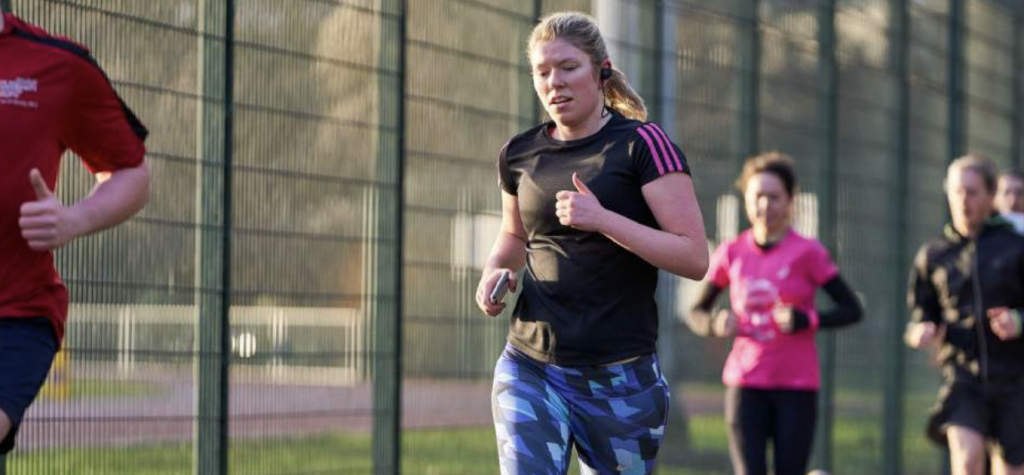
Parkrun is a charity that operates a free timed 5km run every Saturday in locations around the UK. It publishes age grade scores, which reflect a runner’s time as a percentage compared with the world record for their age and sex. Sorting the results by age grade gives a single ranking for the event across men and women of all ages. These statistics help motivate people, whether they are aiming to come in first, second or third on raw time, to perform well for their age and sex category, or simply to track their own performance over time.
However, Parkrun explicitly asks people to register not as either “male” or “female” based on sex but by selecting one of four “gender” options.31 By running in the female category, male runners can get their age grade scores inflated by as much as 18%. This boosts their position in Parkrun’s age grade rankings, often to the top on the day or even all-time.
The first-place position in the “female” category may be taken by a man, and women’s finish positions in the female category are rendered unreliable by the inclusion of men listed as women.32 Numerous records in the female category are held by men (Parkrun stopped publishing records in February 2024 but they are still published on the 5k app, which uses Parkrun data). Parkrun results feed into Power of 10, a national ranking system run on behalf of UK Sport, so that males registered as female at Parkrun can rank as top women nationally.
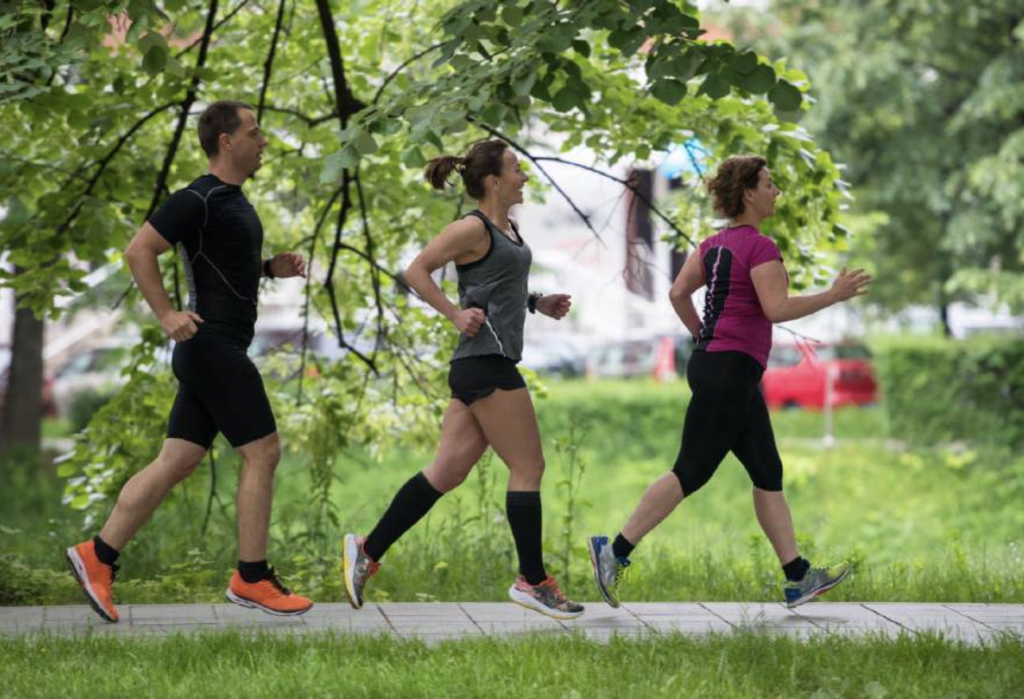
The Breeze initiative by British Cycling aims to get women into the saddle and enjoying non-judgemental female camaraderie. Advertised as “for women of all abilities across the UK“, with smiling pictures of female cyclists in countryside locations, Breeze rides are inclusive of trans-identifying males. Some rides may have as few as two participants, and trans-identifying men may also be instructors. This means that women may be turning up for a ride in a secluded location expecting to meet other women and instead be met by a man.
Breeze ride leaders and participants have explained how this deters some women. British Cycling’s response has been to make explicit on the website that this may happen, saying: “With inclusion at its heart, the Breeze programme has also always been open to transgender females and non-binary participants who most closely identify as female.” Nonetheless, a woman will not know before meeting for a Breeze ride whether there will be a male rider or leader, because this is not disclosed in advance.

The Bridge is a women-only gym in Southwark operated by a charity, The Bridge Central (formally the YWCA central club). It seeks to make fitness, movement and wellbeing more accessible to more women. But it interprets women as including “trans women”. This means that women specifically accessing its “female only” facilities may experience unexpected and unwanted contact with men.
English Bridge Union selects national teams for home nations and international tournaments. Bridge is not deemed to be a sport, but male players dominate the rankings. Running women-only tournaments can be justified as a positive action for female participation and opportunity. But the EBU includes men who identify as women in its England women’s team.
The sports councils have not withdrawn or apologised for their bad guidance. Nor have they created new guidance or training that protects women’s sport based on a clear recognition that sex matters. This creates unnecessary uncertainty and acts as a barrier to proudly supporting and celebrating women’s sport at every level.
Indeed, the sports councils continue to collect data for equality which categorises people by gender identity instead of sex. In November 2024 Sport England produced a report entitled Diversity in Sport Governance.33 It does not consider board diversity by sex but only by self-declared gender, asking respondents to: “Please select which gender you best identify with.” The options given are male, female, non-binary, self-describe and prefer not to say. Appointing men who identify as women on to boards to speak “as women” does not serve the purpose of increasing female visibility and voice. As the For Women Scotland case concluded, it does the opposite.
Sport England’s Active Lives survey to track participation in sport at all levels also collects “gender” (male, female, other), including from schoolchildren.34 If this is intended as a proxy for sex, there can be no “other” category.
Sports organisations that undertake equality impact assessments without remembering that “trans women” are men will fail to spot that they have policies that are detrimental to women, and will punish women who point this out.
Those that seek to avoid the controversy by making sporting activities and facilities mixed sex undermine opportunities for women and girls. This is already an issue in schools, which are abandoning provision for girls with the idea that mixed sport is more inclusive. It is not.
“Having missed out on a top female spot at a Parkrun due to being beaten by a man, I am disappointed by the failure of Parkrun to realise how unfair their gender policy is. It is leading to the exclusion of women who want the chance to take part in a category that isn’t also open to men. I have been fortunate enough to compete in running at an elite level where steps are taken to ensure fairness. I don’t think it’s unreasonable to expect that people should be given the same access to fairness, regardless of what level of sport they are participating in. Women deserve fairness.”
Claire Hallissey, Olympic marathon runner, competed in 2012
Sports bodies risk legal liability
The judgment of the Supreme Court made clear that exceptions which permit different treatment based on sex apply on the basis of biological sex. An organisation which admits trans-identifying men into a service or programme badged as being “for women” is no longer operating within the “gateway conditions” of the relevant exception and risks losing the protection against legal liability that such exceptions give.
These organisations are risking liability for discrimination and harassment against women based on sex by not following the law if they encourage men to be included “as women” in women’s activities, facilities or competition.
The organisers would risk claims both for direct sex discrimination (in relation to the differential treatment of non-trans members of both sexes) and for indirect sex discrimination brought by women placed at a particular disadvantage by having to compete against trans-identified men.
Public bodies also risk judicial review of the lawfulness of their policies, and of their compliance with the public-sector equality duty and obligation to make decisions rationally and lawfully.
Charities whose purposes are restricted to benefitting women are not permitted to extend those benefits to men, whether or not they have done so in the past. Trustees have legal duties and can be held responsible for the consequences that flow from a breach and for any losses that a charity incurs as a result.35
In a contact sport, the sports provider could also face a personal injury claim from any woman who suffers an injury as a result of playing against a trans-identifying man. Compensation for personal injury can be recovered under the Equality Act, and such a claim could also be brought as a freestanding claim under common-law negligence principles.
Importantly, sports organisations have safeguarding responsibilities that depend on having clear rules and standards of conduct, including being honest about what sex people are. A misunderstanding of the Equality Act should never have been allowed to undermine this responsibility. There could be liabilities from inadequate protection from harm.
Under s.111 of the Equality Act, it is unlawful for organisations to instruct, cause or induce acts of discrimination by their clients, association members, employees and so on. The sports system is a highly connected chain of cascading rules that are strongly enforced from the top in order to secure fair competition. Liability also flows upwards. A harassment or discrimination claim against a sport organiser following a discriminatory policy could lead to claims against the federation and governing body that endorsed the policy.
Getting back on track
Protecting women’s sports is the right thing to do
Women who are seeking a career in sport or to excel in amateur competition have a short window in which to develop their skills and fitness and to pursue their goals within the sport. It is unjust and unreasonable to expect them to divert their energy from the pursuit of sporting excellence to fighting legal battles simply to get their governing body to maintain fair, safe rules for women’s sport, as the law requires.
It is up to the sports councils, pursuant to the public-sector equality duty, to ensure that the national governing bodies they recognise serve both women and men, avoid engaging in unlawful sex discrimination and advance equality of opportunity between the sexes.
The Supreme Court judgment confirms that the law supports women’s sport. As the government embarks on a Decade of Change for women’s sport,36 it should bring the sector together around a clear, confident understanding of the law and of the interests of women and girls in sport.
The sports councils do not have to wait for political leadership, regulatory pressure or individual legal cases. Standing up for fairness, safety and inclusion for women and girls in sport is simply the right thing to do. It is straightforward, fair, popular and lawful.
It is also now aligned with regulations set by international sporting bodies such as the IOC and World Athletics that are returning to clear sex-based rules.
Allowing men to take women’s places in sports programmes and competitions is neither safe nor fair.
Policies shaped by a misunderstanding of the protected characteristics in the Equality Act are likely to be unlawful.
It’s time for leadership
Recognising that women and girls need and deserve dedicated provision in sport should never have been difficult or controversial. Women-only categories in sport are the main inclusion measure for women, since without them there would be little opportunity to play fairly (and, in some sports, safely).
Sports should be inclusive, but trying to include people into opposite-sex sports is precisely the wrong way to think about equality and inclusion. Sports bodies should make sure they welcome people who identify as transgender into sports and facilities for their own sex.37
Consecutive governments and the sports councils have misunderstood the Equality Act and created a hostile environment for women in sport as a result.
They should now take five steps to put this right:
- The Minister for Sport should call for opportunity, fairness and safety for women and girls to be respected at every level of every sport: from community changing rooms to elite athlete programmes, and all levels in between.
- The Sports Councils Equality Group should withdraw its 2021 “trans inclusion” guidance and recognise that the correct approach to trans inclusion is inclusion within the correct sex category.
- The sports councils should make a joint statement of commitment to women’s sport and produce clear, simple guidance recognising that, for the purposes of protection against sex discrimination and harassment, and for advancing equality of opportunity for women at every level, woman means female and man means male.
- Individual sports councils should bring their data-collection surveys and registration data into line with the Equality Act and the reality that sex is immutable and binary.
- The sports councils should ask national governing bodies and others in receipt of public funding to sign a fairness pledge to protect women’s sport at every level and to use sex-based categories in their equality impact assessments and data collection.
If the sport system will not rectify its own errors, the Equality and Human Rights Commission (EHRC) should use its statutory powers to take action.
The sports councils, the EHRC and the governments and parliaments to which they answer should act to protect women’s sport. It should not fall to individual women or grassroots women’s-rights groups to spend the next decade bringing individual legal cases to bring the whole sport system into line with the Equality Act.
Organisations with a mandate to promote sport for women and girls should celebrate the Supreme Court judgment and not shy away from calling out the harm that “trans inclusion” policies have done in diverting the focus of the sport system away from promoting female sporting participation and excellence.
Female athletes should be spending their time competing on the field, not fighting in court for basic rights and dignity.
Sports bodies should be spending their resources celebrating and championing women’s sport, not trying to defend actions that undermine legal protections against sex discrimination for women and girls.
Annex: The culture of fear in sport
It is sometimes claimed that women do not mind about the women’s category and women’s activity in sport being made “trans inclusive” and that no one is complaining. The reality is that many women have been trying to complain, but no one is listening to them. The Sports Councils Equality Group project report (2021) described an atmosphere of intimidation and fear.
“The overwhelming majority of people who considered fairness and safety could not be achieved with transgender inclusion into female sport did not feel confident to voice these opinions.”
“Other athletes said that they had been warned not to discuss this topic by their national governing body and had been threatened with sanctions such as non-selection if they disobeyed.”38
In 2024, campaign group Fair Play For Women published first-hand reports from 35 sports that revealed many ways in which women and girls are being adversely affected.39 Many spoke of the pressures against speaking up.
“They also easily out-ran us all, and afterwards I looked around at my fellow competitors in stunned amazement – but they all kept their eyes trained on the ground.” (athletics)
“The whole team has been told to not leave any comments on social media regarding this issue (for or against). A coach has also left the team for his views against it.” (football)
“Arguably more difficult was the cult of silence around it. I know one woman who kept losing to the same trans rider and so eventually quit, and many others who have been seriously demoralised – and yet so few speak out for fear of being labelled a bigot.” (cycling)
“I have written to the sport’s governing body raising my concerns regarding the number of ‘non-binary men’ now playing a women’s sport and the decline in women wanting to play at a competitive level or any desire to return to the sport due to the number of men now playing. I have not received a reply or any acknowledgement.” (roller derby)
“I have been personally negatively affected by being sent death threats and appalling abuse because I speak up in defence of fair and safe sport for females. I’ve lost work because I speak up.” (athletics)
Sex Matters wishes to thank the legal experts who reviewed this document to confirm its legal accuracy.
Thanks also to SEEN in Sport for providing women’s testimonies.
- Sex means whether someone is male or female. Gender reassignment is defined as relating to a person who is “proposing to undergo, is undergoing or has undergone a process (or part of a process) for the purpose of reassigning the person’s sex by changing physiological or other attributes of sex”. It has recently been confirmed by the Supreme Court that this does not affect the terms used to describe the sexes.[↩]
- For example, Jane Couch successfully sued the British Boxing Board of Control as a qualification body in 1998 for sex discrimination for refusing to license female boxers.[↩]
- A similar duty applies to Sport Northern Ireland under Section 75 of the Northern Ireland Act 1998.[↩]
- International Olympic Committee (2026). IOC Policy on the Protection of the Female (Women’s) Category in Olympic Sport and Guiding Considerations for International Federations and Sports Governing Bodies.[↩]
- This Girl Can and UK Active (2021). As told by the 51%.[↩]
- Brown, Shaw and Shaw (2024). ‘Sex‐based differences in track running distances of 100, 200, 400, 800, and 1500m in the 8 and under and 9–10‐year‐old age groups’, European Journal of Sport Science.[↩]
- Women’s Sport and Fitness Foundation (2009). Barriers to sports participation for women and girls.[↩]
- Vitality (2024). Active Women, Healthy Lives: Understanding Barriers to Women’s Participation in Physical Activity.[↩]
- Women in Sport (2026). Let Her Dream 2025: The Rise of the Gender Dream Deficit in Sport.[↩]
- This Girl Can and UK Active (2021). As told by the 51%.[↩]
- This Girl Can and UK Active (accessed May 2026). Safer Spaces to Move Resource Hub.[↩]
- Everyone Active (accessed May 2026). ‘Abbey Leisure Centre women’s only gym’.[↩]
- England Rugby (2024). RFU design guide to female toilet provision.[↩]
- This Girl Runs (accessed May 2026).[↩]
- LTA Tennis for Britain (2025). She Rallies Plan 2025–2029.[↩]
- The FA (2024). ‘Reaching Higher: the FA release 2024–28 strategy for women’s and girls’ football’.[↩]
- One Wales (2023): Welsh Rugby Union Strategy.[↩]
- English Cricket Board (2025). State of equity in cricket report.[↩]
- Scottish Cycling (2024). Women & Girls Strategy.[↩]
- English Chess Federation (accessed May 2026). ‘Women’s Chess – Community Page’.[↩]
- Charity Commission (2003). Charitable Status and Sport.[↩]
- International Olympic Committee (2026). ‘FAQ about the IOC policy on the protection of the female (women’s) category in Olympic sport’.[↩]
- 44Cup (2023). ‘Julia Miñana: Rule Change Boosts Female Crew Participation in 44Cup’.[↩]
- The Ocean Race (2016). ‘Race changes rules to attract world’s best female sailors’.[↩]
- North Middlesex Cricket Club (2026). ‘5. Age Qualification/League Eligibility’, Junior Section Info 2026.[↩]
- K01CT207, Canterbury County Court.[↩]
- Women in Sport (2026). Reimagining Sport Coaching: Designing a System That Works for Women.[↩]
- For Women Scotland v The Scottish Ministers [2025] UKSC 16.[↩]
- Ben Cooper KC has written a helpful briefing on the implications of the Supreme Court judgment.[↩]
- Sex Matters (accessed May 2026). ‘Sports timeline’.[↩]
- Parkrun Support (2025). ‘1.3 Gender categorisation’.[↩]
- With thanks to the Olympian Mara Yamauchi, who tracks male participation in the female category in Parkrun.[↩]
- Sport England and UK Sport (2024). Diversity in Sport Governance.[↩]
- Sport England (2024). Active Lives Adult Survey November 2022-23 Report.[↩]
- Murray Blackburn Mackenzie (2026). Losing focus: Women’s charities and the UK Supreme Court ruling.[↩]
- UK Government (2025). ‘Government teams up with experts to supercharge women’s sport by the 2035 FIFA Women’s World Cup’.[↩]
- Insofar as it is safe and fair. Women who are taking testosterone may not be able to compete in the women’s category.[↩]
- Carbmill Consulting (2021). Project report: SCEG Project for Review and Redraft of Guidance for Transgender Inclusion in Domestic Sport 2021.[↩]
- Fair Play For Women (2024). How ‘inclusion’ in sport is harming women and girls.[↩]