
This is part of our Sex in the Supreme Court campaign |
The next EHRC chair must uphold the law

Sex Matters has written to two Parliamentary committees, the Joint Committee on Human Rights and the Women and Equalities Committee, about their questioning of Dr Mary-Ann Stephenson, and their decision not to endorse government minister Bridget Phillipson’s decision to appoint her as the next chair of the Equality and Human Rights Commission (EHRC).
A key part of the job of the chair is to ensure that the EHRC delivers on its mandate to make sure the Equality Act 2010 is understood, implemented and enforced. Dr Stephenson’s answers indicated that she understood this.
The committee’s questions relating to sex-based rights and trans rights were, but for a few exceptions, openly hostile to those who hold gender-critical beliefs, ill-informed about the law and unsupportive of the EHRC doing its job of ensuring understanding and enforcement of the Equality Act.
Open letters are part of the pattern of cancellations
The committees referred several times to letters and emails received from people and organisations raising concerns about Dr Stephenson.
These mass letters form part of a well-established pattern of attempted “cancellation”: the smearing, mobbing, intimidation, discrimination, harassment, and no-platforming of gender-critical women. Some of the most high-profile targets have included Professor Kathleen Stock at Sussex University, Dr Hilary Cass for her evidence-based review of child gender medicine, and JK Rowling. There have been hundreds of documented instances of such witch hunts against women standing up for sex-based rights and dozens of employment claims and tribunals.
The EHRC’s current chair, Baroness Falkner, has been targeted since the EHRC began a course correction in order to bring its approach into line with the Equality Act. Sex Matters maintains a timeline.
The letters criticising Dr Stephenson involve the same groups and continue in the same vein:
- Leaders of organisations that are members of the LGBT Consortium wrote to the committee with the vague allegation that Ms Stephenson has “previously supported views seen at odds with inclusivity for all”.
- Another petition said she had a history which “includes making anti-trans statements and associations with groups advocating for the curtailment of trans people’s human rights”.
- An open letter from FFLAG (“a charity dedicated to supporting families and their LGBT+ loved ones”) raised a series of concerns that she had attended feminist conferences and that, as director of the Women’s Budget Group, she authored its position on GRA reform which was to “allow for the continued exclusion of trans people from single-sex services and spaces” for the opposite sex.
These letters are clearly based on disagreement with the Equality Act and a wish for the EHRC to return to going beyond the law in advocating for the desires of transgender individuals.
Discriminatory questions
During the meeting its members subjected Dr Stephenson to questions which, had they been in the context of a candidate in a regular job interview, might well have led to a successful claim of unlawful belief discrimination:
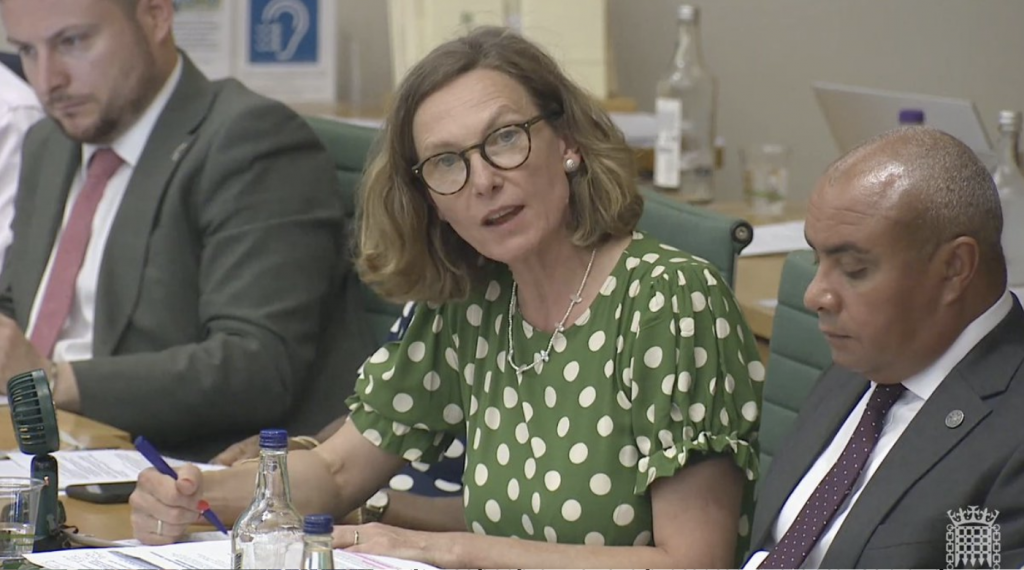
Catherine Fookes, one of the Labour MPs on the Women and Equalities Committee, suggested that having gender-critical beliefs might be a conflict of interest with being an EHRC commissioner. She asked: “How will you manage conflicts of interest that may arise due to the beliefs of people on the board, things that people have said previously and that kind of thing?”. This question clearly relates to the letter written by members of the LGBT Consortium alleging that Dr Stephenson has “previously supported views seen at odds with inclusivity for all”.
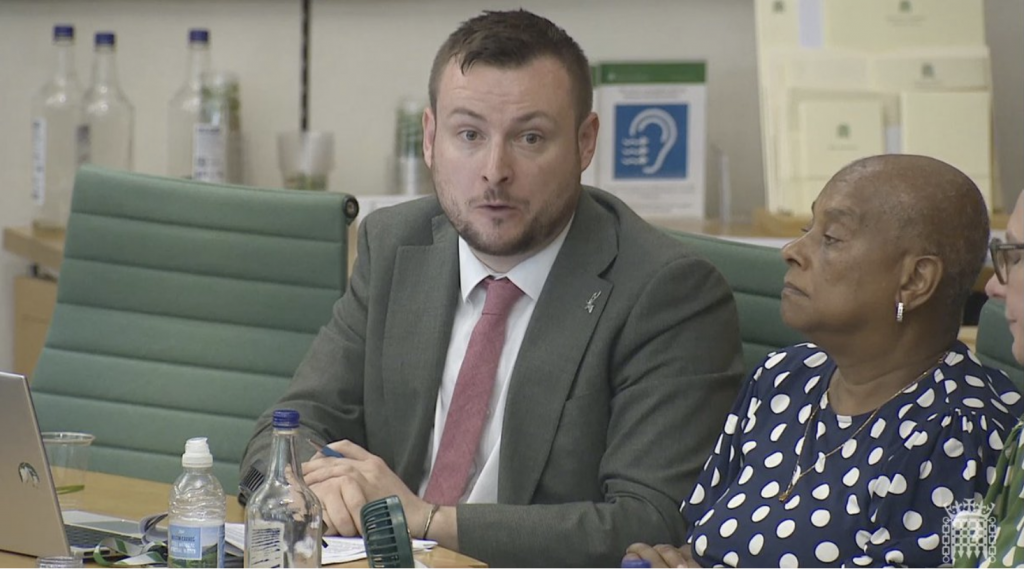
Peter Swallow MP, elected as the first Labour representative for Bracknell in 2025 and a member of the Joint Committee on Human Rights, seemed to suggest that Dr Stephenson is someone who would engage in unlawful discrimination against people with the protected characteristic of gender reassignment. He asked: “Would you welcome a trans commissioner being appointed?” Any prospective chair who would not welcome a suitably qualified commissioner with any protected characteristic would clearly be unsuitable for the role, and the insinuation that this would apply to Dr Stephenson is preposterous.
Mr Swallow also asked Dr Stephenson to address a series of spurious “concerns”. The concerns were that she had signed some open letters against no-platforming and silencing of gender-critical views, had donated £25 to a legal crowdfund for a woman who had faced unlawful belief discrimination (which the claimant won) and had engaged with gender-critical feminist organisations, including a registered charity. Dr Stephenson patiently explained that each of these was a perfectly ordinary, reasonable action. But she should not have had to. It is notable that previous candidates for EHRC chair have not been asked to justify £25 donations, or attendance at conferences. Nor was Dr Stephenson asked to justify other donations she may have made or other conferences she may have attended. Again, the only possible reading of these questions is prejudice against those with gender-critical views.
Committee members hectored Dr Stephenson, calling on her repeatedly to condemn or distance herself from “people on social media suggesting that women or trans women entering toilets should be photographed or videoed”. Dr Stephenson had said she had not seen that and would not comment on things she had not seen.
Misinformed inquiries
![[1] Correction: Rachel Taylor mistakenly refers to the Supreme Court. The reference should have been to comments made by former Supreme Court justice Lord Sumption.](https://sex-matters.org/wp-content/uploads/2025/07/Correction-1024x177.png)
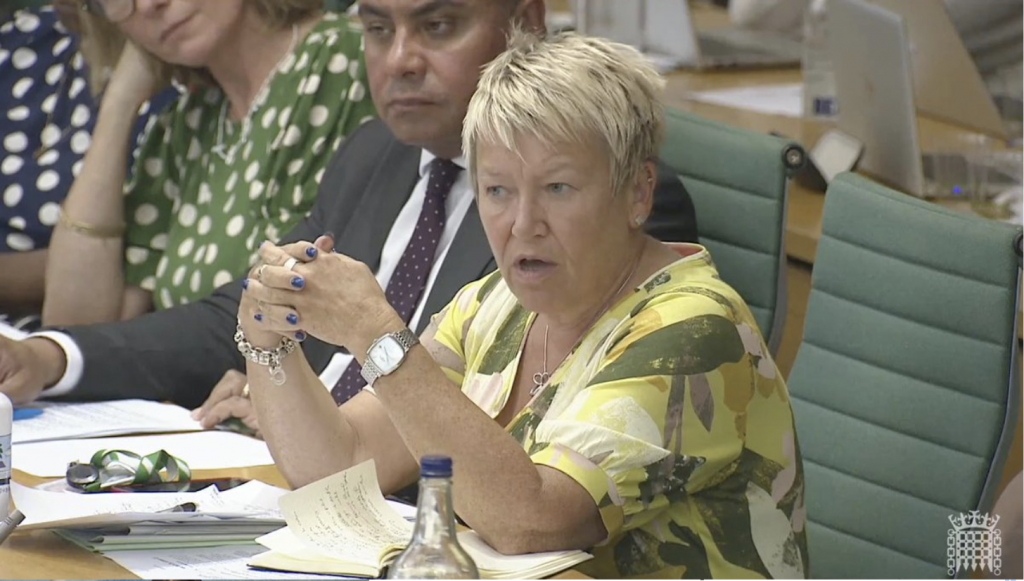
Rachel Taylor MP, another Labour MP from the Women and Equalities Committee, incorrectly asserted that the Supreme Court disagreed with the EHRC’s interim update. She said: “The Supreme Court noted that the EHRC’s interim guidance or statement went beyond what the law required.” In fact the Supreme Court has made no such comment. In the transcript of the meeting a correction is marked saying that Ms Taylor was thinking about comments made by Former Supreme Court Judge Lord Sumption.
Lord Sumption has not commented on the EHRC’s interim update either. His only public commentary was made on Radio 4, a couple of days after the judgment, and before the interim update was published.
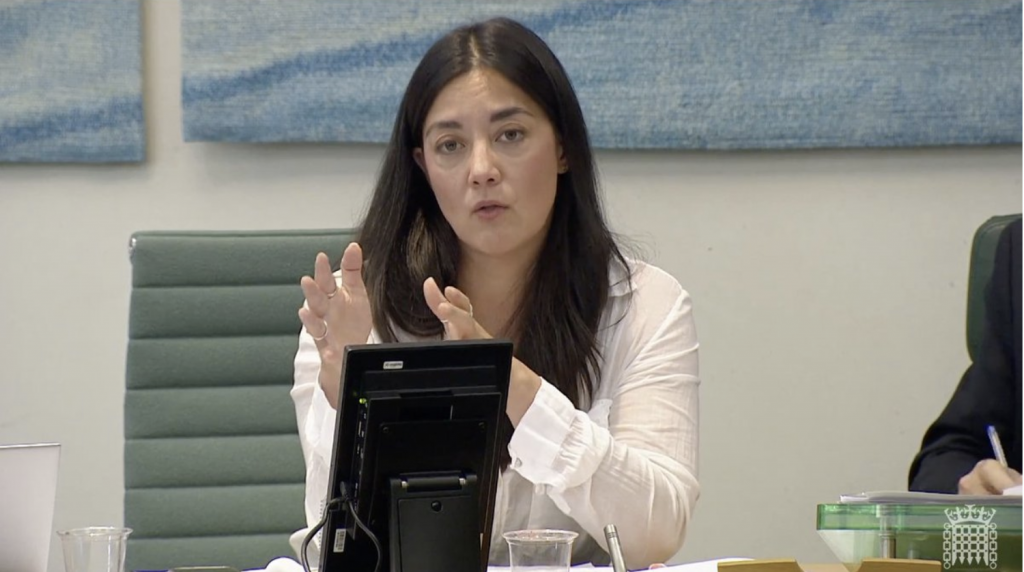
The chair of the Women and Equalities Committee, Sarah Owen MP, misrepresented Baroness Falkner’s contribution in a previous session. She said the EHRC chair had “alluded to Article 8 of the Human Rights Act not applying for trans women and them not having a right to private life” in relation to workplace toilets. In fact Baroness Falkner had written back to the Women and Equalities Committee specifically to clarify her answer saying that the qualified rights protected by Article 8 are engaged but not necessarily breached in situations where people are asked to declare their sex or to choose a unisex option.
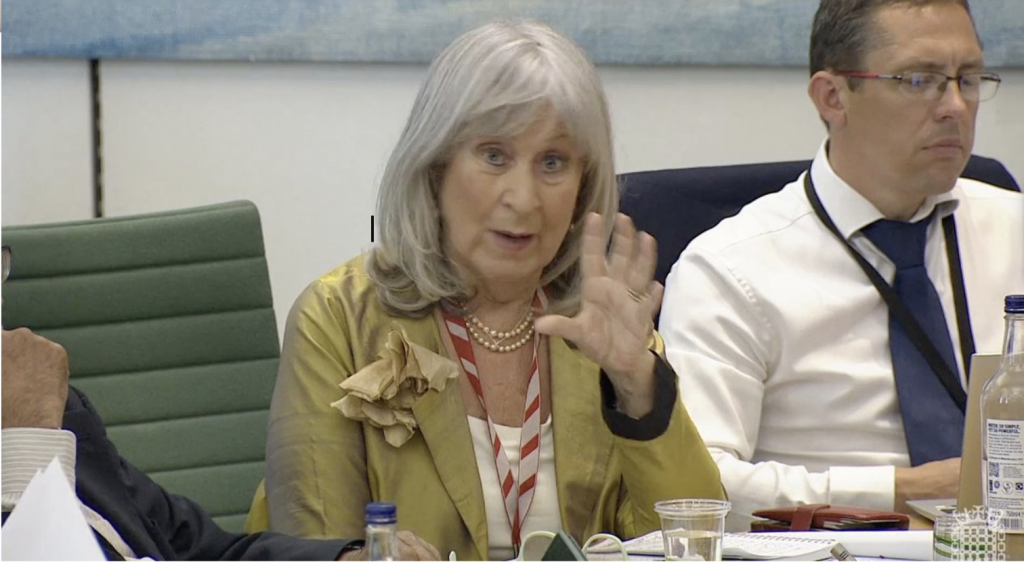
Baroness Kennedy, a Labour peer on the Joint Human Rights Committee, stated that there were no unisex toilets at Waterloo station and challenged Dr Stephenson on what she would say to a transwoman who wanted to use the women’s toilets there. In fact there are unisex toilets right next to both the male and female toilets at Waterloo station.
There are serious issues and challenges with addressing misunderstanding about the law, and the understandable anger and disappointment of those who have been misled (including children and vulnerable people). It is extremely disappointing that the committee asked questions which were not fact-checked.
Discouraging sticking to the law
Several of the questions suggested that the committee members wanted the EHRC not to implement the Supreme Court’s judgment:
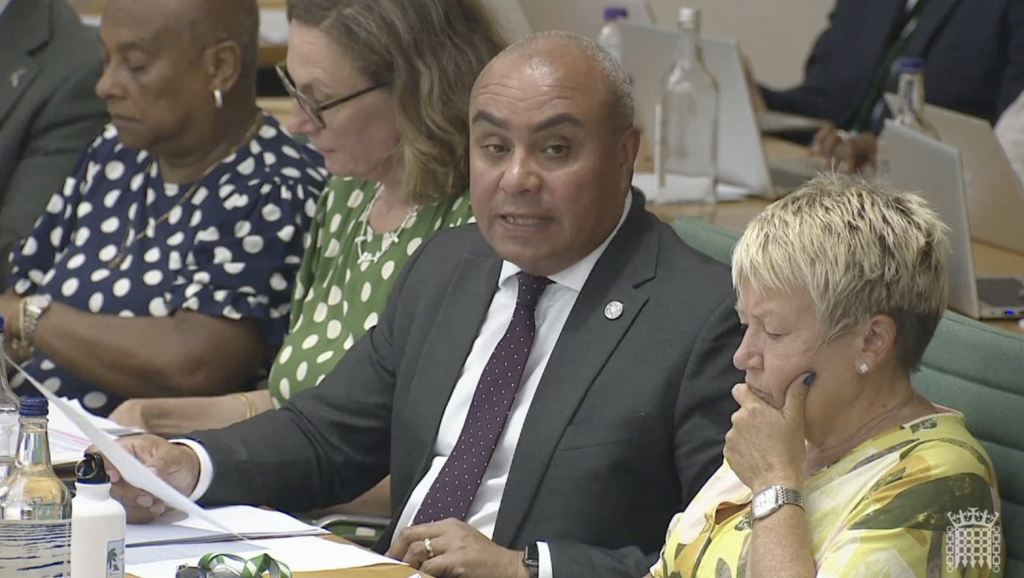
David Burton-Sampson MP seemed to suggest that this part of the EHRC’s role might be optional. He asked: “To what extent do you foresee explaining and enforcing the updated EHRC [code of practice for service providers] being the initial focus of your tenure as chair?”. The obvious and only answer was that this will continue to be one of the areas that the EHRC works on.
Catherine Fookes MP suggested that the presence of people who support the Supreme Court ruling at an EHRC consultation was a problem. “I have heard from some of the organisations that came to the [EHRC] Q&A sessions on the draft statutory code of practice that they felt incredibly uncomfortable. The space was very dominated by those who supported the Supreme Court ruling and people felt really uncomfortable.”
Peter Swallow MP asked whether Dr Stephenson would “feel empowered to take a second look” at the statutory code of practice after it was approved by Parliament.
The committees have written to the Minister for Women and Equalities saying that the EHRC should “advocate effectively on behalf of all protected groups, including some of the most vulnerable in society”. In fact the role of the EHRC is not to be a partisan advocate for particular groups but to uphold the Equality Act 2010, which protects everyone against discrimination and harassment and is consistent with protecting human rights. According to media reports, the Minister disagrees with the committees’ criticisms of Dr Stephenson’s experience, and is set to proceed with the decision by the government, which has welcomed the clarity provided by the Supreme Court, to appoint Dr Stephenson.
The EHRC should engage with a wide range of interest groups, including those that are disappointed at the Supreme Court’s ruling. But it cannot do its job and appease people who do not accept the definition of man and woman in law, and it should not try to.