
As you may know, on 16th April 2025 the Supreme Court handed down judgment in For Women Scotland Ltd v The Scottish Ministers [2025] UKSC 16. The court held that for the purposes of the Equality Act 2010 “woman” means a biological woman and “sex” means biological sex. Accordingly where separate-sex services are provided they must be provided based on biological sex. The Equality and Human Rights Commission (EHRC) has issued an interim update to support this: see https://www.equalityhumanrights.com/media-centre/interim-update-practical-implications-uk-supreme-court-judgment
Template email to raise concerns about changing rooms and toilets
This template email is designed to help you clearly and confidently raise concerns about policies for changing-room, toilets and other facilities such as showers and sleeping accommodation.
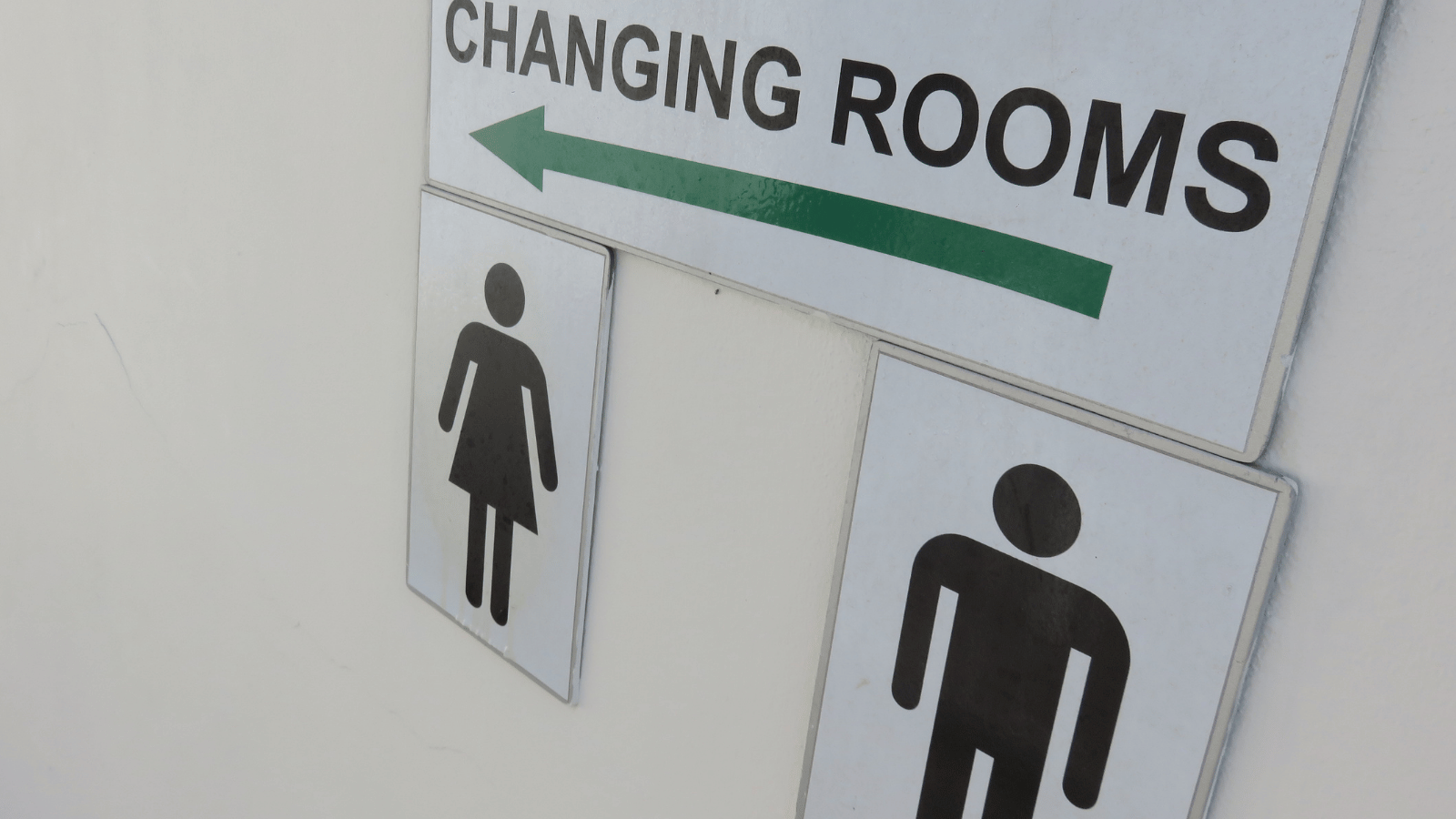
This template email covers:
- the removal of single-sex facilities
- unclear guidance on who is permitted to use which facilities.
If you are concerned about proposals to make changing-room or toilets into “gender-neutral” or unisex facilities, use our template email specifically for that.
Once you know your rights, use this sample text to start an informal conversation, adapted to submit a formal grievance, or amended to escalate a previous complaint.
How to use it
- Use the text below, or edit the same text in a Google doc (click Use template at top right) or Word document.
- Copy and paste into an email, with the optional sections to suit your own situation.
- Replace the placeholder text in [square brackets].
- Send it as an informal query or adapt it to form part of a formal grievance if needed.
Write the email
Start by saying who you are and how you are connected to the organisation – service user, pupil, parent, long-term customer – and mentioning any history you have of discussion of this topic with the organisation.
Then use this copy:
Adapt this paragraph according to what kind of facilities you are complaining about:
I am concerned that your policy on provision of [toilet / changing / washing / sleeping] facilities based on gender self-identity is unlawful, and puts women and girls in particular at risk of harassment. I am writing to ask for reassurance that you will bring the policy into line with the law as soon as possible by issuing a simple, clear statement that facilities are provided based on biological sex.
Now describe the situation – keep this short and factual. Include if relevant how you know or when you found out about the policy. For example:
There are toilets labelled male, female and unisex, but there is no clear written policy (for example on your website) which explains that this is by biological sex.
There are changing rooms labelled Men and Women, but your published policy states that these are managed on the basis of gender self-identity: [link to or quote from the policy]
I spoke to a member of staff and was told that trans-identifying individuals are allowed to use the sleeping accommodation of their choice.
Following the Supreme Court judgment, you issued a statement on your [intranet / website / social media] that said: [quote or give link]
Then use our legal explanation:
This policy means that the following circumstances arise:
- some women and girls will self-exclude because of the policy or because of bad experiences
- men who identify as transgender or non-binary (or who say they do) may use the women’s facilities
- women and girls may encounter and be alarmed, humiliated or made to feel embarrassed or uncomfortable by men in the women’s facilities
- women who know about the policy may feel frightened knowing that a trans-identifying man may be present or appear, and that complaints and concerns are likely to be ignored
- women and girls are at risk of voyeurism, indecent exposure and sexual harassment from men using women’s facilities.
Add details here of your own experience using the facilities – exactly what happened, and how you felt about it.
Then explain the effect of the Supreme Court judgment:
The Supreme Court judgment has clarified at paragraph 264 (emphasis added):
“This examination of the language of the EA 2010 , its context and purpose, demonstrate that the words ‘sex’, ‘woman’ and ‘man’ in sections 11 and 212(1) mean (and were always intended to mean) biological sex, biological woman and biological man. These and the other provisions to which we have referred cannot properly be interpreted as also extending to include certificated sex without rendering them incoherent and unworkable.”
While it is true that the EHRC is now consulting on an updated code of practice for service providers, this does not entitle you to postpone revising unlawful policies. Whatever the final EHRC guidance says, it will not (and could not) encourage actions which are unlawful under the Equality Act 2010.
It is well recognised that forcing women to share spaces with men where they are undressing puts women at a particular disadvantage because:
- women are in general more fearful of men than men are of women
- women are in general at greater risk of violence at the hands of men than men are of violence at the hands of women
- the risk of seeing a male in a state of undress or being seen by a male undressed engages the vulnerability, privacy and dignity rights of women, and women have a greater taboo around nudity and a well-founded sense of vulnerability to men, much more than the other way round
- men are statistically more likely to be guilty of crimes of violence, sexual assault, indecent exposure, and voyeurism than women
- women in general feel (and have enforced against them) taboos about physical modesty more powerfully than men.
These disadvantages are not controversial and are central to the rationale for the customary division of the sexes in public facilities where women and girls are in a state of undress or are otherwise physically vulnerable; they can give rise to direct and indirect discrimination or harassment claims.
Then use this text to explain next steps (adding the name of the organisation):
I am asking you to issue a clarification statement to make clear to everyone that facilities are provided based on biological sex.
By way of example, the Houses of Parliament recently added the following statement to its visitor information:
“Members of the public should use facilities that correspond to their biological sex or the gender-neutral toilets.” (https://www.parliament.uk/visiting/access/facilities/toilets/)
Issuing such a statement would bring an end to the confusion and provide to women (and men) the safe single-sex spaces to which they have a lawful entitlement.
Please confirm, therefore, within 14 days of the date of this letter that [name of organisation]:
- accepts that where services are provided separately to women and men they must be provided on a biological sex basis
- will issue a statement that clarifies that access to single-sex facilities is on the basis of biological sex
- will explain to individuals who have previously been told that they may use opposite-sex facilities that this is not permitted, and they will be directed in future towards appropriate facilities (such as a unisex option)
- will not remove separate-sex facilities in general and replace them with all “gender-neutral” (unisex).
I look forward to hearing from you within the timescale set out above. I will be sending the response to Sex Matters and may seek support from them to take the next steps towards legal action if the policy remains unlawful.
Now sign and send it.
Feedback
Tell us about your complaint whether you succeed or hit a brick wall. We will treat it in confidence and will not share anything publicly without your consent.
It’s useful for us to track how organisations are responding to the Supreme Court’s clarification of the law in FWS, and to have an idea of compliance and non-compliance by sector.