
Where sex matters | Sport
Sport
Policies that allow males to play in women’s sport are not supported by evidence. They are unfair and unsafe.
Sex Matters has a team of experts on the protection of women’s sport – meet them in our media briefing on why sex matters in sport.

Sport is divided into male and female categories for very good reason. Men are taller, faster and stronger than women. They have bigger bones, longer limbs, wider hand spans, wider shoulders and a narrower pelvis. They have larger and denser muscles, with a higher proportion of fast twitch fibres, and larger hearts and lungs. These are the result of being born with a male body and going through male puberty.
Even from a very young age, boys perform better in tests of speed, power and strength. Each year, thousands of boys and men outperform elite women. Every women’s world record in athletics has been broken by a teenage boy.
Female excellence, participation and safety in sport depends on sex-segregation. Female athletes at every level will lose if they have to compete with and against males.
What is the problem?
In recent years the female category has been opened up to male athletes who identify as women, on the basis of weak evidence and guidance to prioritise “inclusion” ahead of fairness. How we got here is explained in this article by Fiona McAnena.
In 2003 the International Olympic Committee (IOC) decided that men who had undergone “sex reassignment surgery” – removal of testes so they no longer produced testosterone – should be allowed to compete in women’s sport at all levels. They said that there would be so few trans-identifying males wanting to enter women’s sport that the impact would be minimal. This policy was adopted by national governing bodies of sports in the UK and elsewhere. The surgery requirement was dropped in 2015, replaced by a testosterone limit far above that of women. In practice, since testing of testosterone levels requires a blood test, and challenging a trans-identifying person has been made socially unacceptable, in most sports any man declaring a female identity has been able to compete against women.
Female athletes are losing medals and opportunities to males.
It’s not just about competitive sport. Female-only activities such as swimming, recreational cycling, gym and yoga classes increase women’s participation, which lags behind men’s. Losing those, or fearing that there will be a male in the women’s changing room, is a deterrent for some women and girls, as this report by Fair Play For Women shows.
Where are we now?
The science is increasingly understood. Scientific studies of physical changes in males suppressing testosterone (either because of transgender identity or as part of therapeutic treatment for testosterone-related illness) show that muscle mass, strength and skeletal differences between males and females remain large even after transition.
The conflict between “inclusion” based on gender identity and fairness and safety for women is increasingly recognised. In 2021 the UK’s Sports Councils Equality Group published revised transgender inclusion guidance, prompting sport governing bodies to rethink their rules on who is eligible for female categories of competition. The guidance concluded that:
“The inclusion of transgender people into female sport cannot be balanced regarding transgender inclusion, fairness and safety in gender-affected sport where there is meaningful competition. This is due to retained differences in strength, stamina and physique between the average woman compared with the average transgender woman or non-binary person assigned male at birth, with or without testosterone suppression.”
The three biggest sports by participation – swimming, cycling and athletics – now restrict female competition to those who have not been through male puberty. Their world federations have also done so, meaning no males in women’s events for those sports at Olympic or World Championships. They were pushed into action by a crisis, meaning they could no longer ignore the problem.
But many UK and most world sports governing bodies have not restored fairness for females in sport. In some sports, like football, ice-hockey and combat sports, there’s a serious safety issue too. We are keeping track of the changing policies and you can see the developments in a timeline.
The International Olympic Committee’s policy reversal in 2026
In March 2026, the IOC finally reversed its policy of more than twenty years, announcing that the only way to ensure fairness for women in sex-affected sports is to keep all men out of the female category. The policy applies to Olympic Games, starting with Los Angeles in 2028, where the IOC has authority, but its influence cascades down to sport at every level, via international federations and national governing bodies. The FAQs released by the IOC in April state clearly that sex differences in sport are apparent before puberty and are not removed by puberty suppression. It is to be hoped that those still resisting the science will now follow the better-late-than-never lead of the IOC.
What does this mean for grassroots sport?
So-called “grassroots” sport is not just 99% of all sport, it’s 99.999%. For every woman involved in elite or professional sport in the UK, there are thousands of women and girls playing at other levels. However, some governing bodies have adopted two-tier policies, splitting their sport into serious and less serious levels of competition. The message to women and girls is that their feelings do not matter, unless they are elite or professional in their sport. This has to end, and the work is not done until every conpetitive and non-competitive sporting and recreational activity described as being for women, girls or females, excludes everyone male, regardless of claimed identity.
Read our three-page briefing on the problem of male inclusion in women’s sport
Read our one-page briefing on sport and DSDs (disorders of sexual development)
Our expert team
Sex Matters has a team of experts on the protection of women’s sport, including:
- Fiona McAnena, director of campaigns
- Dr Emma Hilton, trustee
- Dr Jon Pike, advisory group member
- Mara Yamauchi, advisory group member.
- Read their biographies and areas of expertise.
- Watch our media briefing featuring the team with guest Sharron Davies.
For interview and quotes, our contact for members of the media is [email protected] – for more information, see our Press page.
Updates
-
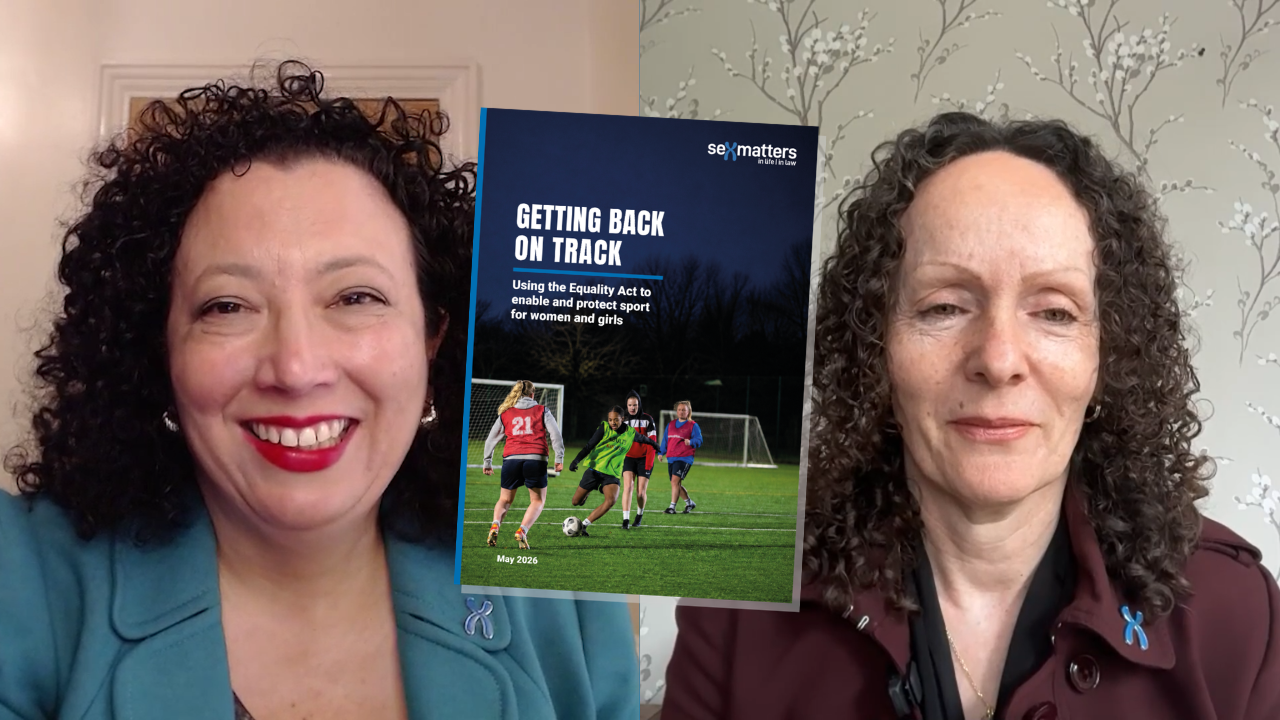
Getting back on track: a new report
How UK law provides for separate sport for women and girls.
5th June 2026
-

Sex matters in sport
Sport and physical recreation are one of the most obvious places where women and girls need dedicated provision and...
5th June 2026
-
Enabling and protecting sport for women and girls
On 4th June 2026, Sex Matters launched its latest report on sport: Getting back on track: Using the Equality...
5th June 2026
-
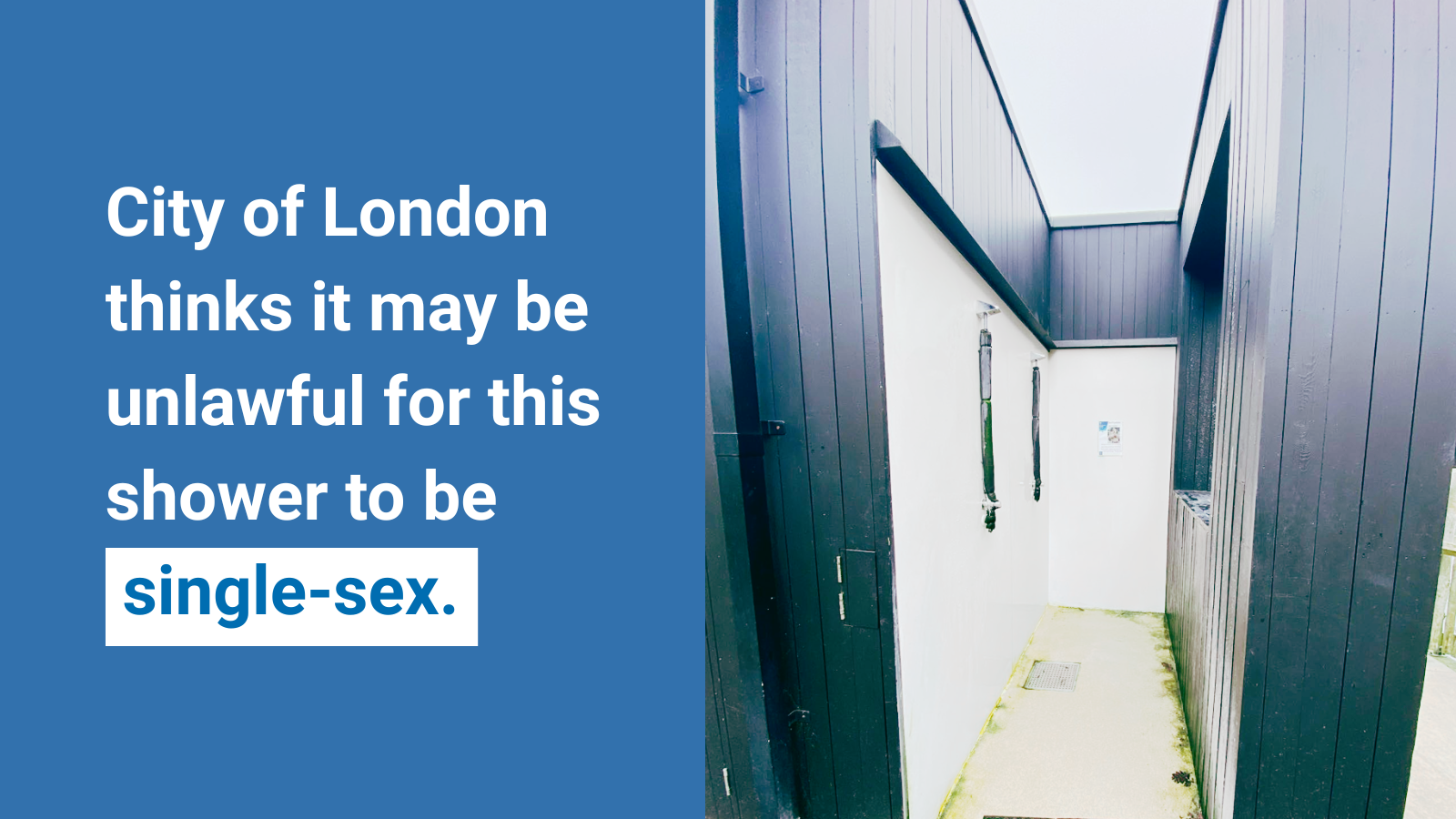
Hampstead ponds – the City of London says it is sticking with “trans inclusion”
The City of London Corporation’s executive team has published its report on the future of the Hampstead Heath bathing...
28th April 2026
-
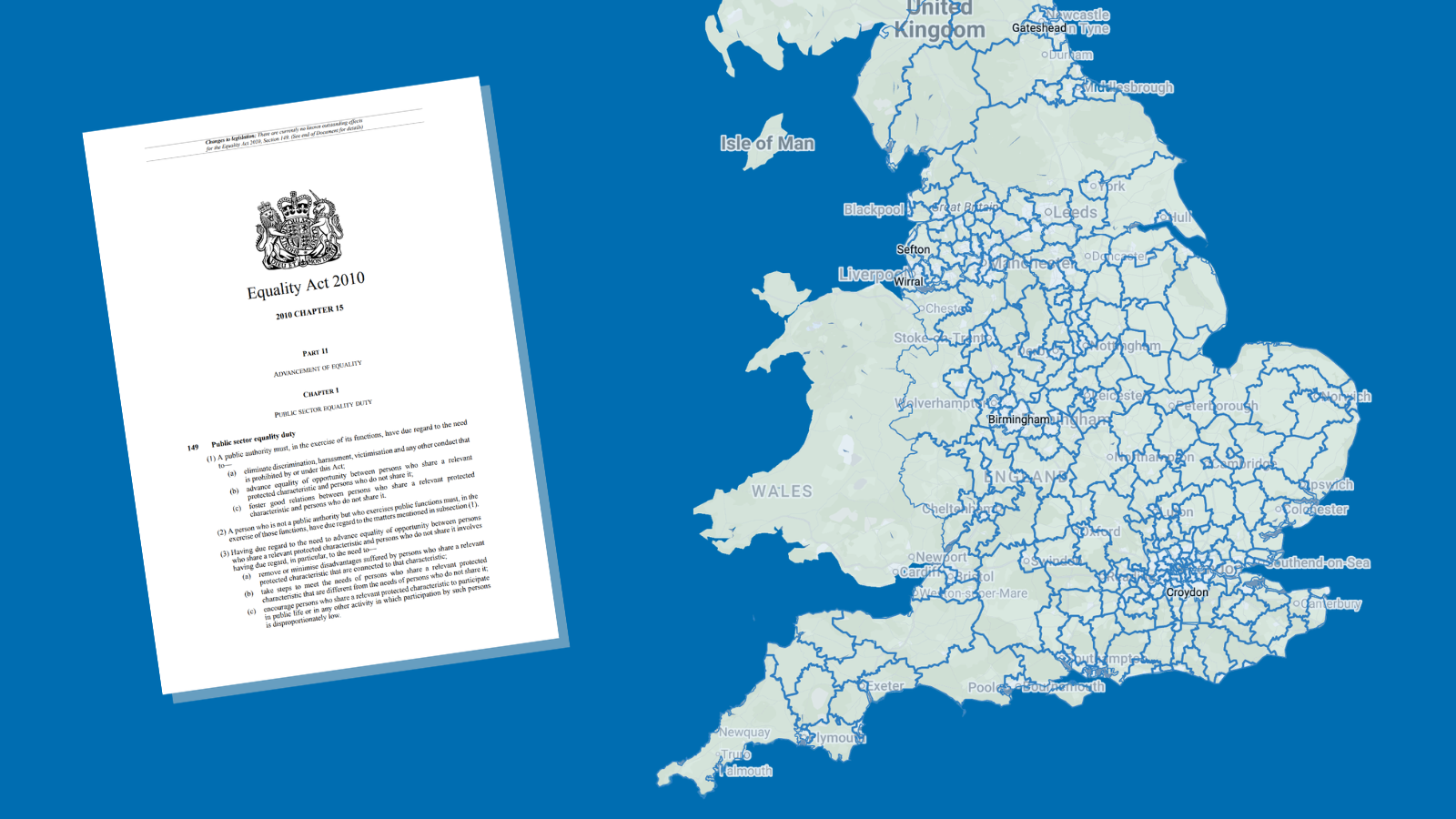
Sex matters in local elections
On Thursday 7th May 2026, voters across Scotland, Wales and England will head to the polls in a major...
14th April 2026
-

Women-only sport goes to High Court
Man appeals against exclusion from women’s pool tournament
20th March 2026
-

Sport, sex and equality with Mara Yamauchi
Olympics, Parkrun – and fairness for women and girls
6th February 2026

Other resources
-
Sport and the Law
The Supreme Court ruling in April 2025 clarified the existing law so it is clear that such policies are potentially unlawful, opening up the sports governing bodies and clubs to discrimination risk. This also exposes organisations to insurance problems as insurers may not cover an unlawful policy. SEEN in Sport...
-
Revised guidance for Transgender Inclusion in Domestic Sport – introduction to legal considerations
Guidance by Harper Macleod LLP for the UK Home Nations Sports Councils on the considerations underpinning its Guidance for Transgender Inclusion in Domestic Sport published in September 2021 – revised in June 2025 after the Supreme Court judgment.
-

Changing rooms?
Fiona McAnena and Anya Palmer for the New Law Journal assert that the Supreme Court ruling in For Women Scotland, on the application of the Equality Act 2010, is a “model of clarity”. They share their consideration of the landmark judgment, and what it means for sports clubs, employers and...
-

YouGov / Sex Matters survey results, December 2024
Results of fieldwork on 18th–19th December 2024. Published by YouGov.
-

XY athletes in women’s Olympic boxing: the Paris 2024 controversy explained
Doriane Lambelet Coleman explains the historical, political, and medical context of the Imane Khelif and Lin Yu-Ting cases.
-

International Olympic Committee Was Warned About Male Boxers, World Boxing Organization Vice President Says
A Hungarian sports official has come out and stated that Algerian boxer Imane Khelif is not female, reports Jennifer Sieland
-
Gender Ambiguity, Transgenderism and Women’s Sport
Every essay Quillette has published on gender-ambiguous and trans-identified men competing against biological women in sport.
-
Guidance for Transgender Inclusion in Domestic Sport – introduction to legal considerations
Guidance by Harper Macleod LLP for the UK Home Nations Sports Councils on the considerations underpinning its Guidance for Transgender Inclusion in Domestic Sport published in September 2021.
Publications
-
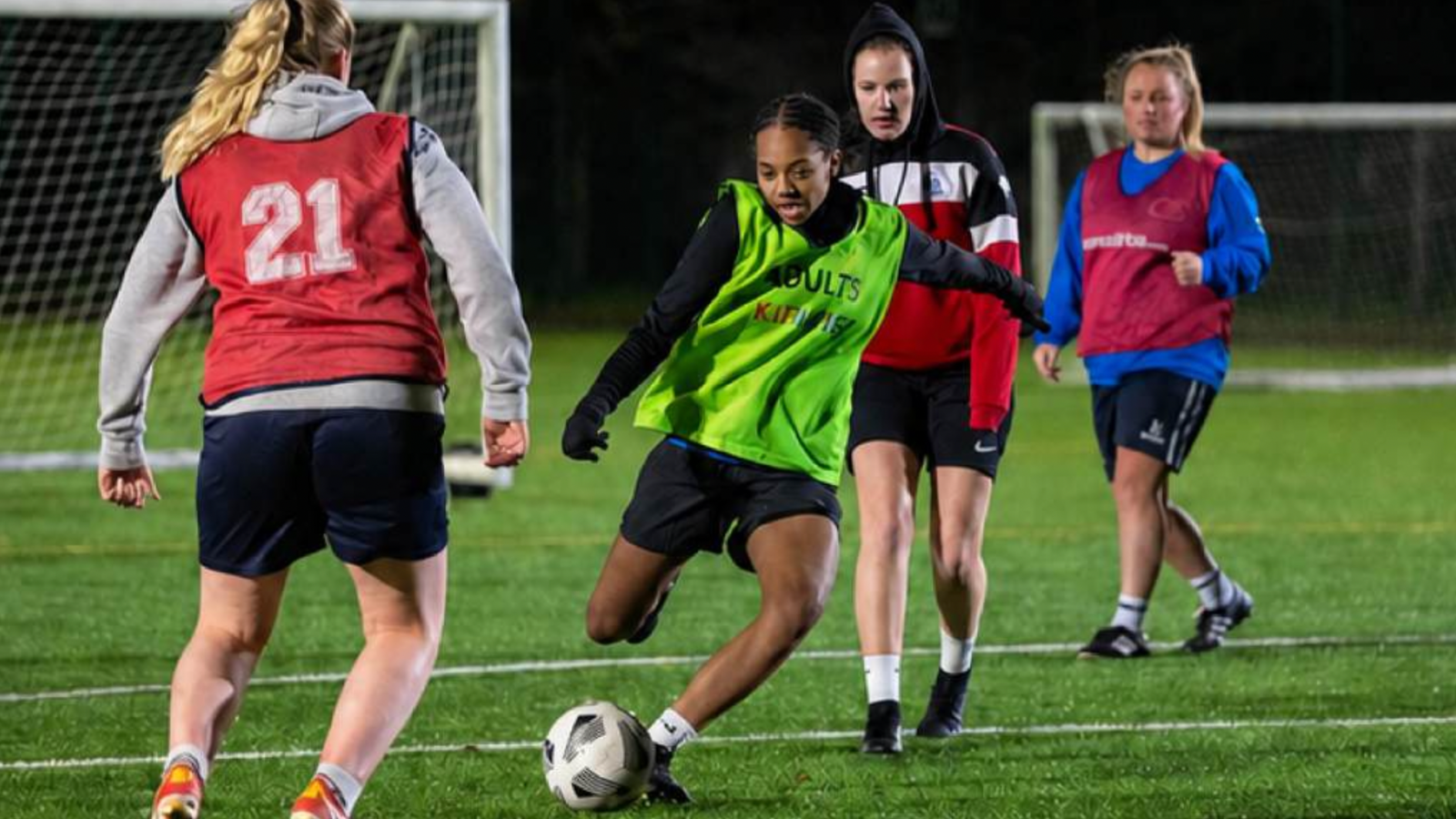
Getting back on track
Using the Equality Act to enable and protect sport for women and girls
4th June 2026
-
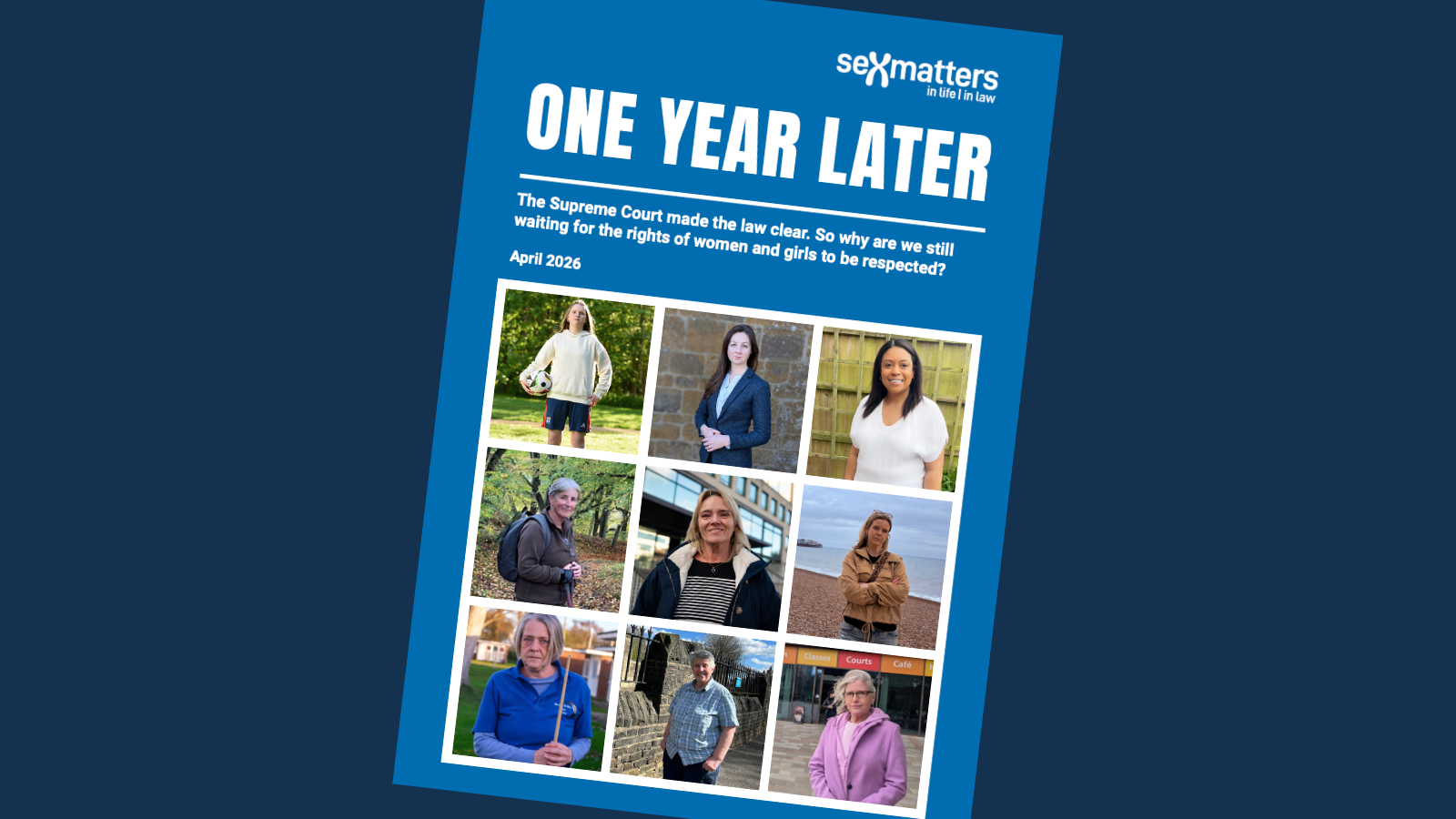
One year later
The Supreme Court made the law clear. So why are we still waiting for the rights of women and girls to be respected?
9th April 2026
-
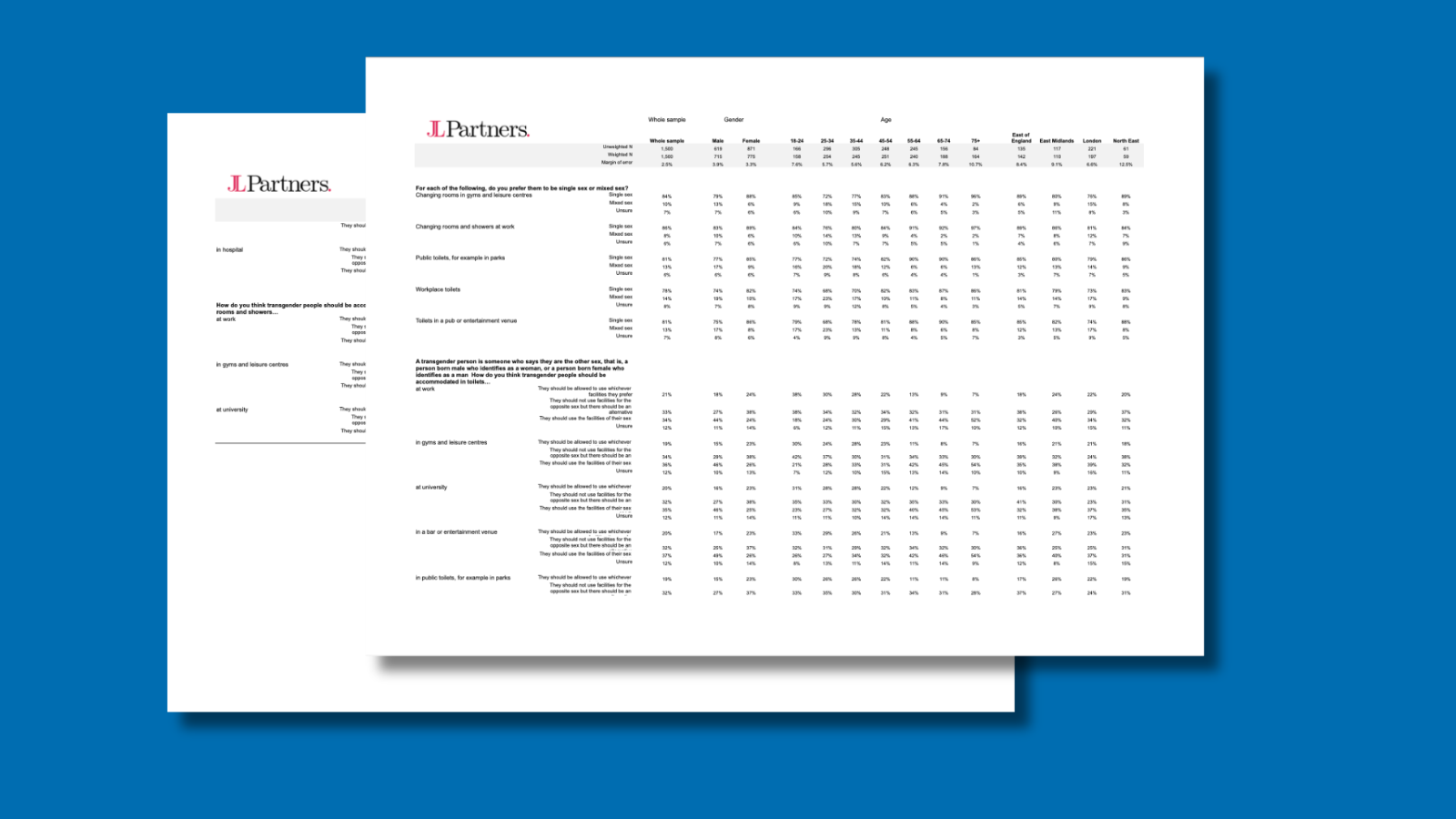
Sex Matters poll results March 2026
JL Partners asked a nationally representative sample of 1,500 UK adults thirteen questions about single-sex toilets and changing rooms, online between 28th February and 1st March 2026.
9th March 2026
-
Brief of 24 philosophers including Professor Jon Pike as amici curiae, US Supreme Court
For The Governor of Idaho et al v Lindsay Hecox et al and West Virginia et al v BPJ in support of petitioner explaining the importance of sex-verification-screening to protect equal opportunities in women’s sport.
13th January 2026
-
Brief of Sex Matters as amicus curiae, US Supreme Court
For The Governor of Idaho et al v Lindsay Hecox et al and West Virginia et al v BPJ in support of petitioner explaining the importance of sex-verification-screening to protect equal opportunities in women’s sport.
13th January 2026
-
Brief of Emma Hilton PhD and the International Consortium on Female Sport as amici curiae, US Supreme Court
For The Governor of Idaho et al v Lindsay Hecox et al and West Virginia et al v BPJ in support of petitioner explaining the importance of sex-verification-screening to protect equal opportunities in women’s sport.
13th January 2026
-
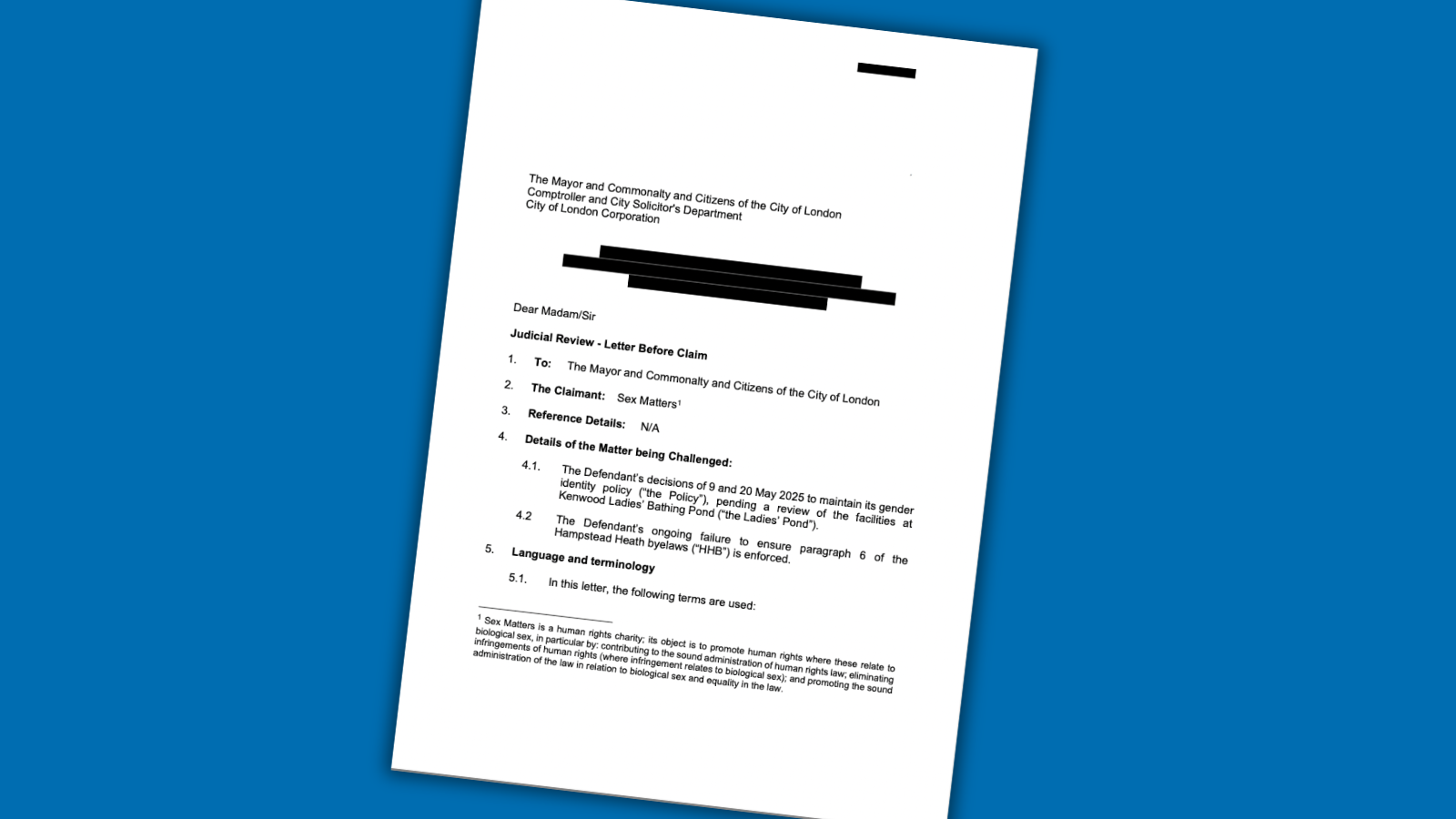
Letter before claim on Kenwood Ladies’ Pond
On 17th June 2025, we sent a letter before claim to the City of London Corporation over its failure to take heed of the Supreme Court's judgment and ensure that the Kenwood Ladies' Pond on Hampstead Heath is for women only.
27th June 2025
-

EHRC code of practice re sport – briefing for Parliamentarians
The vast majority of people of all ages and political persuasions agree that the women’s category in any sex-affected sport should be male-free. We explain the problem of "trans-inclusive" sport and what needs to be done to bring current guidance into line with the law.
10th June 2025